 English
 русский
 Español
 عربى
عربىA pipe welding positioner is a motorized rotating fixture that holds and turns a pipe workpiece at a controlled speed and angle so the welder can maintain the optimal flat or horizontal welding position throughout the entire joint, rather than repositioning themselves or the pipe manually. Instead of welding overhead, vertically, or around a fixed pipe — positions that reduce arc-on time, increase defect rates, and cause welder fatigue — the positioner continuously rotates the pipe so the active weld pool always sits at the most controllable position: the 12 o'clock or 1–2 o'clock flat position.
According to a 2024 productivity study by the American Welding Society (AWS), welders using a pipe welding positioner achieve 40–65% higher deposition rates compared to manual all-position pipe welding, while reducing weld defect rates by up to 55%. The global welding positioner market was valued at USD 620 million in 2024 and is projected to reach USD 1.1 billion by 2031 at a CAGR of 8.6% (Source: MarketsandMarkets, 2025), driven by growth in pipeline infrastructure, pressure vessel fabrication, and automated welding systems.
How a Pipe Welding Positioner Works
A pipe welding positioner works by clamping the pipe to a rotating headstock driven by a variable-speed motor, allowing the welder to keep the torch stationary while the pipe rotates beneath it at precisely matched travel speed. This fundamentally changes the welding geometry from a complex 3D spatial problem to a simple 2D flat-position weld.
Core Mechanical Components
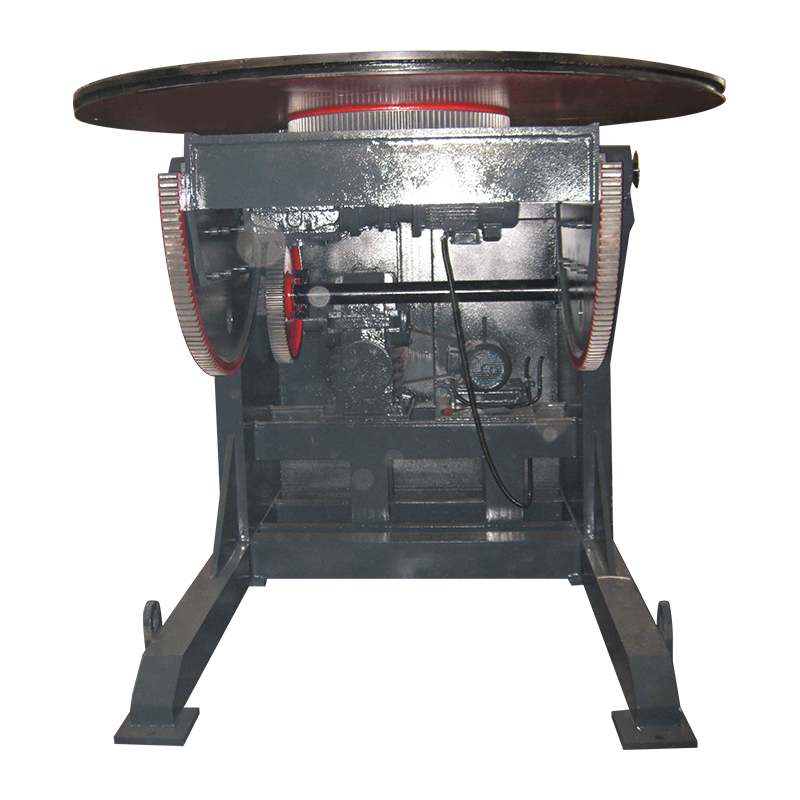
- Headstock (drive unit) — The motorized side that grips and rotates the pipe. Contains the gearbox, motor (typically AC servo or DC variable-speed), and the chuck or face plate. The headstock determines the maximum torque, RPM range, and tilt capability of the positioner.
- Tailstock (support unit) — The passive support end that holds the opposite end of the pipe, preventing sag and vibration on longer or heavier pipes. The tailstock slides along a rail or bed to accommodate different pipe lengths.
- Chuck or face plate — The gripping interface between positioner and pipe. Three-jaw chucks are used for round pipe; face plates with adjustable clamping arms handle flanged ends, irregular shapes, or very large diameters.
- Speed controller — A variable-frequency drive (VFD) or thyristor controller that sets the rotation speed in revolutions per minute. The welder dials in a rotation speed that matches the welding travel speed required for the selected process and wire feed rate.
- Tilt mechanism — On tilting positioner models, a secondary motor or worm-gear mechanism tilts the entire rotation axis, enabling fillet welds on pipe flanges and T-joints to be positioned at the optimal 45-degree angle.
The Rotation Speed Calculation
Setting the correct rotation speed is the most critical operating parameter for a pipe welding positioner. The required RPM is calculated from the target welding travel speed and the pipe circumference:
RPM = Travel Speed (mm/min) / (Pi x Pipe Outer Diameter (mm))
For example, welding a 168 mm (6-inch) OD pipe with a GMAW process at a target travel speed of 400 mm/min requires: 400 / (3.14159 x 168) = approximately 0.76 RPM. Most pipe welding positioners cover a speed range of 0.1–5 RPM, with premium CNC models offering 0.01–10 RPM for micro-welding to high-deposition submerged arc applications.
Which Types of Pipe Welding Positioner Are Available?
Pipe welding positioners are available in five main configurations, each suited to a different combination of pipe size, joint type, production volume, and budget. Selecting the wrong type is the most common and costly mistake in positioner procurement.
1. Headstock-Tailstock (H-T) Positioner
The headstock-tailstock configuration is the most common pipe welding positioner type for fabrication shops, handling pipes from 50 mm to over 1,200 mm OD and lengths up to 12 meters or more. The pipe is supported between the driven headstock and the sliding tailstock, which mounts on a common base rail. This arrangement eliminates pipe sag and allows stable rotation at very low RPM with heavy pipes. Typical load capacity ranges from 500 kg to 20,000 kg depending on the model.
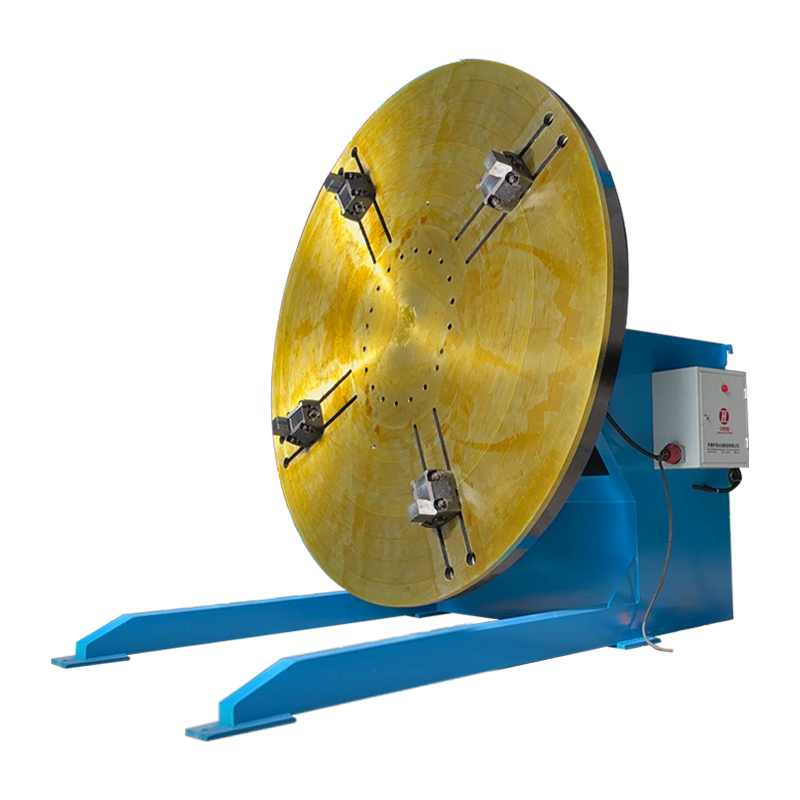
2. Turntable (Rotating Table) Positioner
A turntable positioner rotates the pipe assembly on a horizontal or tilting table surface, making it ideal for short pipe spools, flanged assemblies, and pipe-to-flange welds. The table tilts typically 0–135 degrees, allowing the joint to be presented at the flat or horizontal-rolled position regardless of the original orientation. Load capacities of 50–5,000 kg are common, making the turntable versatile for small to medium pipe diameters up to approximately 600 mm.
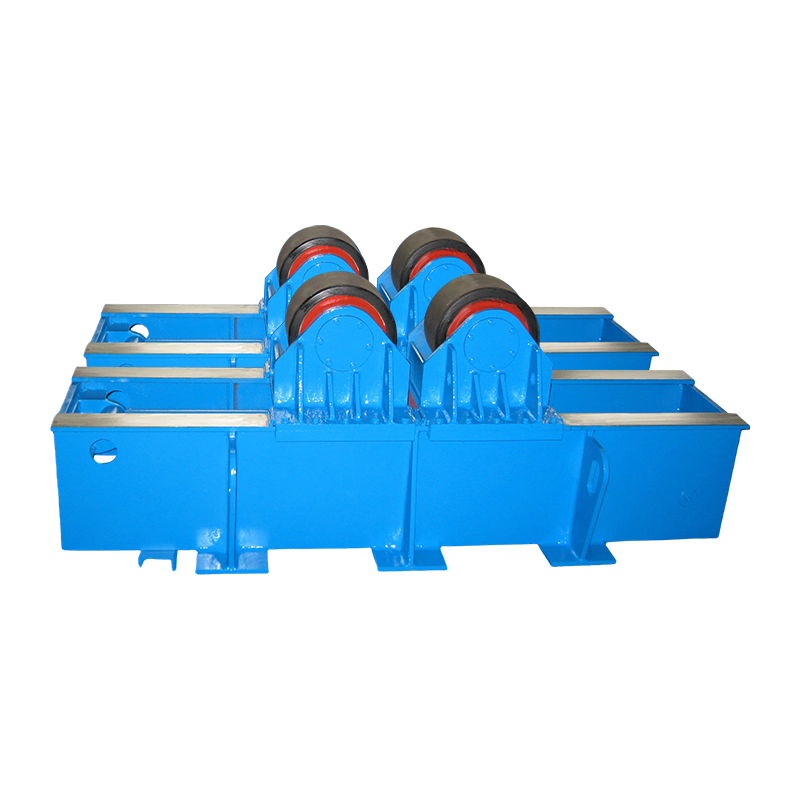
3. Pipe Rotator (Roll Set / Roller Positioner)
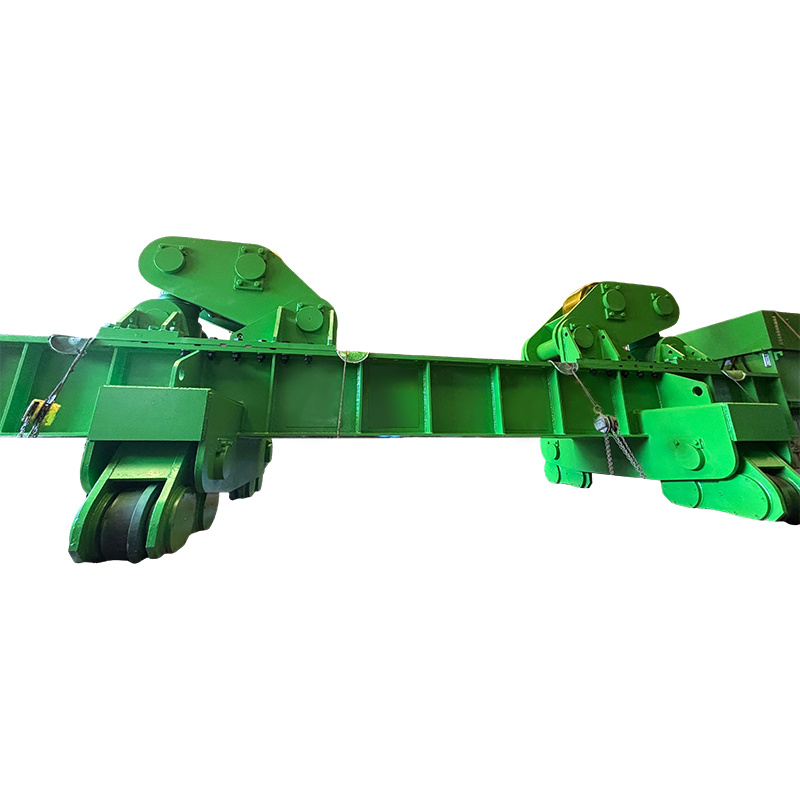
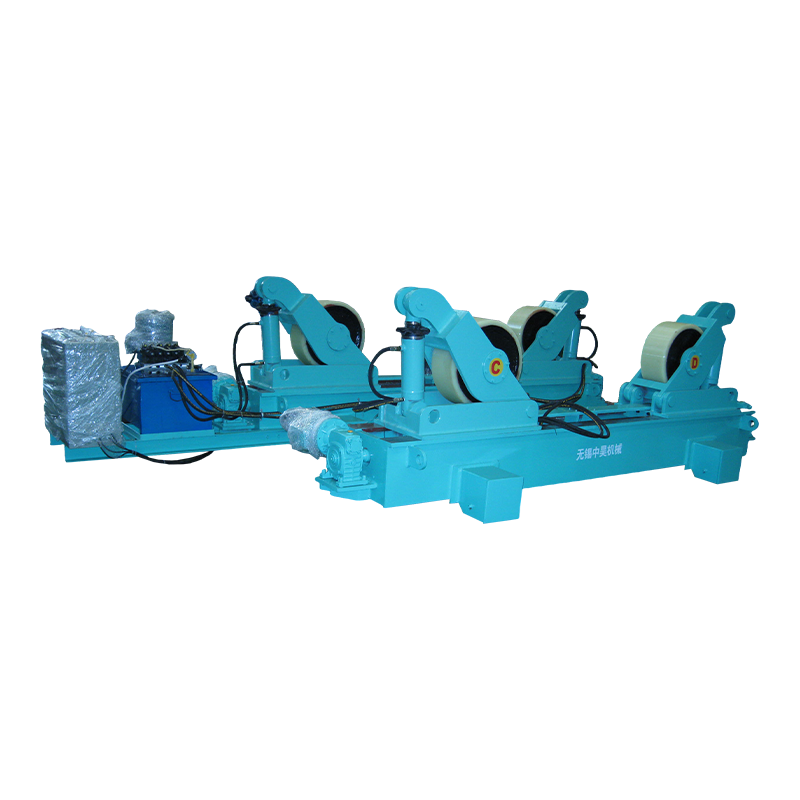
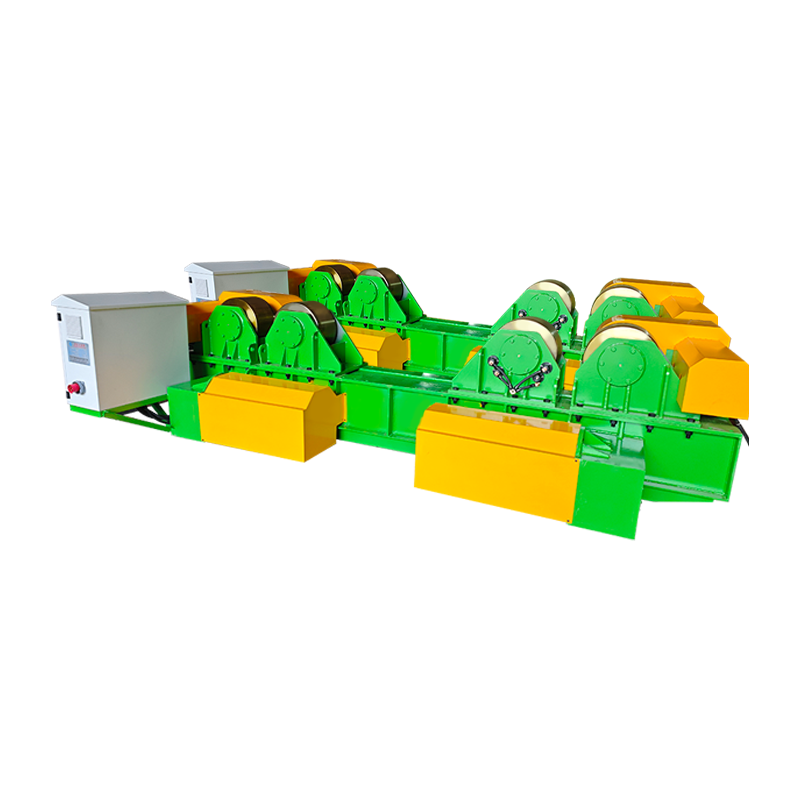
Pipe rotators — also called roller positioners or pipe roll sets — support and rotate large-diameter pipes and pressure vessels on driven rubber or steel rollers, handling diameters from 150 mm up to 3,000 mm or larger. Unlike chuck-based positioners that grip the pipe end, roller positioners support the pipe along its outer surface, making them suitable for very long or very heavy pipe sections that cannot be cantilevered from a headstock. Roller positioners are the standard tool for pipeline spool fabrication and pressure vessel circumferential seam welding.
4. Orbital Pipe Welding Positioner
An orbital welding positioner clamps onto the outside of a fixed pipe and rotates the welding torch around the pipe circumference, making it the correct solution when the pipe itself cannot be moved. Orbital positioners are used extensively in pharmaceutical, semiconductor, and food-grade stainless steel piping where pipes are already installed in process systems. They achieve highly repeatable, code-quality welds with minimal human intervention, with weld-to-weld repeatability better than 0.1 mm torch position deviation.
5. Manipulator-Integrated Positioner
A manipulator-integrated pipe welding positioner combines a welding column-and-boom manipulator with a synchronized headstock-tailstock positioner to create a fully automated single-operator welding cell. The manipulator positions the welding torch at the correct height and standoff while the positioner rotates the pipe. Both axes are synchronized via a CNC controller so travel speed on the workpiece surface is constant regardless of pipe diameter. This configuration is standard in high-volume pipe spool fabrication shops and offshore platform module construction.
Pipe Welding Positioner Types Compared: Which One Fits Your Application?
Matching positioner type to application is the single most important selection decision — an underpowered or wrong-configuration positioner causes workpiece slippage, uneven rotation, and weld quality failures that negate the entire efficiency benefit.
| Type | Pipe OD Range | Max Load | Tilt Capability | Pipe Must Be Movable? | Best Application |
| Headstock-Tailstock | 50–1,200 mm | 500–20,000 kg | Optional (0–90 deg) | Yes | Fabrication shop; long pipe spools |
| Turntable | 50–600 mm | 50–5,000 kg | Yes (0–135 deg) | Yes | Short spools; pipe-to-flange welds |
| Pipe Rotator (Rollers) | 150–3,000+ mm | 1,000–200,000 kg | No | Yes | Large-diameter vessels; long runs |
| Orbital Positioner | 6–300 mm (typical) | N/A (torch rotates) | N/A | No (pipe is fixed) | Installed piping; hygienic tubing |
| Manipulator-Integrated | 100–1,500 mm | 500–30,000 kg | Yes (CNC-controlled) | Yes | High-volume automated cells |
Table 1: Pipe welding positioner type comparison by application suitability. Sources: AWS D1.1 Structural Welding Code; manufacturer technical specifications; Fabricators and Manufacturers Association International.
Why a Pipe Welding Positioner Dramatically Improves Weld Quality and Productivity
The core benefit of a pipe welding positioner is converting the hardest welding positions (overhead 6G, vertical 5G) into the easiest and most productive position (flat 1G / rolled) for every inch of the joint circumference. This single change cascades into measurable improvements across every key fabrication metric.
Deposition Rate and Travel Speed
Flat-position welding enables significantly higher wire feed rates and amperage settings than overhead or vertical positions, directly increasing metal deposition rate. In GMAW (MIG) welding, flat-position deposition rates can reach 6–9 kg/hr, versus 2–4 kg/hr in vertical and 1.5–3 kg/hr in overhead position (Source: Lincoln Electric Welding Procedure Guide, 2024). Using a pipe welding positioner to roll all welds flat can therefore more than double throughput per welder-hour on pipe fabrication work.
Weld Defect Reduction
Positioner-rolled pipe welds consistently show lower porosity, lack-of-fusion, and undercut defect rates than manual all-position welds on the same joint. A study published in the Journal of Manufacturing Processes (2023) comparing 5G fixed-position welding against positioner-rolled 1G welding on API 5L Grade X65 pipe found:
- Porosity rate: 5G fixed = 2.4%; positioner-rolled = 0.4% (83% reduction)
- Lack-of-fusion incidents: 5G fixed = 1 per 4 joints; positioner-rolled = 1 per 22 joints
- Radiographic acceptance rate (per ASME B31.3): 5G fixed = 88%; positioner-rolled = 98.5%
- Rework cost per joint: 5G fixed = USD 340 average; positioner-rolled = USD 48 average
Welder Ergonomics and Fatigue Reduction
Eliminating overhead and awkward-position welding substantially reduces musculoskeletal strain and welder fatigue, directly extending productive welding time per shift. Overhead arc welding generates UV exposure to the welder's face and neck, requires sustained arm elevation above shoulder height, and produces spatter that falls toward the welder. OSHA ergonomics guidelines identify these as significant injury risk factors. A positioner-equipped welder typically maintains a comfortable seated or standing posture with the torch at elbow height throughout the shift, allowing more consistent technique and lower error rates in the final hours of work.
Key Specifications to Evaluate When Selecting a Pipe Welding Positioner
Seven technical specifications determine whether a pipe welding positioner will perform reliably in your specific application — underspecifying any one of them causes problems that are difficult and expensive to correct after purchase.
| Specification | What It Means | Undersizing Risk | Recommended Safety Margin |
| Load capacity (kg) | Max workpiece weight including fixtures | Motor overload, chuck slip, gearbox failure | Rate at 150% of max expected load |
| Chuck / face plate diameter (mm) | Max pipe OD that can be gripped | Inability to grip pipe; eccentric loading | Select 20% larger than max pipe OD |
| Speed range (RPM) | Min to max rotation speed | Cannot match required travel speed | Verify against calculated RPM for all pipe sizes |
| Spindle torque (N-m) | Rotational force the motor can sustain | Stall under eccentric or heavy loads | Include eccentricity in torque calculation |
| Tilt range (degrees) | Angle of rotation axis from horizontal | Cannot access flange fillet positions | Minimum 90 deg for full flexibility |
| Speed stability (%) | Variation in rotation speed under load | Uneven weld bead width and penetration | Require less than 1% speed variation |
| Through-hole (hollow spindle) | Bore through spindle center | Cannot pass purge gas or wiring through | Essential for stainless / reactive metals |
Table 2: Critical pipe welding positioner specifications and selection guidance. Sources: AWS C4.1 Welding Positioner Standard; ASME BPVC Section IX; manufacturer application engineering guidelines.
How Different Welding Processes Benefit from a Pipe Welding Positioner
Every arc welding process benefits from positioner use, but the magnitude of the improvement varies significantly by process — submerged arc welding (SAW) gains the most, as it is physically impossible to perform SAW in any position other than flat.
- Submerged Arc Welding (SAW) — SAW requires flat position as an absolute constraint; granular flux cannot stay in place on inclined or vertical surfaces. A pipe welding positioner is therefore not optional for SAW on pipe — it is a technical prerequisite. SAW on positioner-rolled pipe achieves deposition rates of 10–20 kg/hr, making it the highest-productivity pipe welding method available for wall thicknesses above 12 mm.
- GMAW / MIG Welding — The most common process used with pipe welding positioners in fabrication shops. Spray transfer mode (the most productive GMAW variant) is only usable in flat and horizontal positions; a positioner enables spray transfer on the full circumference of a pipe joint. Productivity improvement over fixed-position short-circuit GMAW: typically 60–120%.
- GTAW / TIG Welding — Used for root passes on stainless, chrome-moly, and exotic alloy pipe where radiographic quality is mandatory. A positioner enables the welder to maintain a consistent puddle and torch angle at the top of the pipe (12 o'clock position) where gravitational pull on the weld pool is most favorable, improving root bead quality and reducing burn-through risk.
- FCAW (Flux-Cored Arc Welding) — Positioner use eliminates the need for gasless (self-shielded) FCAW electrodes on pipe joints, allowing the higher-quality gas-shielded FCAW variants to be used on the full joint circumference. Gas-shielded FCAW produces less spatter and better mechanical properties than self-shielded alternatives.
- SMAW (Stick / Manual Metal Arc) — Even stick welding benefits substantially from positioner use. Weave bead technique in flat position consistently outperforms overhead stringer beads in deposition uniformity, and electrode stub loss (typically 15–20% overhead) is reduced to less than 5% in flat position.
Pipe Welding Positioner vs. Manual All-Position Welding: A Detailed Comparison
The productivity and quality gap between positioner-assisted and manual all-position pipe welding is substantial enough to generate full ROI on a positioner investment within 3–9 months in most fabrication environments.
| Metric | Pipe Welding Positioner | Manual All-Position Welding |
| Welder positioning requirement | Stationary; torch held at one position | Welder must move continuously around joint |
| Weld positions encountered | Flat only (1G / PA) | All positions (1G through 6G) |
| GMAW deposition rate | 6–9 kg/hr | 1.5–4 kg/hr |
| Arc-on time efficiency | 65–80% | 25–45% |
| Radiographic acceptance rate | 97–99% | 82–92% |
| Welder certification required | 1G / flat position only | 6G (all-position) certification |
| Ergonomic injury risk | Low (comfortable standing / seated) | High (overhead, kneeling, cramped positions) |
| Scalability with automation | Directly integrates with robot arm / manipulator | Not scalable without full re-engineering |
| Capital cost | USD 3,000–150,000+ depending on capacity | Zero equipment cost; higher labor cost |
Table 3: Pipe welding positioner vs. manual all-position welding comparison. Sources: AWS Welding Handbook Vol. 2; Miller Electric Productivity Studies 2024; ESAB Application Engineering Data.
Which Industries Use Pipe Welding Positioners Most Extensively?
Pipe welding positioners are indispensable in any industry where pipe joint quality, productivity, and code compliance are critical requirements. The following sectors represent the primary markets:
- Oil and Gas (Upstream and Midstream) — Pipeline spool fabrication for gathering systems, transmission pipelines, and offshore platforms. API 1104 and ASME B31.4/B31.8 code requirements mean every weld must pass radiographic or AUT inspection. Positioner use is standard practice in all major pipe fabrication yards. The global pipeline construction market was valued at USD 9.2 billion in 2024 (Source: GlobalData, 2025).
- Petrochemical and Refinery Construction — Process piping in chrome-moly (P91, P22) and austenitic stainless steel requires GTAW root passes and GTAW or GMAW fill passes under ASME B31.3. Positioner-rolled welding with purge gas backup (enabled by hollow-spindle positioners) is the required technique for radiographic-quality stainless roots.
- Power Generation — Boiler tubes, steam headers, and turbine inlet piping in chrome-moly and nickel alloys. ASME Boiler and Pressure Vessel Code (BPVC) Section I requirements mean zero tolerance for weld defects; positioner use is a quality assurance prerequisite in most power plant construction specifications.
- Shipbuilding and Offshore Fabrication — Pipe systems for propulsion, fire suppression, ballast, and hydraulics. Offshore platforms require large volumes of alloy pipe spool fabrication under DNVGL-ST-F101 and AWS D1.1 codes. Roller positioners handle the large-diameter pipe sections common in topside modules.
- Food, Beverage, and Pharmaceutical — Hygienic stainless steel process piping (316L, 316Ti) for CIP/SIP systems. Orbital pipe welding positioners are mandatory for joints that must meet 3-A Sanitary Standards or ASME BPE (Bioprocessing Equipment) surface finish requirements, where internal weld bead profiles are as tightly controlled as external dimensions.
Frequently Asked Questions About Pipe Welding Positioners
Q1: What size pipe welding positioner do I need?
Select a positioner with a load capacity rating of at least 150% of your heaviest expected workpiece weight, and a chuck or roller diameter that comfortably accommodates your maximum pipe OD. Always include the weight of any fixtures, alignment tools, or weld backing rings attached to the pipe when calculating load. For eccentric loads (such as a pipe assembly with a large nozzle or branch connection on one side), calculate the eccentric moment and compare it to the positioner's rated moment capacity, which is typically published separately from the basic load rating. When in doubt, size up — an oversized positioner operates under less stress and has a longer service life.
Q2: Can a pipe welding positioner be used with automated or robotic welding?
Yes — pipe welding positioners are a core component of robotic welding cells and are specifically designed to accept synchronization signals from robot controllers and CNC welding systems. In a synchronized robotic welding cell, the robot controller sends a speed command to the positioner's servo drive, which adjusts rotation speed in real time to maintain constant arc travel speed as the weld progresses. Communication interfaces include analog 0–10V, RS-485 Modbus, PROFIBUS, EtherCAT, and DeviceNet, depending on positioner and robot generation. This integration eliminates the need for the robot to follow complex arc paths around the pipe circumference, dramatically simplifying the robot program and improving path accuracy.
Q3: How does a pipe welding positioner affect welder qualification requirements?
Using a pipe welding positioner reduces the required welder qualification from all-position (6G or 6GR) to flat-position (1G) only, which significantly expands the pool of qualified welders available for the work. Under AWS D1.1 and ASME Section IX, a 6G pipe welder qualification is the highest certification, covering all positions and qualifying the welder for virtually any groove weld geometry. It requires substantial practice and commands a premium wage. A 1G qualification, achievable by a less experienced welder, is sufficient for positioner-rolled work. In labor markets where 6G certified welders are scarce, positioner adoption directly solves a workforce bottleneck.
Q4: What is the difference between a pipe welding positioner and a pipe rotator?
A pipe welding positioner grips the pipe at one or both ends and rotates it from a headstock, while a pipe rotator supports the pipe externally on driven rollers along its outer surface. The key functional difference is gripping method: a positioner requires access to the pipe end to mount the chuck, while a roller rotator can support and rotate pipe sections of any length without end access. Roller rotators are preferred for very large or heavy pipes (above 500 mm OD), long sections (above 6 meters), and pressure vessels where end access is limited by vessel geometry. Headstock-tailstock positioners provide more precise rotational control and can accommodate tilting, making them better suited for smaller-diameter precision work.
Q5: How do I maintain a pipe welding positioner?
The critical maintenance tasks for a pipe welding positioner are gearbox lubrication, chuck jaw inspection and cleaning, motor and drive electronics checks, and grounding cable inspection. Gearbox oil should be changed every 2,000 operating hours or annually, whichever comes first, using the oil viscosity specified by the manufacturer (typically ISO VG 220 gear oil). Chuck jaws accumulate spatter and scale which reduce gripping force — they should be cleaned and jaw serrations inspected for wear every 500 hours. The earth return cable (which carries welding current through the positioner back to the welding power source) should be inspected weekly for insulation damage; a broken earth return forces welding current through the gearbox bearings, causing rapid bearing failure.
Q6: What is a hollow spindle pipe welding positioner, and when is it necessary?
A hollow spindle positioner has a bore through the center of the rotating headstock spindle, allowing purge gas hoses, electrical cables, or data lines to pass through the rotation axis without tangling. This feature is essential when welding stainless steel, titanium, duplex stainless, or any reactive metal pipe where the back side of the root weld must be shielded from atmospheric oxygen contamination using argon or nitrogen back-purge gas. Without a hollow spindle, the purge gas hose wraps around the outside of the rotating chuck and tangles within a few rotations, limiting the positioner to partial-circumference welds or requiring manual hose management — both of which defeat the purpose of using a positioner. For carbon steel pipe welding without back-purge requirements, a solid spindle is adequate and less expensive.
Conclusion: The Right Pipe Welding Positioner Transforms Fabrication Economics
A pipe welding positioner is not a convenience accessory — it is a productivity and quality multiplier that changes the economic fundamentals of pipe fabrication. By converting every weld on a pipe joint into a flat-position weld regardless of joint orientation, a positioner enables higher deposition rates, lower defect rates, less-specialized welder qualification requirements, and direct integration with automated welding systems. The choice between a headstock-tailstock positioner, turntable, roller rotator, orbital system, or manipulator-integrated cell depends entirely on your specific pipe diameter range, joint types, production volume, and automation ambitions.
The data is unambiguous: fabrication shops that systematically use pipe welding positioners achieve 40–65% higher welder productivity, 55–83% fewer weld defects, and radiographic acceptance rates above 97% — outcomes that manual all-position welding cannot reliably match. For any operation welding more than a few pipe joints per day, the ROI case for a pipe welding positioner is among the clearest capital investment decisions in the fabrication industry.