 English
 русский
 Español
 عربى
Agglomerated flux for submerged arc welding is a granular flux produced by crushing minerals and ferroalloys, binding the powder with a silicate, and sintering the granules at roughly 600–900 °C. That temperature stays far below melting, so the alloy powders in the mix survive and become part of the slag system — which is why this type of flux can add manganese, silicon, chromium, molybdenum or nickel to the weld pool instead of only shielding it.
The practical answer for most buyers: choose agglomerated flux when weld chemistry, toughness and low hydrogen matter more than rough handling, and accept that it must be dried, stored and recycled with discipline. Choose fused flux when the shop is humid, the current is extreme, or nobody will look after a holding oven.
- Typical grain size: 10–60 mesh (about 0.3–2.0 mm).
- Bulk density: roughly 1.0–1.3 g/cm³, against 1.5–1.8 g/cm³ for fused flux.
- Conditioning before use: bake at 250–300 °C for 1–2 hours, hold at 120–150 °C.
- Hydrogen classes commonly offered: H5, H10, H15 (diffusible hydrogen in ml/100 g).
- Flux consumption: about 0.6–1.2 kg per kg of wire, depending on joint type and recycling.
Agglomerated versus fused flux: the difference that changes your weld
Agglomerated flux gives you chemistry control; fused flux gives you moisture resistance and mechanical toughness of the granule. That single trade-off drives almost every other decision — price, storage, recycling rate and the defects you will fight on the floor.
| Property | Agglomerated (bonded) | Fused |
|---|---|---|
| Manufacturing route | Mixed powders bound and sintered at 600–900 °C; granules never melt | Raw materials melted above 1,500 °C, cooled, crushed and screened |
| Alloying through the flux | Yes — ferroalloys survive sintering and compensate Mn/Si burn-off | Limited — alloys are largely fixed by the melt |
| Moisture pick-up | High; hygroscopic, baking is mandatory | Low; effectively non-hygroscopic in normal storage |
| Grain strength | Softer and more porous; breaks down with handling | Hard and glassy; survives repeated recovery |
| Basicity range | Wide, up to about 3 and above | Usually moderate; high basicity is harder to achieve |
| Recycling tolerance | Sieve and blend, but cap the recovered share | High recovery rate with little degradation |
| Typical fit | Thick-wall vessels, wind towers, structural steel with toughness requirements | High-current multi-wire setups, humid plants, aggressive recycling |
How the manufacturing route shapes arc behaviour
The porous, sintered granule behaves differently under the arc than a glassy fused grain, and those differences show up as gas escape, slag release and flux consumption.
From powder to granule
Minerals such as magnesite, fluorspar, alumina and quartz are crushed, blended with ferroalloys and bonded with potassium or sodium silicate. After granulation the flux is dried and sintered, then screened into narrow size bands. The porosity created by the binder is deliberate: it gives hydrogen and other gases an escape path through the flux blanket, which is one reason properly baked agglomerated flux performs so well on thick sections.
What happens at the arc
Under the arc the granule melts into a slag that protects the pool, shapes the bead and releases alloying elements. Because the grain is softer, recycled flux generates fines faster; a hopper full of dust-sized particles screens the arc unevenly, causing ragged bead edges and inconsistent penetration. Screening discipline matters more here than with fused flux.
Reading the flux certificate: basicity, hydrogen class and current rating
Never specify agglomerated flux by brand name alone — specify the wire–flux couple, because the mechanical properties are certified for the pair, not the flux on its own.
- Basicity index. A ratio of basic to acidic oxides. Higher basicity generally means lower oxygen in the weld and better impact toughness, but poorer slag detachability and tighter parameter windows.
- Hydrogen class. An EN 760 designation such as SA AB 1 67 AC H5 tells you the flux is agglomerated (AB), its composition class, that it runs on AC, and that the couple was tested at H5 — no more than 5 ml of diffusible hydrogen per 100 g of weld metal.
- Current type and range. Confirm AC, DC+ or both, and the maximum current for single-wire and multi-wire operation.
- Grain size band. Standard 10–60 mesh suits most work; finer bands serve thin plate and small fillets.
- Alloy transfer data. The certificate should state expected Mn and Si pickup at defined current and voltage, since that is the whole point of choosing agglomerated flux.
Matching flux to wire, plate and current
The flux does not work in isolation: arc voltage is effectively a chemistry control, because higher voltage melts more flux and transfers more alloy while burning more manganese and silicon out of the pool.
On a typical structural job, a manganese-silicon agglomerated flux paired with an EM12K-type wire will hold manganese around 1.0–1.4% and silicon around 0.3–0.6% when voltage is kept stable. Push voltage up by 3–4 V to widen the bead and those figures shift; on high-strength plate that shift can be the difference between passing and failing a toughness test. Keep voltage within ±1 V of the qualified procedure, and re-qualify if the flux grade or grain band changes.
Drying, holding and recycling: three rules that prevent most defects
Moisture is the dominant failure mode of agglomerated flux, and it is entirely controllable with a baking oven and a holding oven.
- Bake before use. Spread flux no deeper than about 30–50 mm and bake at 250–300 °C for 1–2 hours. Follow the manufacturer's figure — some grades specify 300 °C, others 250 °C.
- Hold, do not cool. Transfer baked flux into a holding oven at 120–150 °C and take only what the shift will consume. Flux that cools in a humid plant reabsorbs moisture within hours.
- Screen and blend recovered flux. Use a recovery unit, sieve out particles below roughly 0.3 mm and any slag, dust or mill scale, then cap recovered flux at 20–30% of the hopper charge unless the manufacturer approves more.
Two habits worth banning: mixing agglomerated and fused flux in the same hopper, because their different densities segregate and feed an inconsistent slag; and leaving flux in the hopper overnight in an unheated shop.
Defects that point back to the flux
Most SAW defects attributed to "bad flux" are actually storage, screening or parameter problems, and they are diagnosable from the surface appearance alone.
| Defect | Likely cause | Correction |
|---|---|---|
| Surface porosity, wormholes | Damp flux, contaminated wire, skipped baking | Rebake at 250–300 °C, use a holding oven, check wire cleanliness |
| Slag inclusions | Low current, fast travel, poor slag detachability | Raise current slightly, adjust run-off, review basicity for the joint |
| Undercut | Arc voltage too high, travel speed too fast | Reduce voltage 1–2 V, slow travel, correct torch angle |
| Ragged bead edges | Fines and dust from recycled flux | Rescreen, discard particles under 0.3 mm, check hopper feed |
| Hydrogen cracking | Moisture plus high restraint on thick plate | H5-class flux, preheat, controlled cooling |
Keeping the arc over the seam: the equipment side
Agglomerated flux rewards a stable arc, and a stable arc comes from rigid work support rather than from the welder's hands. For circumferential seams on vessels and towers, the workpiece turns on welding rotators while a column and boom holds the head at constant height; nozzles and small circular parts are better served by a welding positioner, which tilts the part into flat position where SAW is happiest.
Two matching options for heavy-wall work:
 SAW Column and Boom Welding PositionerProvides precise torch positioning and stable travel for heavy-wall submerged arc welding, with standard and heavy-duty configurations for long seams.View Product →
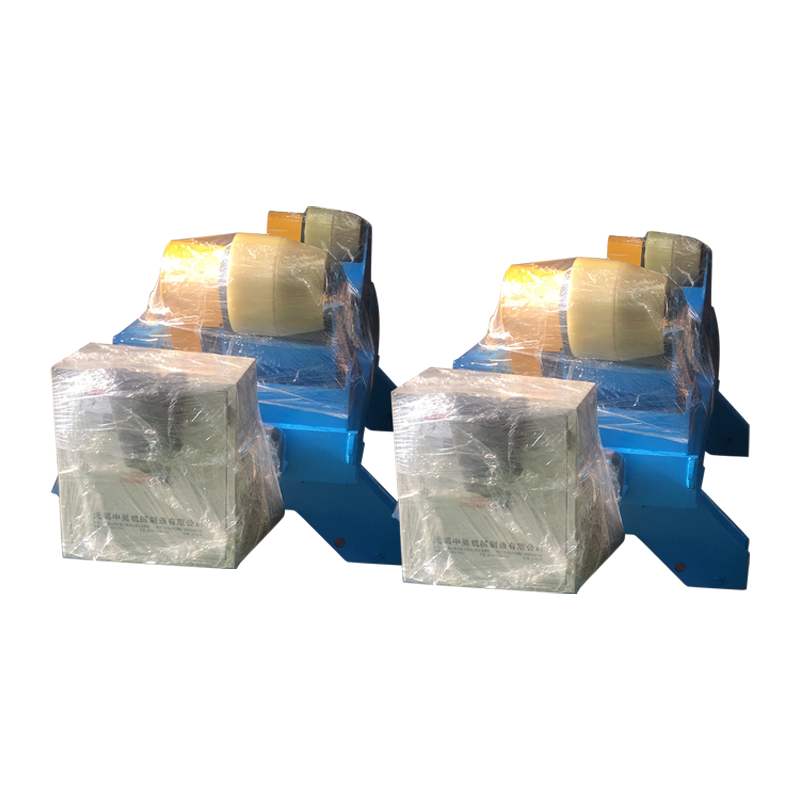
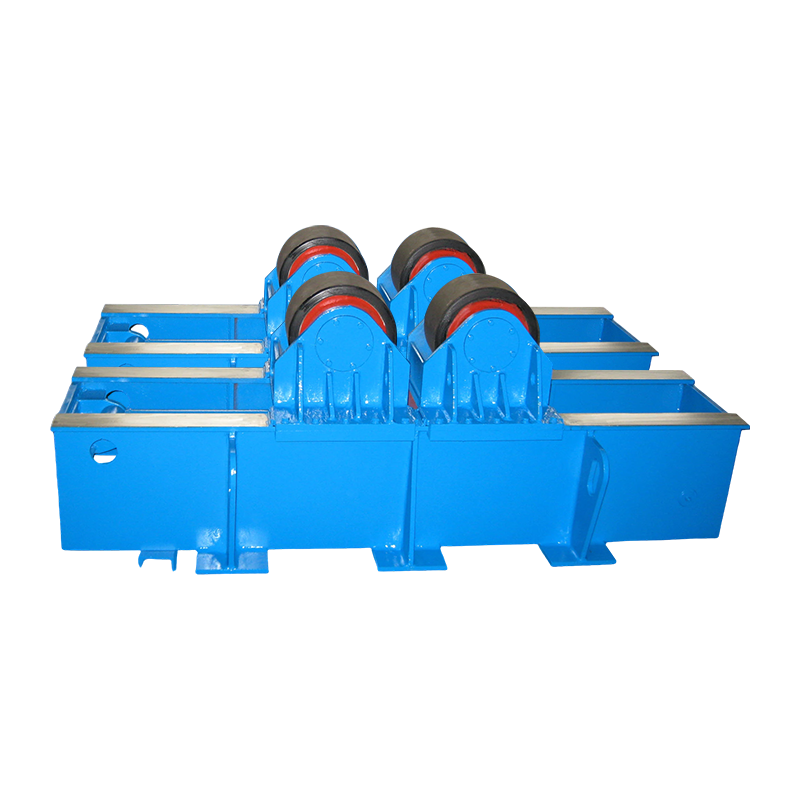
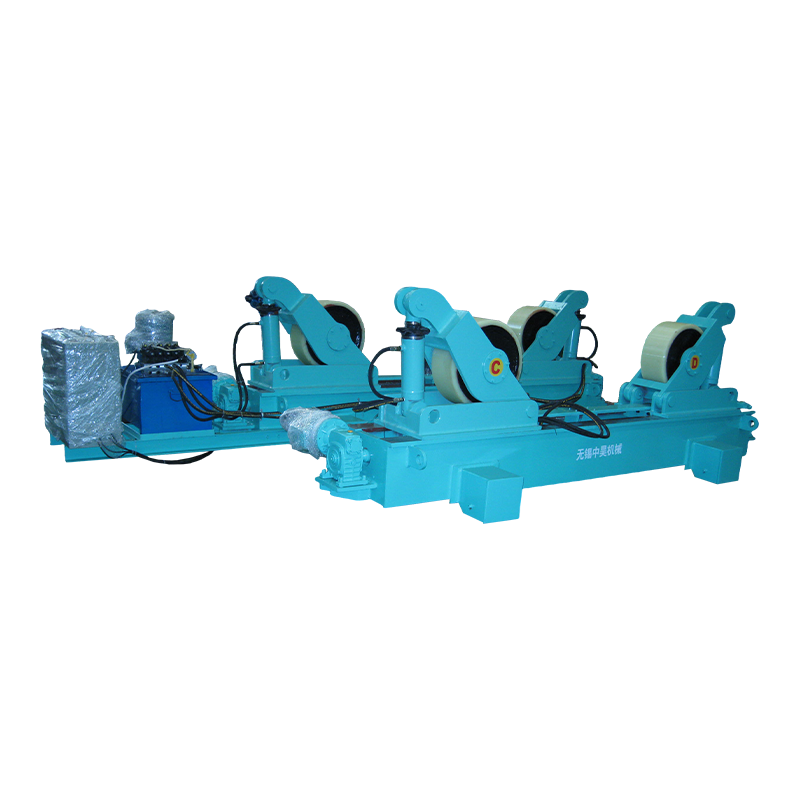
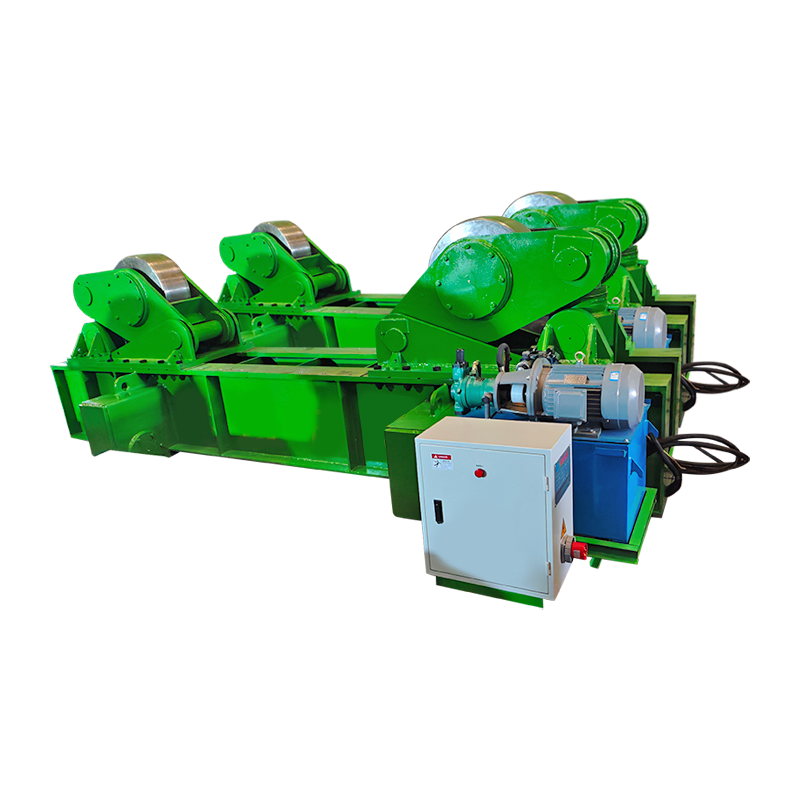
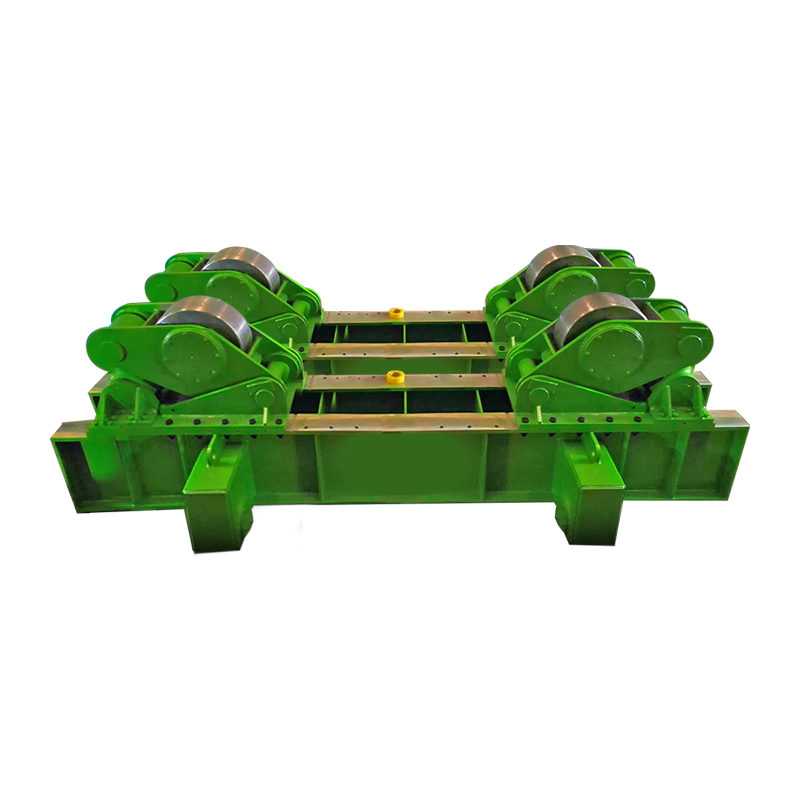 Fit Up Welding Rotators for Pipe and Tank AssemblyHydraulic two-roller sets support alignment, rotation, and welding of pipes, cylinders, and large annular workpieces across multiple load capacities.View Product →
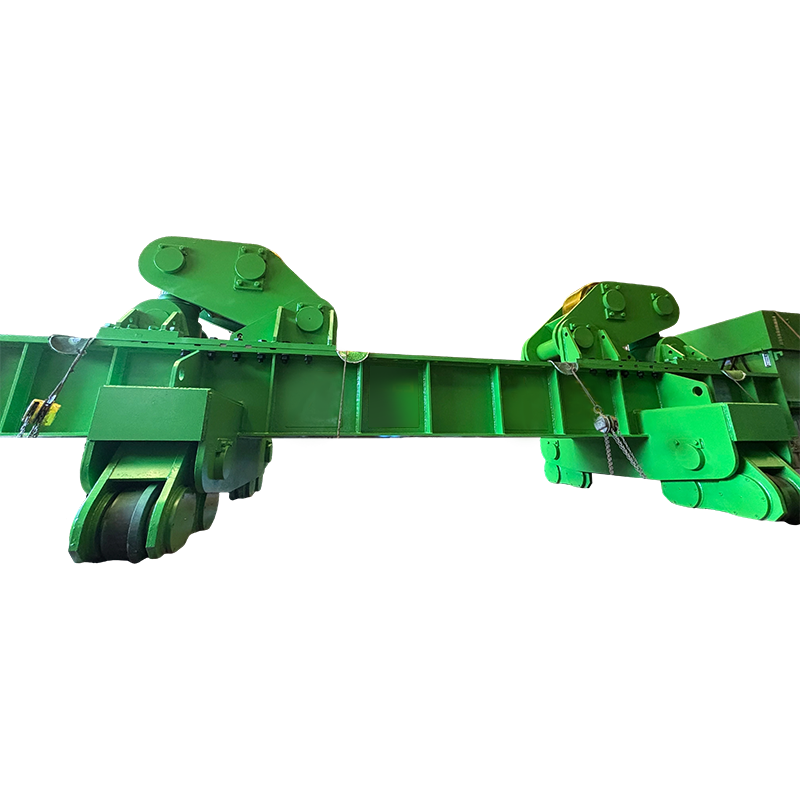
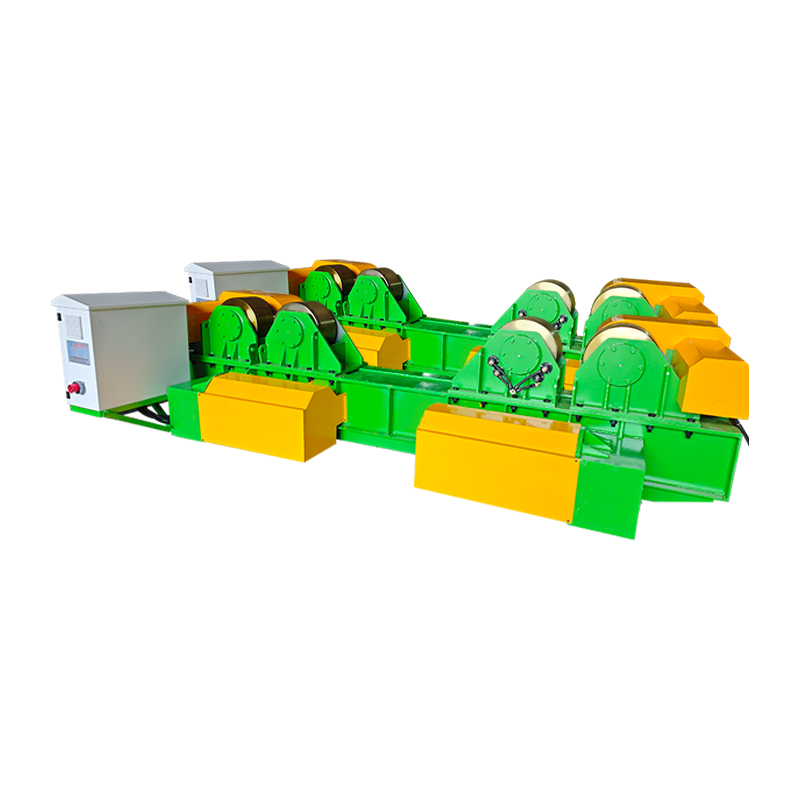
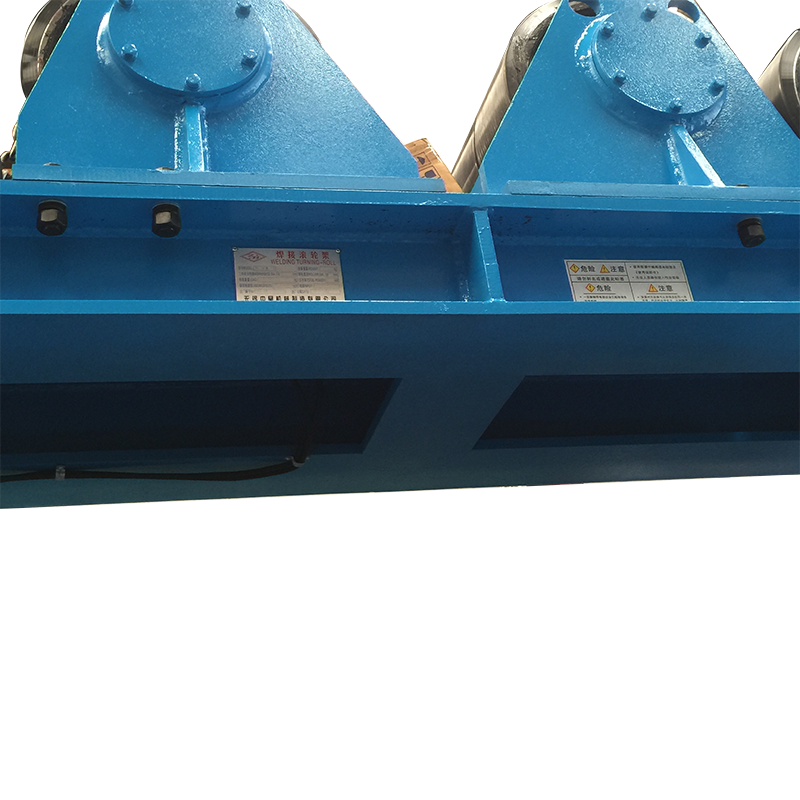 100T Heightened Adjustable Welding RotatorHandles ultra-heavy cylindrical workpieces with adjustable roller spacing and modular drive, suitable for large circumferential welds and assembly without a fixed foundation.View Product →
A column and boom keeps the flux blanket and contact tip at a fixed distance from the pool, which is exactly what keeps alloy pickup repeatable. Fit-up rotators handle the assembly stage before welding, and a heightened adjustable rotator clears large-diameter shells without re-engineering the foundation.
A short procurement checklist
Buy on the couple, not on the catalogue page — the five questions below eliminate most of the risk before the first arc is struck.
- Ask for the wire–flux couple certificate with mechanical properties, not a flux datasheet alone.
- Get the hydrogen class and the baking instruction in writing, including temperature and hold time.
- Check basicity against your plate strength and impact-test temperature.
- Confirm grain band and maximum current against your thickest joint and your highest current procedure.
- Agree a recycling policy: sieve size, maximum recovered share, container and storage conditions.
Frequently asked questions
Is agglomerated flux the same as fused flux?
No. Agglomerated flux is bonded and sintered at low temperature, so it can carry alloying elements; fused flux is melted at high temperature, which makes it dense and moisture-resistant but limits alloying.
Do I have to bake agglomerated flux before use?
Yes, in almost every case. Bake at 250–300 °C for 1–2 hours in layers of 30–50 mm and keep it in a holding oven at 120–150 °C until it reaches the hopper.
Can I mix recovered flux with new flux?
Yes, after sieving out fines and slag, but keep the recovered share at 20–30% unless the manufacturer states otherwise. Higher shares make bead shape and alloy pickup drift.
Can agglomerated and fused flux be used in the same hopper?
No. Their densities differ enough to segregate, which produces an inconsistent slag and unpredictable weld chemistry.
What plate thickness suits submerged arc welding?
Around 6 mm is a practical floor, and 10 mm and above is where the process pays for itself. Agglomerated flux is most often specified from about 12 mm upward on vessels, towers and heavy structural work.
Agglomerated flux is a chemistry tool, not a consumable commodity. Specify the wire–flux couple, protect the flux from moisture from the baking oven to the hopper, screen what you recover, and hold the arc steady with rigid positioning equipment. Do those four things and the low-hydrogen, high-toughness deposits that made you choose agglomerated flux in the first place become routine rather than a result you inspect for and hope to find.