 English
 русский
 Español
 عربى
Capacity Is a Load Envelope, Not a Single Tonnage
To choose welding positioner capacity, size the machine around the real load envelope: workpiece weight plus tooling, center of gravity, torque at the table or rollers, rotation speed, and duty cycle. A 5 t rating is only useful if the load sits near the table center, the work can be clamped safely, and the drive can start and stop that mass without shock.
In practice, capacity is the combination of static load, dynamic load, and moment. Static load is the mass on the fixture. Dynamic load appears when the part is lifted, indexed, or stopped. Moment appears whenever the center of gravity is offset from the rotation axis. Two parts can weigh the same and need very different positioners because one is compact and the other is a long, off-center weldment.
For buyers, the practical rule is simple: do not buy from the tonnage column alone. Ask for the rated load at a stated center-of-gravity offset, the permissible torque, the speed range at that torque, and the duty cycle. Those four numbers tell you more than a model name.
Start With the Real Workpiece Load
Start with the heaviest normal workpiece, then add tooling, clamps, and temporary supports; do not use the part’s catalog weight alone. A fabricated frame may gain several hundred kilograms from fixtures, and a tank section may be weighed without nozzles, flanges, or internal supports. The capacity calculation should use the complete rotating mass.
Use a load map rather than one number. Record the mass, overall dimensions, center-of-gravity offset from the rotation axis, and the worst-case overhung distance. If the center of gravity is 300 mm from the table center, the overturning moment is load multiplied by that offset. That moment, not just the mass, loads the bearing, table, and drive.
A common procurement starting point is to keep normal welding load at or below 70–80% of rated capacity and to keep assembly or impact loads inside the manufacturer’s stated limit. That is not a substitute for the builder’s calculation, but it leaves room for fit-up errors, weld distortion, and occasional tooling changes.
Check Torque, Center of Gravity, and Rotation Speed Together
Torque is the capacity limit that buyers miss most often; a positioner can hold a load that it cannot safely rotate. The required torque rises with the center-of-gravity offset, friction, acceleration, and any tilt axis. For a table positioner, check the tilt torque and the rotation torque separately. For a rotator, check the roller load and the drive torque needed to turn the shell.
Rotation speed must also be checked at the working diameter. Circumferential weld speed is roughly π × diameter × rpm. For a 1 m diameter shell and a 300 mm/min welding speed, the required rotation is about 0.10 rpm. That is very slow, so the positioner must be stable and controllable at low speed, not merely capable of a high maximum rpm. If the catalog lists only maximum speed, ask for the minimum controlled speed and speed stability under load.
Use this sequence: calculate the rotating mass, locate the center of gravity, calculate the moment, estimate acceleration and friction torque, then compare the result with the positioner’s rated torque at the intended speed. If the part is long, the roller spacing and shell diameter affect the load distribution as much as the total mass.
Match the Positioner Type to the Workflow
The right type is the one that presents the weld joint at a safe, stable height without forcing the operator to fight the fixture; capacity and geometry should be checked together. A conventional turntable is efficient for compact parts that can be clamped near the center. A double-column or L-type positioner suits offset or tall work where the table must reach the part. A fit-up rotator suits long cylinders that should turn on rollers rather than hang from a table.
| Type | Best for | Capacity check |
|---|---|---|
| Conventional turntable | Compact weldments, frames, flanges | Table load at center of gravity, tilt torque, low-speed control |
| Double-column or L-type | Tall or offset parts with access to several sides | Moment at full reach, column stiffness, floor loading |
| Fit-up rotator | Long shells, pipes, and tank sections | Roller load, shell diameter, drive torque, axial restraint |
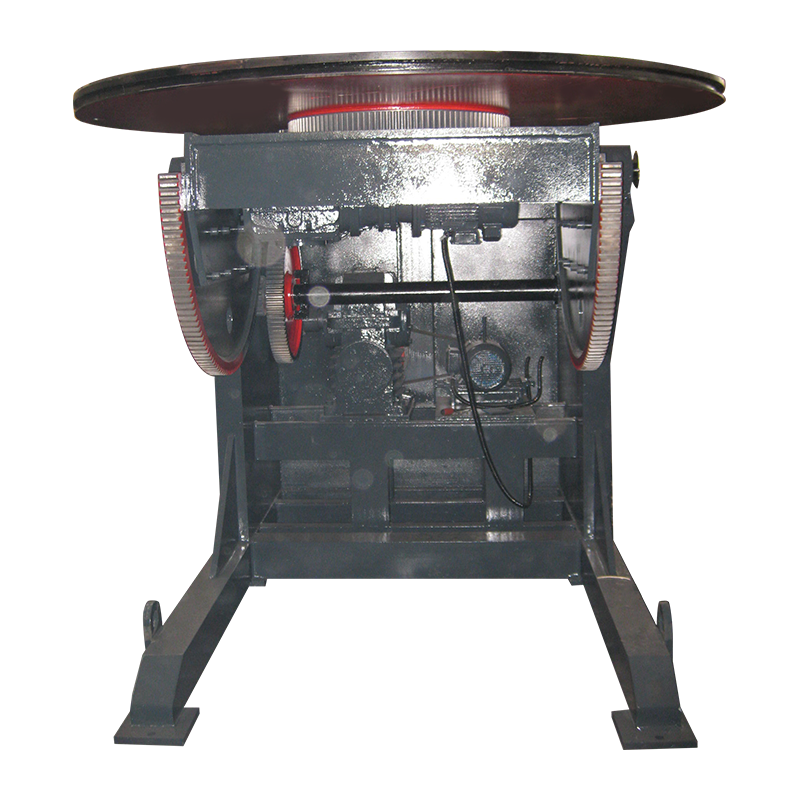
For table-mounted work, review the available welding positioner turntables by load and configuration. A 5 t conventional table is often adequate for small-to-mid frames, but not if the center of gravity sits far from the center or the part needs large tilt torque.
 5T Conventional Welding Positioner for Medium-to-Heavy WorkpiecesA 5-ton tilting and rotating table positioner with stepless speed control, suited to small-to-mid frames when load and center-of-gravity limits are checked.View Product →
Use Rotators When the Part Is Long, Not Just Heavy
Long cylindrical work usually belongs on a rotator because the load is shared by rollers and the weld can be turned at a stable speed; a table positioner may become a cantilever problem. The capacity check changes: roller load, shell diameter, center of gravity along the axis, and the drive torque needed to overcome friction and minor ovality.
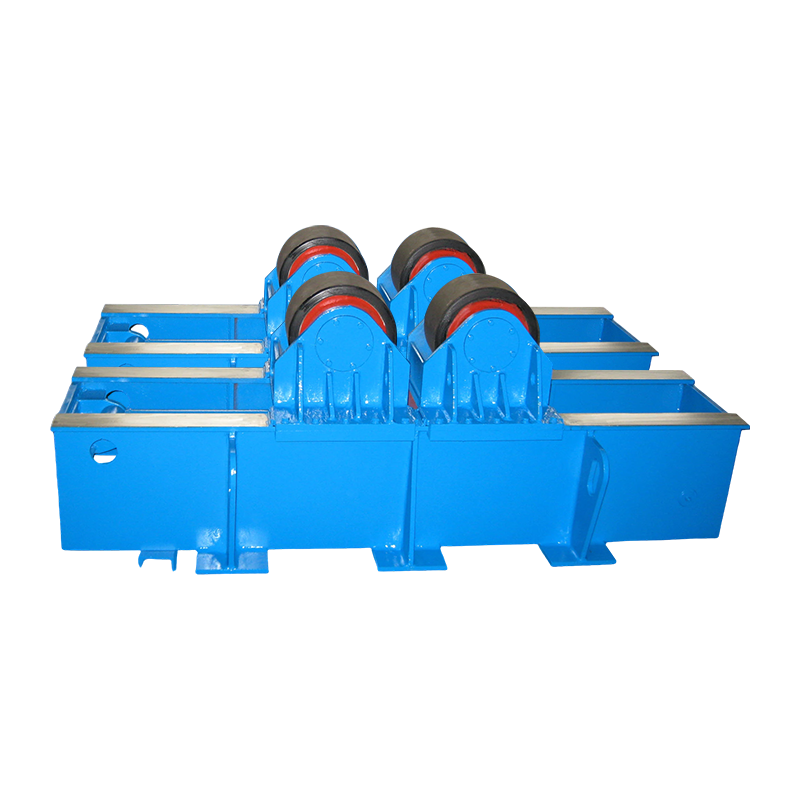
For a tank or pipe section, confirm the roller spacing and the shell’s unsupported length. If the work is a long cylinder rather than a table-mounted part, compare welding rotators and turning roller frames. Then compare the drive and roller arrangement against the actual shell.
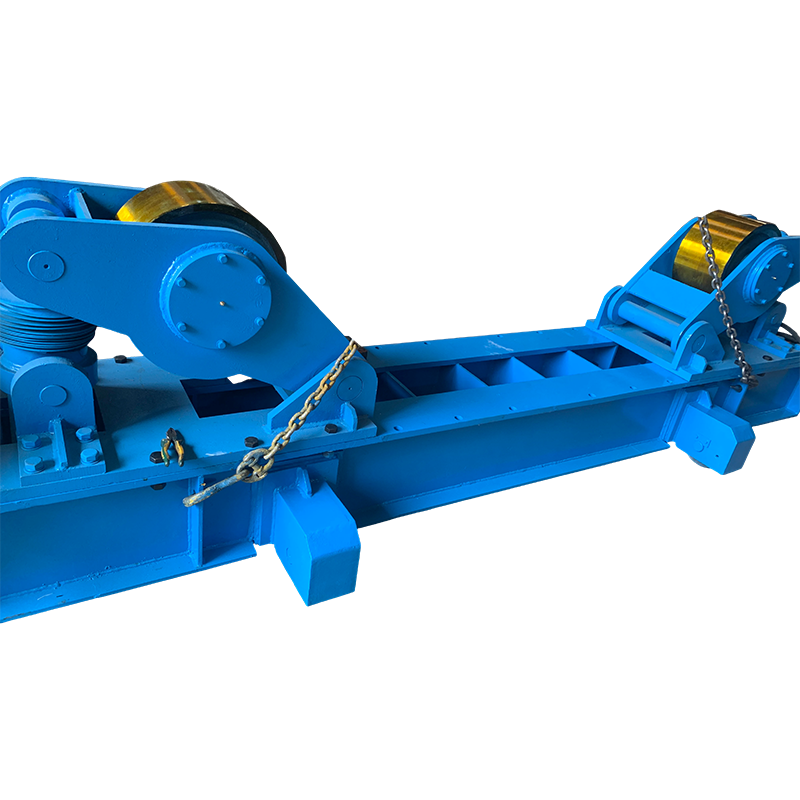 100T Fit-Up Welding Rotator with Manual Rail MovementA 100-ton rotator for assembling medium-to-large cylinders, with manual rail movement and adjustable roller spacing to support stable circumferential and longitudinal seam welding.View Product →
Confirm Duty Cycle, Controls, and Safety Margins
Duty cycle decides whether a positioner that looks adequate on paper will survive production; a machine rated for occasional indexing is not the same as one rated for continuous rotation. Ask for the duty cycle or ED rating, motor and inverter duty, brake rating, and permissible starts per hour. A welding cell that rotates almost continuously may need a different drive and cooling arrangement than a fit-up station that indexes a few times per shift.
Controls should match the operator’s task. Foot pedals, pendant controls, remote interface, and coordinated rotation with a welding column affect cycle time, safety, and weld quality. The positioner should hold position without drift, start and stop smoothly, and allow emergency stopping without uncontrolled movement.
- Check the load at the actual center-of-gravity offset, not just the rated tonnage.
- Confirm the speed range, torque at low speed, and speed stability under load.
- Verify the duty cycle, brake type, and permissible starts per hour.
- Review clamping, grounding, guarding, and emergency-stop access.
- Confirm floor loading, foundation, power supply, and lifting clearance.
A Practical Selection Checklist
Use the checklist below to turn a vague requirement into a quote that can be compared fairly; the goal is to make every supplier answer the same technical questions. For simple work, a standard unit may be enough. For mixed or heavy work, a customized positioner is often cheaper than adapting a standard unit after delivery.
- List every workpiece family and the heaviest normal load, including fixtures.
- Mark the center of gravity and the maximum offset from the rotation axis.
- Define the process: welding position, tilt angle, rotation speed, and duty cycle.
- Set the acceptance test: load test, rotation test, speed check, and safety check.
- Confirm the interface with the welding column, robot, or existing cell.
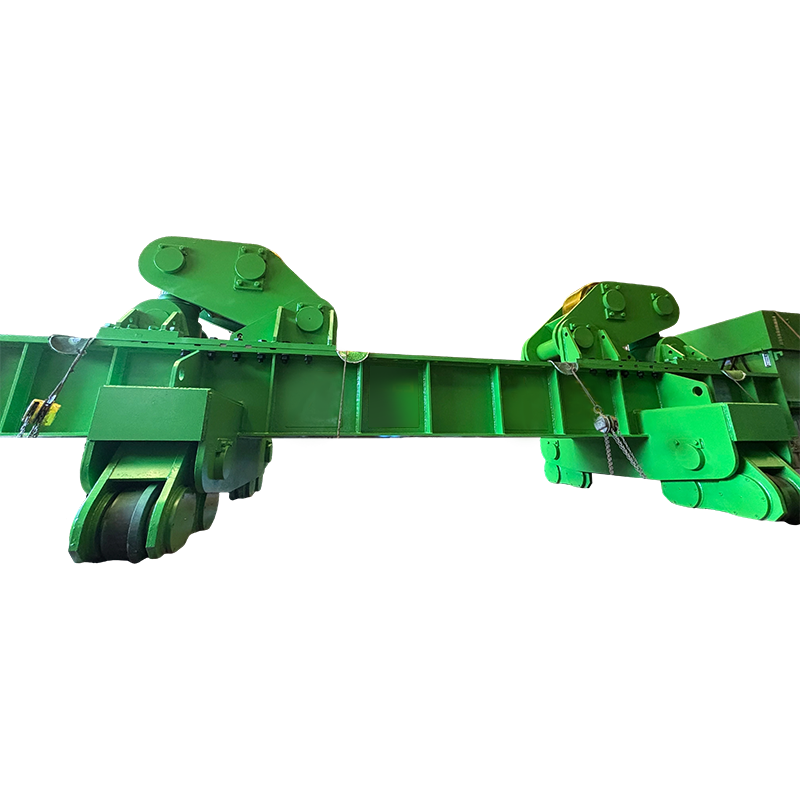
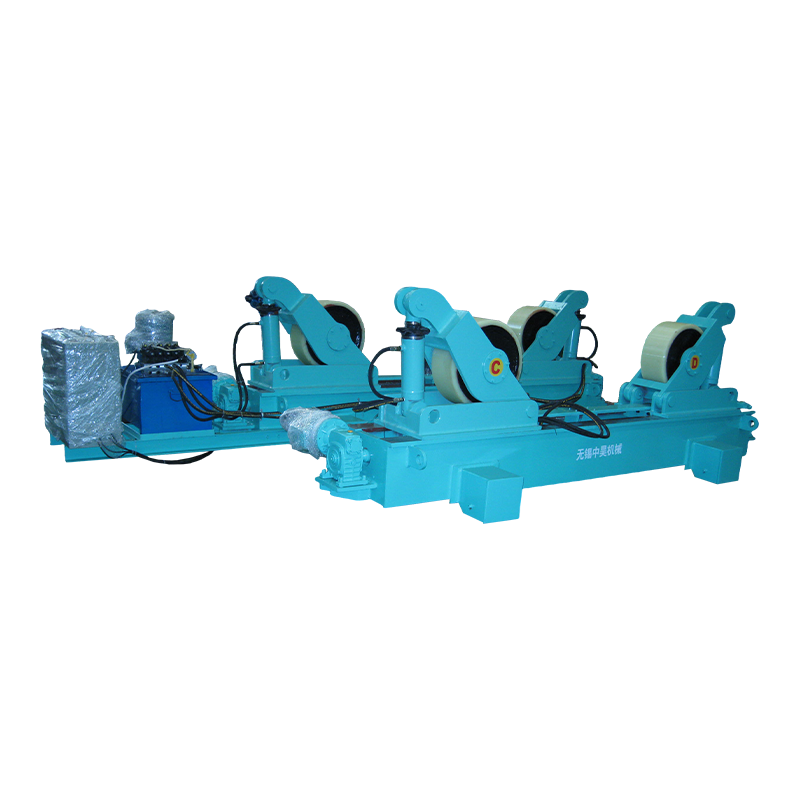
For unusual geometry, ask for a load diagram and a torque calculation with the quote. In the WeldNice range, conventional turntables cover small and mid-size work, while customized units address heavy or offset parts.
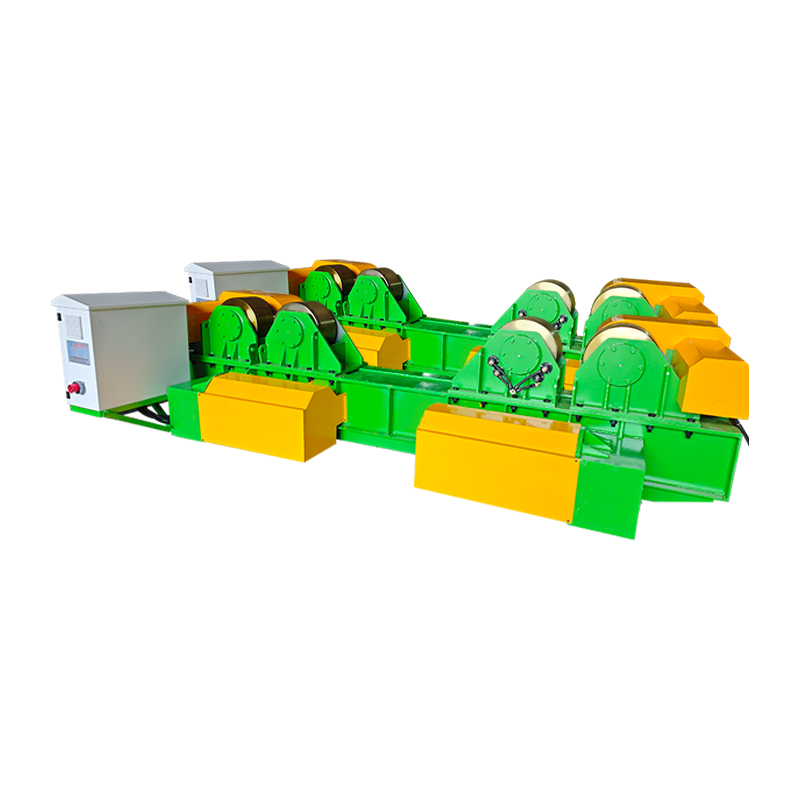
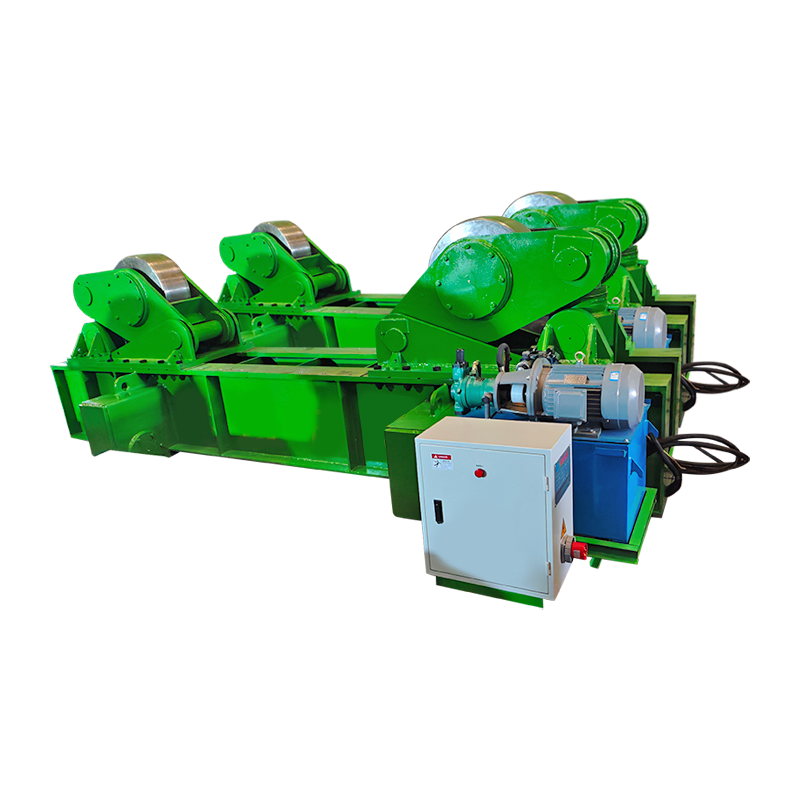
 300T Welding Positioner for Heavy Cylindrical WorkpiecesA 300-ton positioning system with self-aligning, bolt-adjustable roller frames for large-diameter cylinders, using polyurethane rollers and variable-frequency drive for stable rotation.View Product →
Procurement Risks to Check Before Ordering
The biggest procurement risk is comparing prices without comparing the capacity basis; a lower-priced unit may use a smaller drive, a shorter table, or a lighter bearing set. Ask each supplier to state the rated load at a defined center-of-gravity offset, the permissible torque, the speed at that torque, and the duty cycle. If those numbers are missing, the quote is not technically comparable.
Also confirm what is excluded: tooling, clamps, foundation bolts, transport, commissioning, training, and spare parts. A positioner that arrives without the right chuck or fixture can erase the savings from a lower machine price. For export projects, check the voltage, frequency, protection class, and documentation language before shipment.
Finally, agree on the acceptance test. A no-load rotation test is not enough for a heavy positioner. The test should include the rated load or an agreed test load, a low-speed stability check, a brake check, and a review of the safety devices.
Frequently Asked Questions
How do I calculate the required welding positioner capacity?
Calculate the total rotating mass first, then add the center-of-gravity offset and the torque needed to turn, tilt, or stop the load. Compare that result with the positioner’s rated load and torque at the intended speed, and keep a practical margin for tooling and fit-up variation.
Is a higher tonnage always better?
No. A higher tonnage can add cost, height, and floor load without improving the weld. The better choice is the machine that matches the load, center of gravity, speed, and duty cycle with a safe but not excessive margin.
What is the difference between load capacity and torque capacity?
Load capacity is the mass the structure and bearings can support. Torque capacity is the turning effort the drive and structure can transmit. A machine can support a load but still fail to rotate it smoothly if the center of gravity is too far from the axis.
When should I choose a rotator instead of a turntable positioner?
Choose a rotator for long cylindrical work such as tanks, pipes, and shells because the rollers support the part along its length. Choose a turntable for compact parts that need tilt and rotation around a table axis.
What should be included in a capacity quote?
The quote should include rated load, allowable center-of-gravity offset, torque, speed range, duty cycle, control type, tooling scope, foundation requirements, and the acceptance test. Without those details, price comparison is incomplete.