 English
 русский
 Español
 عربى
عربى20T Self-Aligning Airfoil Welding Rotary Machine
The 20T airfoil self-aligning welding rotary machine is widely used in industries such as pressure vessels, chemical equipment, wind turbine towers, p...
See Details
Welding large and elongated workpieces has always presented challenges in the manufacturing industry. Maintaining stability and precision throughout the welding process requires specialized equipment capable of handling heavy loads while ensuring consistent rotation quality. Manufacturers and welding professionals frequently ask about effective solutions that can improve accuracy, reduce manual intervention, and increase overall production efficiency in such demanding applications.
Large welding projects often involve workpieces that are not only heavy but also extensive in length. Traditional welding rotators may struggle to maintain balance when dealing with such components, leading to uneven rotation, potential misalignment, and decreased weld quality. Manual adjustments to achieve proper alignment can be time-consuming and require significant effort from operators.
When workpieces are not properly centered during rotation, several issues may arise. The weld pool may not distribute evenly, resulting in weak spots or inconsistent weld beads. The welding process may require frequent stops and adjustments, interrupting workflow and extending production time. Additionally, improper alignment can place uneven stress on both the workpiece and the welding equipment, potentially leading to increased wear and tear over time.
Manufacturing industries that produce extended components—such as pipelines, pressure vessels, structural beams, and long shafts—require equipment specifically designed to accommodate their dimensions. Standard welding rotators may not provide the necessary support along the entire length of these workpieces, which can compromise stability during rotation.
An extended machine body design addresses this concern by offering adequate support across longer sections of the workpiece. This feature ensures that weight is distributed evenly, reducing the risk of bending or deflection during the welding process. Proper support is essential for maintaining the geometric integrity of the workpiece and achieving consistent weld quality along its entire length.
Self-aligning technology represents a significant advancement in welding rotator design. This feature enables the equipment to automatically adjust and balance the workpiece, achieving proper centering without extensive manual intervention. By intelligently sensing the workpiece's position and making necessary adjustments, self-aligning systems enhance both efficiency and accuracy.
Implementing self-alignment in welding operations offers several practical advantages. Operators can load workpieces more quickly, as the equipment handles the fine-tuning of positioning. The reduction in manual adjustments not only saves time but also decreases the likelihood of human error in alignment. Furthermore, consistent alignment throughout the welding process contributes to more uniform heat distribution, resulting in improved weld integrity.
Modern welding rotary machines incorporate various design elements to address the challenges associated with large workpieces. Understanding these features can help manufacturers select the appropriate equipment for their specific applications and achieve better welding outcomes.
The extended body configuration of advanced welding rotators allows them to accommodate workpieces of considerable length. This design extends the support surface, ensuring stable rotation even when dealing with extra-long components. By providing continuous support along a greater portion of the workpiece, these machines help maintain alignment and reduce deflection during the welding process.
Equipment with extended body designs is particularly valuable in industries such as shipbuilding, oil and gas pipeline construction, and heavy machinery manufacturing, where elongated weldments are common. The ability to handle such components effectively can significantly expand a fabrication shop's capabilities and enable them to take on a wider range of projects.
Self-aligning mechanisms in welding rotators use various technologies to detect and correct workpiece positioning automatically. These systems may include sensors, adjustable rollers, or hydraulic components that work together to center the workpiece on the rotator. Once positioned, the system maintains this alignment throughout the rotation, compensating for any minor shifts that may occur during welding.
This intelligent adjustment capability reduces the need for operators to manually check and reposition the workpiece repeatedly. Instead, they can focus on monitoring the welding process itself, ensuring that parameters remain within the desired range. The combination of automatic alignment and operator oversight creates a more streamlined and reliable welding operation.
Self-aligning welding rotary machines with extended capabilities find applications across numerous industries where large components require welding. These sectors benefit from the increased efficiency, accuracy, and reliability that such equipment provides.
In the pipeline and pressure vessel industry, welding long sections of pipe is routine. These components require precise alignment to ensure proper fit-up and weld quality. Extended welding rotators with self-aligning features allow fabricators to rotate pipe sections smoothly while maintaining concentricity. This capability is essential for achieving high-quality circumferential welds that meet stringent industry standards and inspection requirements.
Manufacturers of structural steel components and heavy equipment often work with large beams, columns, and frames that require welding along extended lengths. The stability provided by extended welding rotators ensures that these heavy sections rotate smoothly, enabling welders to work comfortably around the entire circumference. Self-alignment features help accommodate variations in workpiece geometry, which is particularly useful when dealing with fabricated assemblies that may have minor dimensional differences.
The energy sector, including wind turbine manufacturing and power plant construction, frequently involves the welding of large cylindrical components such as towers and generator housings. These applications demand equipment capable of handling substantial loads while providing precise rotation control. Advanced welding rotators meet these demands by combining robust load capacity with intelligent alignment systems, ensuring that critical welds are performed accurately and efficiently.
Implementing advanced welding rotary machines can have a measurable impact on production efficiency and overall shop productivity. The time saved on setup, alignment, and manual adjustments translates directly into increased throughput and reduced labor costs.
With self-aligning capabilities, the time required to properly position workpieces before welding begins is significantly reduced. Operators can place the component on the rotator, and the system automatically handles the centering process. This streamlined setup means that welding can commence more quickly, allowing for more workpieces to be processed within a given time frame.
Stable rotation and proper alignment contribute to more consistent weld quality throughout the workpiece. When the workpiece rotates smoothly and maintains its centered position, welders can maintain steady travel speeds and consistent arc characteristics. This consistency results in uniform weld beads with predictable mechanical properties, reducing the likelihood of defects that would require rework.
The physical demands of manually aligning and positioning heavy workpieces can contribute to operator fatigue, which may affect both productivity and weld quality over time. By automating the alignment process, advanced welding rotators reduce the physical strain on operators, allowing them to maintain focus and precision throughout their shifts. This ergonomic benefit contributes to a safer working environment and helps sustain productivity levels.
Selecting a welding rotary machine that meets your specific requirements involves considering several factors beyond just load capacity. The length of workpieces you typically handle, the precision required for your applications, and the volume of production all play a role in determining which features will provide the greatest benefit.
When assessing equipment options, start by thoroughly analyzing the characteristics of the workpieces you weld most frequently. Consider not only their weight but also their length, diameter, and any variations in geometry. Understanding these parameters will help you identify whether an extended body design and self-aligning functionality would provide meaningful advantages for your operations.
Your production volume and workflow requirements should also influence your equipment decision. High-volume operations benefit significantly from features that reduce setup time and increase consistency, as even small efficiency gains compound over many cycles. For lower-volume, high-precision work, the emphasis may be more on the accuracy and repeatability that self-aligning systems can provide.
While advanced welding rotary machines may represent a higher initial investment, their long-term value should be evaluated based on the benefits they provide. Consider factors such as reduced labor costs, decreased rework due to improved weld quality, and the ability to take on projects that were previously challenging. When viewed from this perspective, equipment that enhances efficiency and capability can deliver substantial returns over its service life.
Welding large and extended workpieces presents inherent challenges that require specialized equipment to overcome. Self-aligning technology combined with extended machine body designs offers an effective solution, providing the stability, precision, and efficiency needed for demanding applications. By automatically adjusting workpiece alignment and supporting longer components, these machines enable manufacturers to improve weld quality, increase productivity, and expand their fabrication capabilities.
The 10T Extended Self-Aligning Welding Rotary Machine exemplifies how advanced design features can address practical welding challenges. Its extended body accommodates large workpieces, while the self-aligning functionality ensures proper positioning throughout the welding process. For manufacturers seeking to enhance their operations involving substantial welding projects, such equipment provides a reliable foundation for achieving consistent results and operational efficiency.
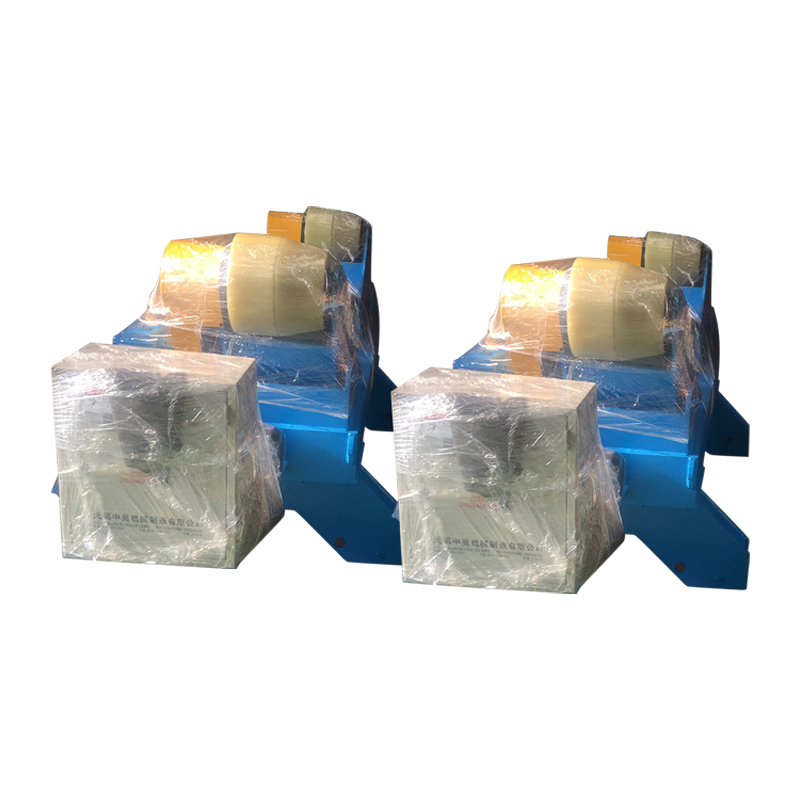
The 20T airfoil self-aligning welding rotary machine is widely used in industries such as pressure vessels, chemical equipment, wind turbine towers, p...
See Details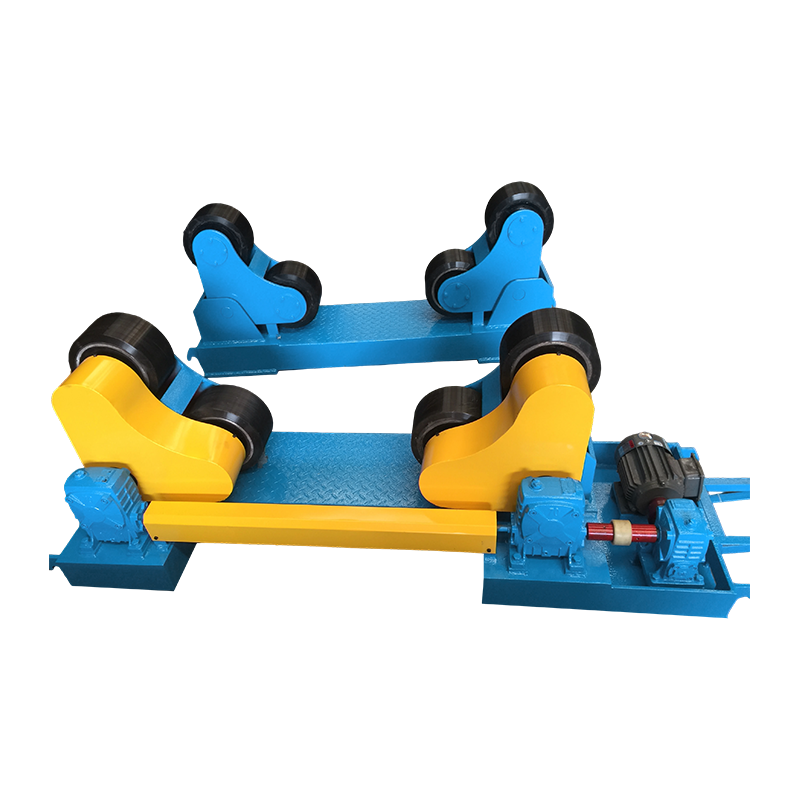
The 10T Extended Self-Aligning Welding Rotary Machine features a self-aligning design, automatically adjusting the balance of the workpiece to ensure ...
See Details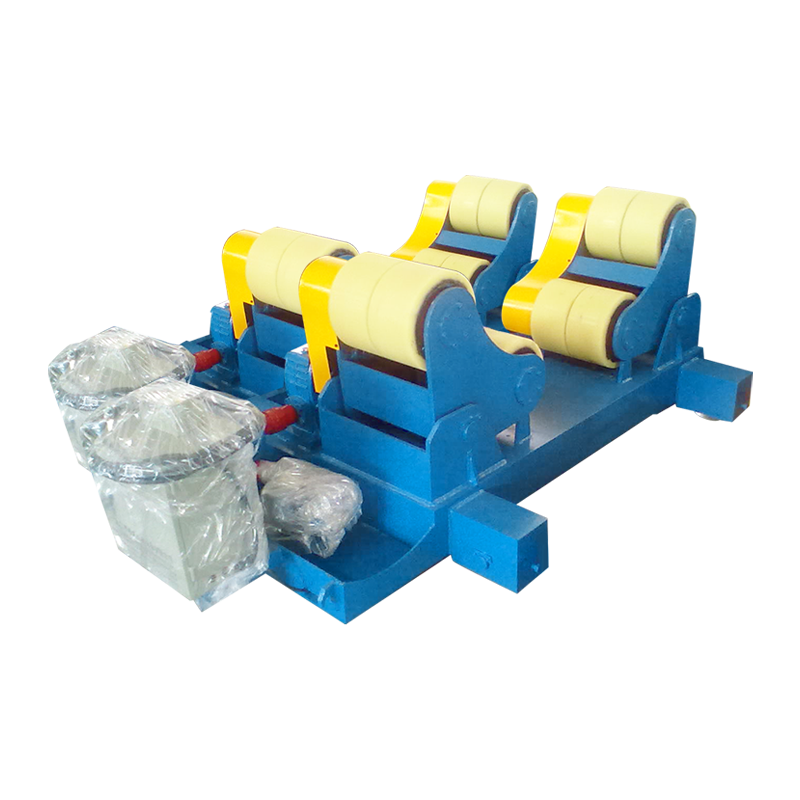
This 10T Manual Track Widened Self-Aligning Welding Rotary Machine combines manual track movement with self-aligning functionality. It ensures stable ...
See Details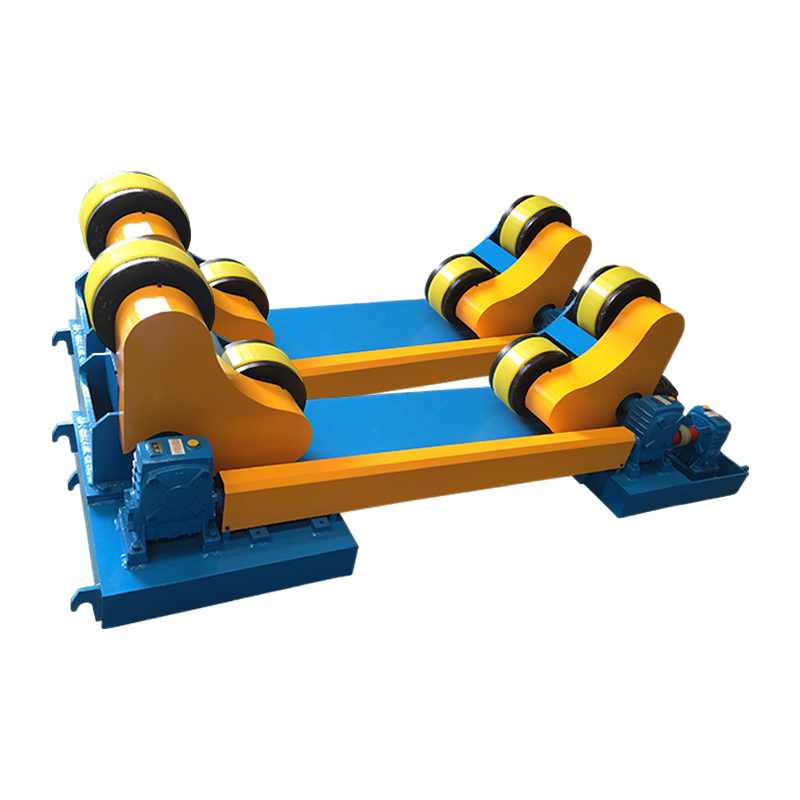
The 10T self-aligning welding rotary machine (with manual track movement and extended version) is a high-performance device specifically designed for ...
See Details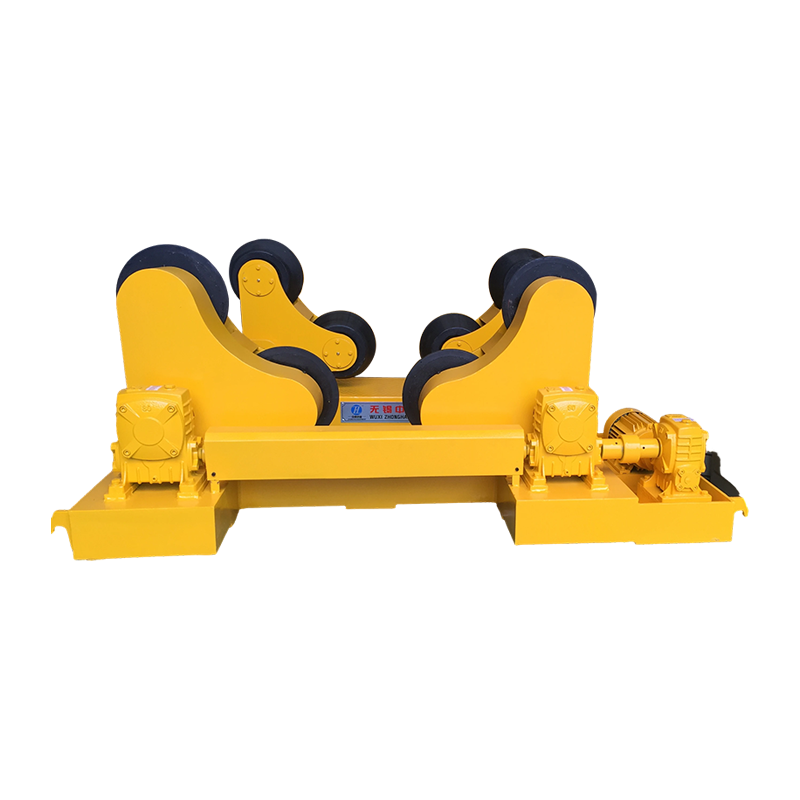
The 10T Self-Aligning Welding Rotator-Winged Type is a specialized machine for assisting in the circumferential welding of large cylindrical workpiece...
See Details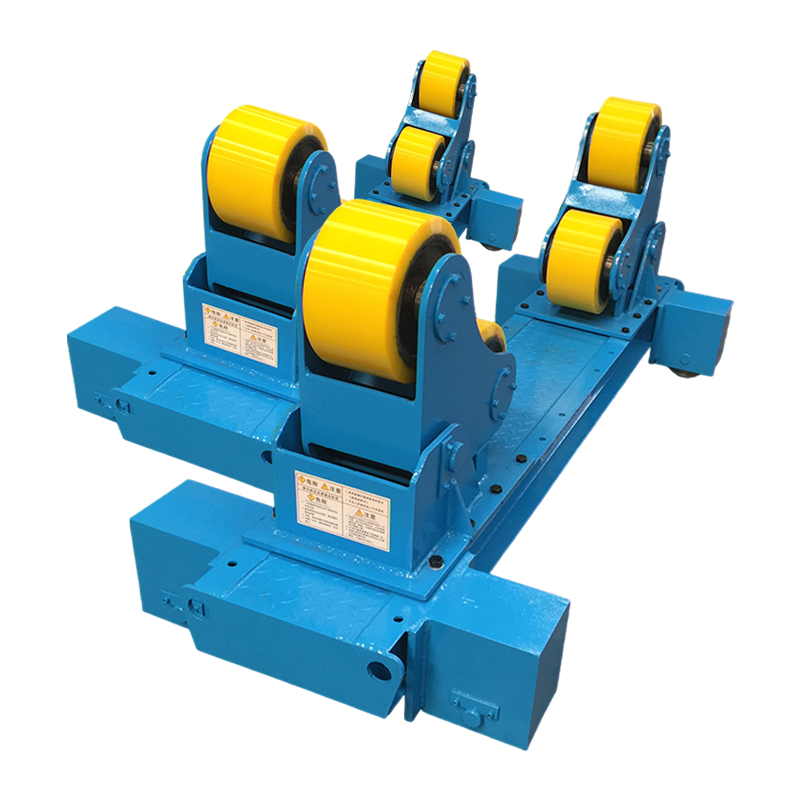
The 20T Self-Aligning Welding Rotator with Manual Orbital Movement and Additional Double Cycloidal Connected Reducer is a specialized piece of equipme...
See DetailsCopyright 2025 Wuxi WeldNice Heavy Industry Technology Co., Ltd. All Rights Reserved Custom Automatic Welding Equipment Manufacturers



sales@weldnicefactory.com