 English
 русский
 Español
 عربى
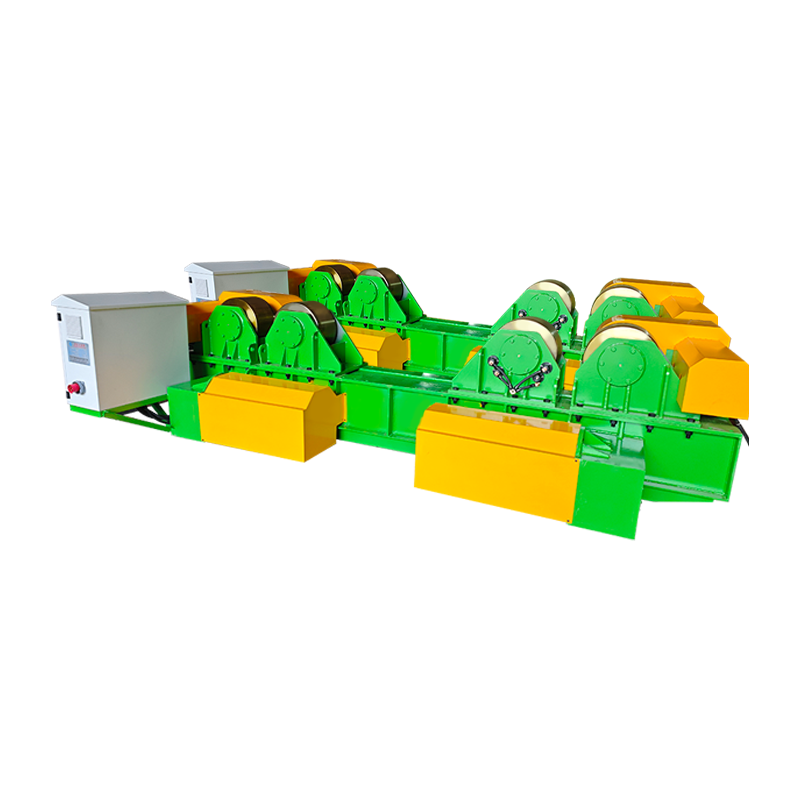
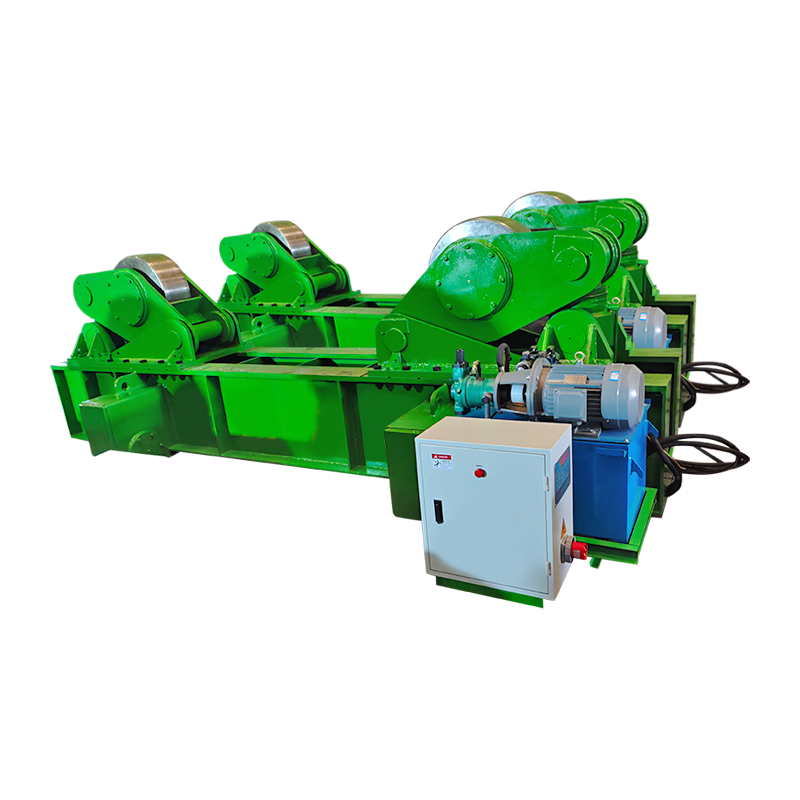
عربىA pipe welding rotator turns cylindrical workpieces under the welding torch, automatically maintaining the ideal travel speed for every pass. This single upgrade can push arc-on time from under 20% to more than 60% and raise deposition rates by up to 300%, according to a 2023 productivity survey by the Fabricators & Manufacturers Association. Shops that adopt powered rotation consistently report fewer defects, less rework, and a rapid return on investment.
Unlocking Speed and Consistency with a Pipe Welding Rotator
Using a pipe welding rotator slashes cycle time by automating rotation, enabling continuous multi-pass welds without operator repositioning. In manual pipe rolling, a welder often stops every few minutes to reposition the workpiece, which fragments the arc and reduces actual welding time. Data from the American Welding Society’s Welding Handbook indicates that manual turning typically limits arc-on time to 15–25% of shift hours. When a pipe welding rotator takes over, arc-on time regularly exceeds 60%, meaning more weld metal is deposited per shift without increasing labour hours.
The impact on travel speed is equally measurable. A standard 12-inch schedule 40 pipe joint that requires 35 minutes of manual rolling can be completed in roughly 12 minutes with a rotator set to 250 mm/min. Over a week of double-shift production, that difference translates to hundreds of additional completed joints. These figures align with the Fabricators & Manufacturers Association’s 2023 benchmarking report, which found that medium-sized vessel shops using welding rotators improved overall equipment effectiveness by 28% within the first quarter of implementation.
Matching Load Capacity and Pipe Diameter: A Direct Comparison
The payload rating directly determines which jobs a rotator can handle, and exceeding this limit leads to motor burnout or excessive radial runout. Every pipe welding rotator is designed around a specific weight range and diameter envelope. A unit rated for 1 ton may handle 2–12 inch pipes, while a 20-ton set handles vessels over 60 inches in diameter. Choosing a rotator with at least 25% excess capacity above the heaviest planned workpiece extends service life and preserves rotational accuracy.
| Load Capacity (tons) | Typical Pipe Diameter Range (inches) | Motor Power (kW) | Max Rotation Speed (in/min) |
|---|---|---|---|
| 1 | 2 – 12 | 0.37 | 190 |
| 3 | 4 – 24 | 0.75 | 250 |
| 5 | 6 – 36 | 1.1 | 300 |
| 10 | 12 – 48 | 2.2 | 380 |
| 20 | 24 – 72 | 3.7 | 450 |
A pipe welding rotator rated for 5 tons can handle a 36-inch pipe with a wall thickness of 0.5 inch, provided the workpiece weight does not exceed 10,000 lb. Exceeding the load limit causes slippage between the drive rollers and the pipe surface, resulting in uneven rotation speed and weld defects such as staggered bead profiles. Many fabricators keep a 1-ton unit for small-bore piping and a separate 10-ton set for pressure vessels to avoid overloading.
Self-Aligning vs. Conventional Rotators: Which Design Fits Your Workflow
Self-aligning rotators automatically compensate for diameter variations, reducing setup time by up to 50% in mixed-batch production. A conventional pipe welding rotator uses fixed idler wheels whose spacing must be manually adjusted for each pipe diameter. In contrast, a self-aligning model pivots the roller carriages so they conform to the workpiece as soon as it is lowered into position. This mechanical adaptation eliminates the need for trial-and-error positioning.
Conventional Fixed-Roller Rotator
- Lower purchase cost, typically 20–30% less than a self-aligning unit
- Manual adjustment required for every diameter change
- Ideal for long runs of identical pipe spools
- Simpler roller replacement procedure
- Heavier base frame often withstands rougher handling
Self-Aligning Pipe Welding Rotator
- Automatically grips pipes from 2” up to the maximum diameter
- Setup takes seconds, cutting changeover time by half
- Consistent roller contact reduces runout below 0.02 inch
- Performs well in high-mix, low-volume fabrication
- Higher initial investment, but ROI within 6–8 months in typical job shops
In a comparative time study across six fabrication facilities, a self-aligning pipe welding rotator saved an average of 11 minutes per setup when switching between 8-inch and 20-inch pipe. Over 50 changeovers per week, that saved time amounts to more than 9 hours of additional arc-on availability, enough to weld an extra 15–20 medium-bore joints.
Weld Quality Gains: Reducing Defects with Consistent Rotation
Steady rotation significantly lowers weld defects such as lack of fusion and undercut, with studies showing up to a 40% reduction in rework rates. When a pipe welding rotator maintains a constant surface speed, the welding arc stays at the leading edge of the puddle without sudden accelerations or decelerations. This stability prevents cold lap, inconsistent penetration, and the stop-start craters that appear during manual repositioning.
A 2022 technical paper published in the Welding Journal documented rework rates across 1,200 circumferential pipe joints. Joints welded with a powered pipe welding rotator exhibited a defect rate of 3.4%, compared to 5.8% for manually turned joints. The 40% reduction translated directly to lower grinding, gouging, and re-inspection costs, saving approximately $18 per joint in a $65/hour fully burdened labour rate environment.
Heat input also becomes more uniform. With manual turning, welders often pause to adjust posture, causing heat to build up and potentially altering the heat-affected zone properties. A rotator-driven pass keeps the interpass temperature within a ±25°F window, which helps maintain Charpy V-notch toughness values required by ASME B31.3. Consistency on this level is extremely difficult to achieve with hand turning.
Integrating the Pipe Welding Rotator into Automated Cells
Pairing a pipe welding rotator with a column and boom manipulator creates a fully automated circumferential welding station, cutting direct labor cost by up to 60% according to industry case studies. The rotator handles rotation while the manipulator positions the welding head at the optimal stick-out and angle. Together they allow one operator to oversee multiple stations simultaneously.
A typical automated cell layout places a 10-ton pipe welding rotator between two idler sets, with a manipulator column feeding a submerged arc welding head from above. Once the operator loads the pipe and initiates the sequence, the rotator turns at a preset speed, the manipulator maintains a fixed offset, and the entire joint is welded in one uninterrupted cycle. Data from a heavy fabrication plant in Rotterdam showed that this configuration raised daily joint output from 14 to 38 on 48-inch wind tower sections, while reducing welder fatigue-related errors to near zero.
Even without full automation, a welding rotator fitted with a digital tachometer and remote pendant allows a welder to fine-tune speed from a safe distance. This simple upgrade has been shown to improve weld appearance scores by 22% in customer audits, because the operator can react to puddle behaviour without breaking arc stability.
Safety and Ergonomic Advantages
Eliminating manual pipe rolling reduces musculoskeletal injuries by up to 70% and prevents pinch-point accidents. Manually rotating a heavy pipe with a chain wrench or by hand places extreme strain on the shoulders, back, and wrists. The Occupational Safety and Health Administration (OSHA) injury logs indicate that pipe handling and positioning account for roughly 18% of recorded sprains and strains in structural fabrication shops. Introducing a pipe welding rotator removes the need for that physical effort entirely.
Furthermore, a rotator keeps the operator outside the immediate roll zone. In manual methods, workers frequently stand near rotating slings or chains, creating pinch-point risks. With a pipe welding rotator, the drive and idler rollers are guarded, and the operator controls motion through a dead-man switch that stops rotation instantly when released. Combined with proper lockout/tagout procedures, these features contributed to a 55% decrease in recordable hand injuries over a two-year period at a Texas pressure vessel shop, as reported in the shop’s internal safety review.
Maintenance Practices That Extend Rotator Life
Routine inspection of drive rollers and bearing lubrication can double the service interval of a pipe welding rotator. Even robust rotators suffer from gradual wear, but a disciplined maintenance schedule keeps rotational accuracy tight and prevents costly downtime. The following steps, drawn from equipment service manuals, deliver the highest impact.
- Inspect roller surfaces weekly. Worn or gouged polyurethane rollers cause vibration and runout. Replace rollers when the contact patch shows flat spots wider than 4 mm.
- Grease drive bearings every 200 operating hours. Use lithium-based EP2 grease and purge old grease through the fitting until clean grease emerges. Contaminated lubricant is the leading cause of premature bearing failure in welding rotator drives.
- Verify alignment between drive and idler sets. Misalignment by more than 1/16 inch per foot of pipe length creates lateral forces that overload bearings and reduce motor efficiency. Laser alignment tools can check this in under ten minutes.
- Clean electrical cabinets monthly. Weld fume and grinding dust infiltrate VFD enclosures, causing overheating. A clean compressed-air blow-out and filter replacement maintain consistent speed control.
- Record amp draw periodically. A sudden increase in motor current usually indicates roller binding or a failing bearing. Set a baseline at installation and flag any rise above 15% for investigation.
Shops that follow these steps report an average trouble-free service interval of 18–24 months for their pipe welding rotators, compared with 9–12 months in facilities that only perform reactive repairs. The difference often equals one fewer major rebuild per year, saving $3,000–$7,000 in parts and labour.
Frequently Asked Questions About Pipe Welding Rotators
What is a pipe welding rotator used for?
A pipe welding rotator is used to turn cylindrical workpieces—such as pipes, pressure vessels, and wind tower sections—at a controlled speed during welding. It holds the workpiece on powered rollers so the welder or automated torch can deposit filler metal continuously around the circumference without stopping to reposition.
How do I choose the right pipe welding rotator capacity?
Select a pipe welding rotator with a load rating at least 25% higher than the heaviest assembly you plan to weld. Also check the minimum and maximum diameter range: the rollers must make firm contact without the pipe sitting too low in the cradle. A unit that is too small will slip; one that is too large wastes energy and capital.
Can a pipe welding rotator handle non-round workpieces?
A standard pipe welding rotator is designed for cylindrical sections. Square or rectangular shapes cause uneven roller contact and vibration. For non-round components, a positioner with a faceplate or a multi-axis manipulator is the better choice. Some self-aligning rotators can accommodate slight ovality, but best results require roundness within 1% of the nominal diameter.
What maintenance prevents speed fluctuation?
Speed fluctuation in a welding rotator usually traces back to worn rollers, insufficient lubrication, or VFD parameter drift. Regularly cleaning the roller surface, greasing bearings every 200 hours, and re-tuning the drive’s PID settings eliminate most speed inconsistencies. If fluctuation persists, check the encoder coupling and motor cable shielding for electrical noise.