 English
 русский
 Español
 عربى
Answer first: the tools and equipment for metal fabrication that decide whether a job is profitable are the machines that cut the plate, turn the workpiece and keep the torch in position - not the tools in the hand toolbox. For a shop building 3 m diameter vessels or 12 m structural beams, that means four groups: cutting machines, workholding and positioning equipment (rotators and positioners), welding automation (column and boom systems, welding heads), and the supporting items such as grinders, clamps, measuring tools, fume extraction and PPE.
Metal fabrication is usually defined as four operations: cutting stock to size, forming it by rolling, bending or pressing, joining it by welding or bolting, and finishing it by grinding, blasting and painting. Every operation has its own equipment list, and the priorities shift with part size. Sheet metal work is dominated by shears, press brakes and hand tools, while heavy fabrication of tanks, towers, pipes and structural steel is dominated by the machines that handle weight and heat.
Here is the practical test. A 30-ton, 3 m diameter tank shell welded horizontally takes two welders roughly one shift per circumferential seam, because they must stop, reposition with a crane and climb back into position. Put the same shell on a powered welding rotator with the seam held in the flat position, and the same two welders finish the seam in about 40 minutes using submerged arc welding at 500-700 A. That single change is normally worth more than buying a second welding machine.
Cutting Equipment Comes First: Flame, Plasma or Laser?
Cutting is the first step in every fabrication job, and it is where the wrong machine creates the most rework, because a cut edge that is out of square or heat-distorted will not close cleanly in a weld joint.
How the main cutting processes compare
The figures below are typical shop values. Exact numbers depend on the machine, the gas or nozzle set and the material grade.
| Process | Typical thickness | Kerf and tolerance | Where it fits |
|---|---|---|---|
| Oxy-fuel (flame) | 6-150 mm and above | Kerf 2-4 mm, tolerance around +/-1.5 mm, wide heat-affected zone | Thick carbon steel plate and structural profiles; lowest cost per metre above 25 mm |
| Fine plasma | 0.5-50 mm | Kerf 1.5-3 mm, tolerance close to +/-0.5 mm, light dross on some grades | Stainless steel and aluminium, mixed-material shops, moderate thickness |
| Fibre laser | 0.5-25 mm, thinner is faster | Kerf 0.2-0.5 mm, tolerance near +/-0.1 mm, minimal distortion | Brackets, sheet and tight nesting where throughput matters |
What to check on a CNC cutting machine
- Table size and rail length must fit the largest plate you realistically buy, plus nesting margin.
- Drive type: gantry with dual-side drive for wide tables; single-side drive is cheaper but deflects under load.
- Control and nesting software: offline programming usually saves more time than a higher cutting speed.
- Fume and dust extraction, which protects the operator and is required in most workshops.
- Repeatability: ask for a figure in mm per metre and verify it with a cut sample rather than a brochure.
- Options worth paying for: automatic torch height control, bevel cutting heads and dual-torch flame cutting for long straight edges.
Workholding and Positioning: The Equipment That Pays Back Fastest
If a shop can afford only one upgrade, positioning is usually the better investment than another welder, because positioning changes the welding position from vertical or overhead to flat, and flat is where high deposition rates are possible.
Welding rotators: match the wheel set to the shell, not just the tonnage
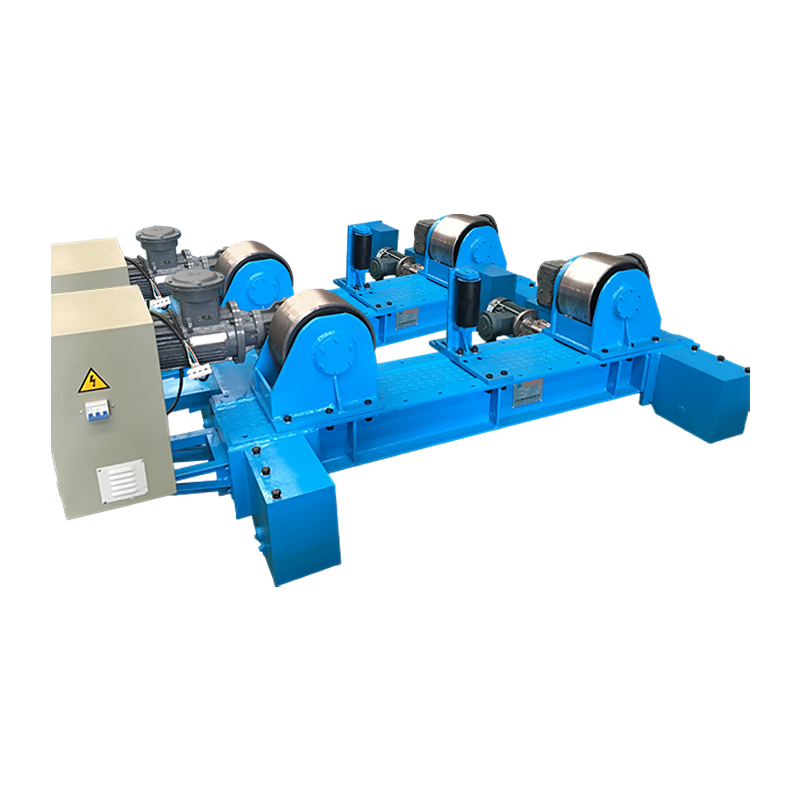
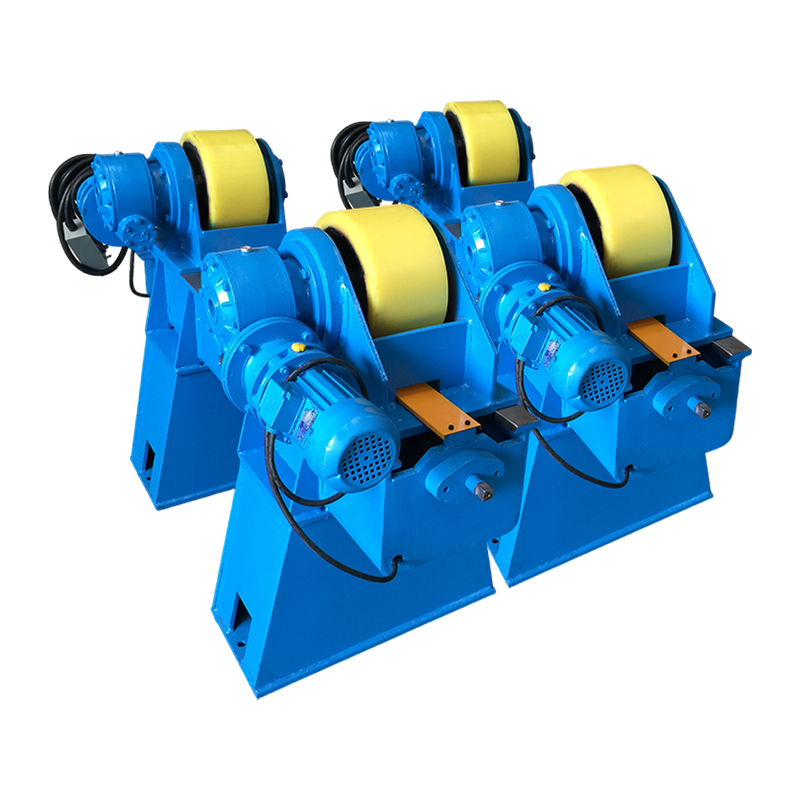
A welding rotator, also called a turning roll, roller frame or pipe rotator, is a pair of powered and idler wheels that rotate a cylindrical workpiece under a welding head or a manual welder. Load capacity is rated per pair and has to cover the workpiece, the tooling and any internal fixtures; a 100 t set is not overkill for an 80 t shell, because an off-centre seam shifts load onto one wheel.
- Wheel type: polyurethane wheels protect machined or painted surfaces, steel wheels carry the heaviest loads.
- Configuration: self-aligning units let the workpiece set the wheel angle, which suits varied diameters; adjustable units use fixed angles and suit repeated production of one diameter; fit-up rotators add hydraulic lift and horizontal pushing to close longitudinal seams on tank shells.
- Diameter range: machines are specified by minimum and maximum job diameter, so check that the range covers your smallest tank as well as your largest.
- Drive and control: variable-frequency drive with pendant or foot control, rotation speeds typically between 100 and 1000 mm per minute, plus inching for alignment.
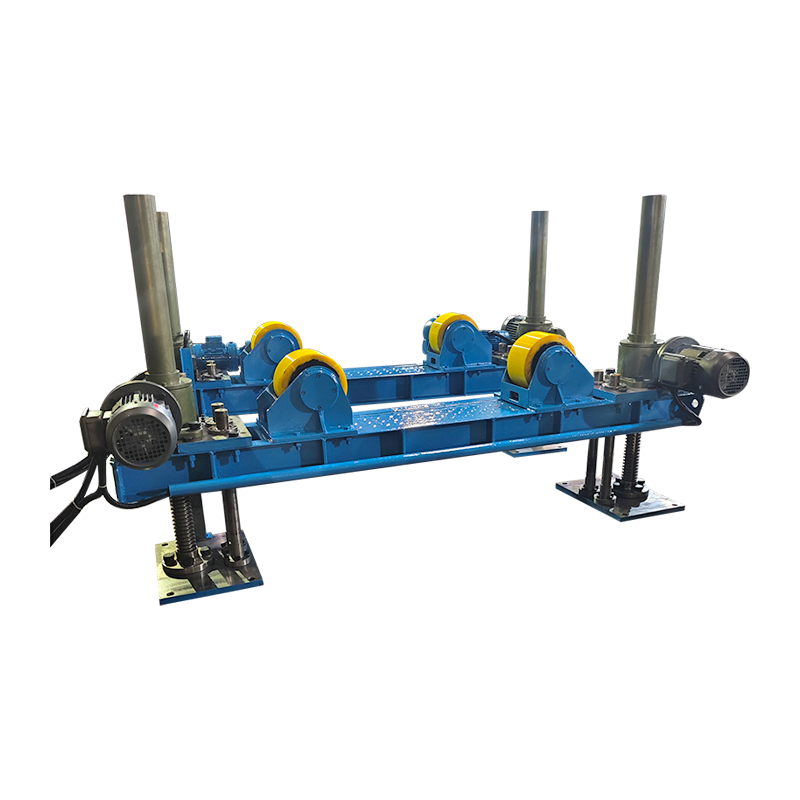
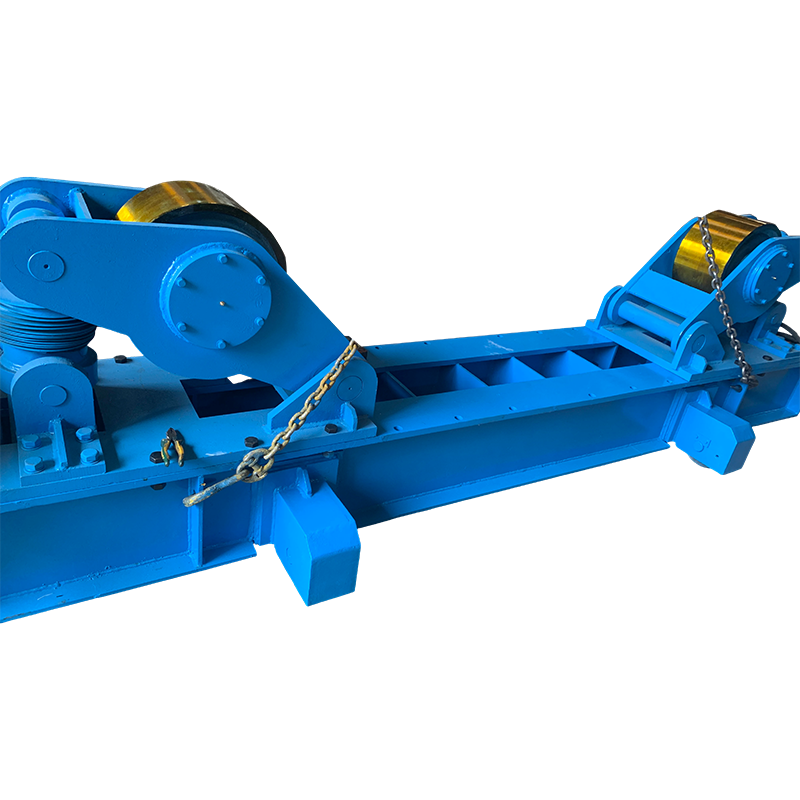 100T Fit-Up Welding Rotator with Manual Orbital MovementHeavy-duty 100-ton fit-up rotator for cylindrical workpieces; manual rail movement, adjustable center distance, and stable seam welding support for large vessels.View Product →
For large vessels, a fit-up rotator in the 100 t class with manual orbital movement is a common starting point, and the same logic explains how welding rotators transform metal tank and pipe manufacturing in practice.
Welding positioners: torque and eccentricity matter more than the load rating
A welding positioner is specified by torque, usually expressed in kNm, together with the eccentricity of the load, not by the load in kilograms alone. A 3 t positioner with a large table may only produce 3-6 kNm of tilting torque, and a long workpiece clamped away from the table centre multiplies the demand.
- Load versus torque: ask the supplier to calculate with your actual part and its centre of gravity.
- Configuration: conventional single-column turntables cover 30 kg to tens of tonnes, double-column and L-type tables handle offset or elongated parts, and servo-controlled units hold position accurately for automated welding.
- Table features: T-slots or tapped holes for clamping, a hollow centre for cables and gas, and a stated flatness figure for precise assembly.
- Movement: 360 degree rotation with 0-90 degree tilt is standard, so confirm the speed range for welding compared with load and unload.
 5T Conventional Welding Positioner for Medium-to-Heavy WorkpiecesFive-ton conventional positioner with tilting and rotation, variable-frequency speed control, and multiple control modes; suited to common industrial workpieces while balancing capacity and cost.View Product →
A conventional 5 t turntable with standard rotation and tilt will handle most small frame and bracket assemblies; larger or awkward parts usually move to the wider welding positioner and turntable range.
Column and Boom Systems and Automatic Welding
Once the workpiece turns reliably, the next bottleneck is the torch. A welding manipulator, often called a column and boom, holds the welding head, keeps stick-out constant and lets one operator run a seam from a control station instead of standing over the arc.
SAW or TIG column and boom?
- Submerged arc welding suits carbon steel from about 6 mm upward, with deposition rates of several kilograms per hour and a flux recovery system.
- TIG suits stainless steel, aluminium and thin, high-quality joints; it is slower and needs accurate arc length control plus a cold wire feed.
- Custom booms are specified by boom stroke, column height, travel bogie and traverse type to suit long vessels or restricted bay layouts.
- Integration: manipulators are commonly ordered together with a rotator and a shared control system, so rotation speed and welding speed stay synchronised.
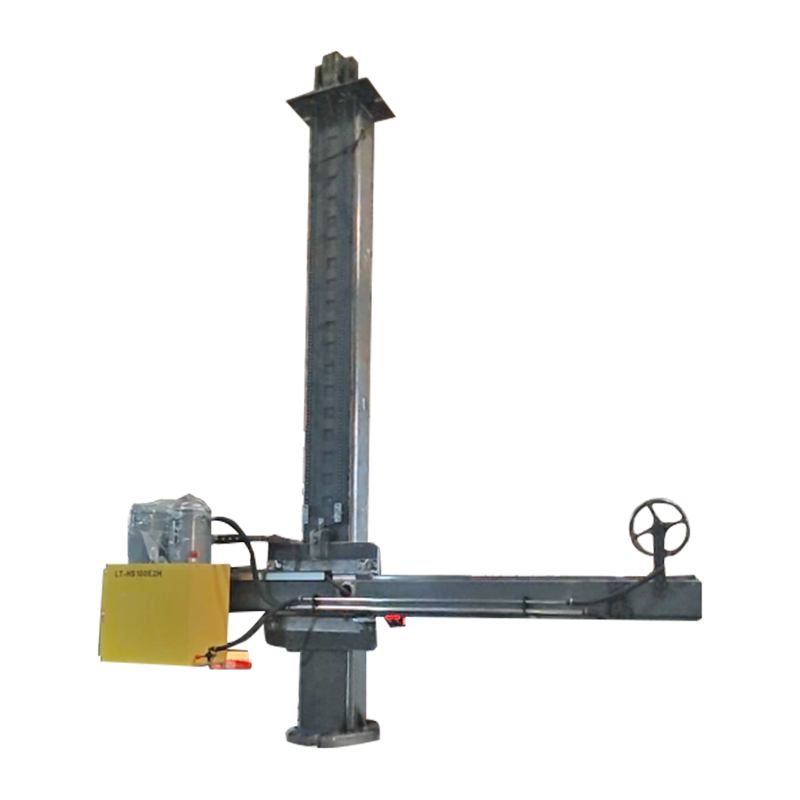 4030 Customized Column & Boom with Electric Orbital MovementCustomized welding column and boom with electric orbital movement; part of the welding manipulator family that holds a welding head with steady stick-out.View Product →
Supporting Tools and Consumables You Still Need
Capital equipment does not remove the need for small items, and a missing clamp stops a 100 t rotator just as effectively as a worn grinding disc.
- Angle grinders with a stock of grinding, cutting and flap discs for weld dressing and edge preparation.
- Clamps: F-clamps, edge clamps, pipe alignment clamps and strongbacks for fit-up before tacking.
- Measuring tools: tape, steel rule, welding gauge for leg length and throat, levels and a vernier calliper.
- Surface preparation: wire brushes, needle scalers and degreasing tools, because porosity usually starts with oil and mill scale.
- Fume extraction and PPE: correct helmet shade, gloves, leathers, hearing protection and extraction or respirators for stainless and galvanised work.
Matching Equipment to the Job: A Selection Table
The table below maps common fabrication problems to the equipment that solves them and to the specification that decides whether the purchase actually works.
| Job or problem | Equipment | Specification that decides success | Typical range |
|---|---|---|---|
| Tank and vessel shells | Fit-up welding rotator with hydraulic lift | Load per pair, diameter range, wheel width | 10-1000 t |
| Pipe and pressure vessels | Self-aligning or adjustable welding rotator | Wheel configuration, speed range, drive type | 1-300 t |
| Small assemblies and frames | Welding positioner or turntable | Torque in kNm, eccentricity, table flatness | 30 kg-50 t |
| Long seams on vessels | Column and boom manipulator | Boom stroke, column travel, head type | 3-8 m booms |
| Plate preparation | CNC flame or plasma cutting machine | Cutting width, repeatability, nesting software | 1.5-4 m wide |
Buying Considerations and Common Risks
Most expensive mistakes in welding equipment are specification mistakes rather than manufacturing defects, and they are usually visible before the order is placed.
- Duty cycle: intermittent shop use and three-shift production are different machines, so ask for the duty rating and motor insulation class.
- Torque and eccentricity, not just tonnage: verify the load chart with your real centre of gravity.
- Tolerance versus need: paying for +/-0.1 mm on a cutting table is wasted on flame-cut plate that will be welded with a 2 mm gap.
- Spares and service: wheels, bearings, drive motors, control boards and pendant connectors should be standard parts or clearly documented.
- Certification and documents: CE marking where required, material certificates, wiring diagrams and a manual in your operators' language.
- Factory acceptance test: run the machine with a representative load before shipment and record rotation speed, noise and temperature rise.
- Customisation versus standard: if only the diameter range is unusual, a modified standard machine is usually cheaper and faster than a fully custom design.
- Installation and training: agree who supplies foundations, power, commissioning and operator training before signing.
FAQ
What is the difference between a welding rotator and a welding positioner?
A welding rotator turns cylindrical work about its own axis, which suits pipes, drums and tank shells. A welding positioner tilts and rotates a workpiece on a table so that a weld can be brought into a comfortable position, which suits frames, flanges and fabricated assemblies. Shops working on vessels normally need both.
How much load capacity do I need?
Start with the heaviest workpiece, add tooling and fixtures, add a 20-30 percent margin, then check the eccentric load case. Rated capacity normally assumes a centred load on a level pair of wheels, so an offset seam reduces the usable figure.
Should I choose self-aligning or adjustable welding rotators?
Self-aligning units are better for mixed diameters and varied work, adjustable units are better where one diameter is produced repeatedly and predictable wheel contact matters, and fit-up versions are the choice when longitudinal seams also have to be closed and aligned.
Can positioning equipment be added later?
Yes, but plan the foundations and bay layout first. Retrofitting a 100 t rotator into a bay designed for a 20 t unit usually costs more than the machine itself, and crane access is often the real constraint.
Which supporting tools matter most?
Grinders, clamps and measuring tools. Most weld quality problems trace back to fit-up, cleaning and measurement rather than to the welding power source.
Start the specification from the workpiece rather than the catalogue: measure the heaviest and the smallest part, decide which welding position each seam will be made in, and only then choose cutting, turning and holding equipment that can deliver that position repeatably. The machines that move the work are the ones that decide how many hours a shift actually produces.