 English
 русский
 Español
 عربى
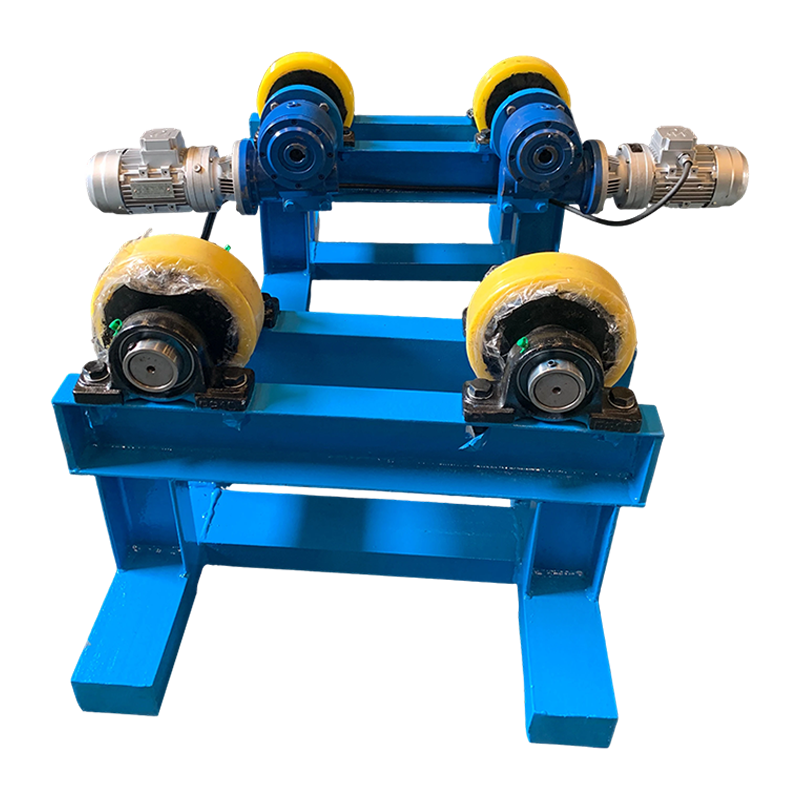
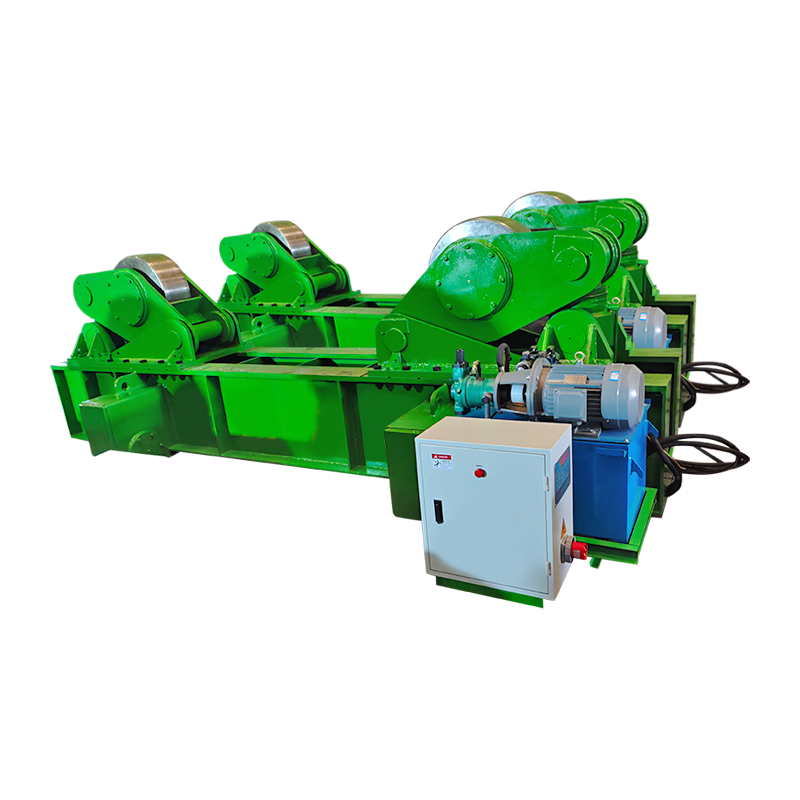
عربىAn automated welding positioner is a motorized mechanical device that holds, rotates, and tilts a workpiece during welding, ensuring the weld joint remains in the optimal flat or horizontal position. By eliminating manual repositioning and reducing non-arc time, it can increase overall welding efficiency by 40% to 60% compared to manual positioning methods, according to fabrication productivity studies.
1. Understanding the Core Function of an Automated Welding Positioner
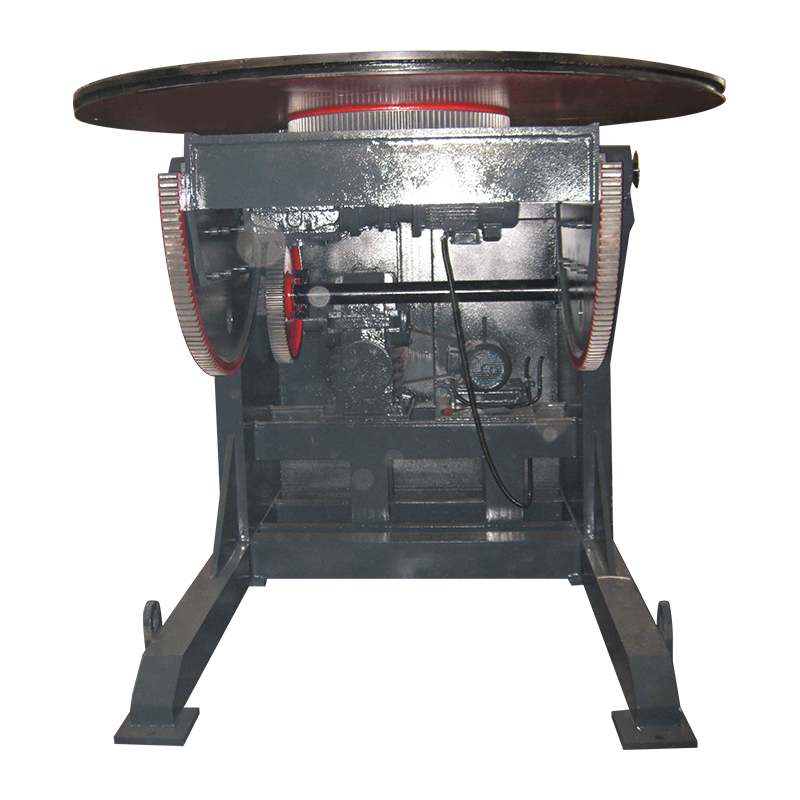
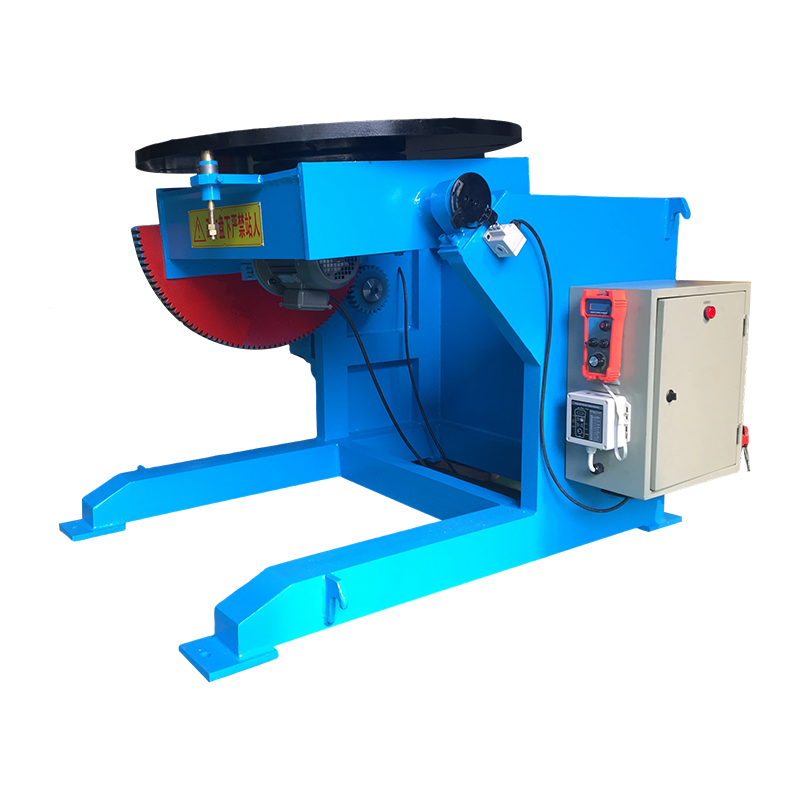
At its most fundamental level, an automated welding positioner solves a persistent challenge in metal fabrication: the need to weld complex assemblies from multiple angles while maintaining weld quality and operator safety. The device consists of a motor-driven worktable mounted on a tilting base, controlled through a programmable interface that allows precise rotation and angular positioning.
The operational principle is straightforward yet powerful. A workpiece is secured to the positioner’s faceplate using clamps or a chuck. The operator then uses a control pendant or foot pedal to rotate the part, bringing each weld area into the ideal flat position—typically within a 15-degree tolerance from horizontal. This gravity-assisted orientation allows the molten weld pool to flow evenly, producing stronger, more consistent joints with less filler material.
Modern systems incorporate variable speed drives, allowing rotation speeds from as low as 0.1 revolutions per minute for precise thick-section welding up to 10 rpm for high-speed circumferential seams on smaller components. The tilting mechanism typically offers a range from 0 to 135 degrees, enabling access to nearly any joint angle without requiring the operator to physically manipulate the workpiece.
2. How an Automated Welding Positioner Dramatically Improves Welding Efficiency
2.1 Reducing Non-Arc Time to Maximize Productivity
The single greatest contributor to improved welding efficiency is the drastic reduction in non-arc time—the periods when the welding torch is not actively depositing material. Research published by the American Welding Society indicates that in manual welding operations without positioning equipment, the arc-on time factor, often called the operator factor, can be as low as 15% to 25% for complex assemblies. A fabricator spending an eight-hour shift manually handling and repositioning heavy steel components may only achieve two hours of actual welding.
With an automated welding positioner, the operator factor can rise to 45% to 65%. Instead of stopping to unclamp, lift, rotate, and re-secure a 200-kilogram assembly between each weld pass, the welder presses a foot pedal to achieve the desired orientation in seconds. Over a 2,000-hour working year, this difference translates to approximately 900 additional hours of arc time per welding station—effectively doubling throughput without adding labor.
2.2 Eliminating Manual Handling for Heavier Workpieces
Manual repositioning of heavy fabrications introduces both inefficiency and safety risk. An assembly weighing 150 kilograms might require two workers, a bridge crane, and ten minutes to rotate 90 degrees between welding sequences. During this period, the welding arc is extinguished, the weld cools, and restart procedures must account for proper interpass temperature control.
An automated welding positioner with a 500-kilogram capacity can rotate that same workpiece through any required angle in under 30 seconds, controlled entirely by one operator. The economic impact is measurable: assuming a labor rate of $45 per hour and six repositioning events per shift, the manual approach costs approximately $45 in labor alone for handling—costs that repeat daily across every welding cell. Over a year with 240 working days, a single positioner eliminates nearly $11,000 in direct handling labor costs while simultaneously increasing arc time.
2.3 Enhancing Weld Quality Through Optimal Joint Positioning
Welding in the flat position consistently produces the highest quality welds with the greatest deposition rates. When a joint is oriented flat, gravity assists in shaping the weld pool, allowing the use of larger diameter electrodes or higher wire feed speeds without risking undercut, overlap, or lack of fusion. The American Welding Society’s structural welding code recognizes that flat position welding permits higher heat input parameters compared to vertical or overhead positions, resulting in deeper penetration and faster travel speeds.
An automated welding positioner makes every joint a flat-position joint. Consider a pipe-to-flange assembly requiring a 360-degree circumferential weld. Without a positioner, the welder must progress through flat, vertical, and overhead positions as they travel around the pipe. With a positioner, the pipe rotates continuously while the torch remains fixed at the 12 o’clock position, maintaining optimal puddle control throughout. Testing data from fabrication facilities shows that this approach increases deposition rates by 30% to 50% for circumferential pipe welds while reducing weld defects by up to 70%.
2.4 Improving Consistency in Repetitive Production Welding
In production environments where identical assemblies are welded repeatedly, consistency becomes a primary quality metric. A skilled manual welder inevitably introduces subtle variations in travel speed, torch angle, and weave pattern from one part to the next. While a highly experienced welder can maintain remarkable consistency, the inherent variability of fully manual positioning creates opportunities for dimensional drift.
An automated welding positioner combined with a mechanized welding carriage or even a manually guided torch reduces this variability significantly. The positioner provides the same rotation speed and orientation for every part in a batch. When set to rotate at 0.8 rpm for a 12-millimeter fillet weld, every assembly receives identical circumferential motion. Data from quality control records in heavy equipment manufacturing indicate that incorporating automated positioning reduces weld dimensional tolerance deviations by 40% to 55%, minimizing the need for post-weld straightening or rework.
2.5 Reducing Rework Costs and Material Waste
Rework represents one of the most significant hidden costs in welding operations. Removing a defective weld, preparing the joint again, and re-welding can consume three to five times the labor and materials of the original weld. Industry data compiled by the National Institute of Standards and Technology’s manufacturing extension programs suggests that rework and scrap costs in fabrication shops without adequate positioning equipment can exceed 8% of total production costs.
By enabling consistent flat-position welding with proper torch manipulation, an automated welding positioner directly addresses the root causes of common defects. Porosity caused by improper torch angle, lack of fusion from poor joint access, and irregular bead profiles from positional welding are significantly reduced. Shops that integrate automated positioning into their workflow typically report rework rate reductions from the 6% to 8% range down to under 2%, delivering direct savings in labor, shielding gas, filler metal, and grinding consumables.
2.6 Improving Operator Safety and Reducing Fatigue
Welding in awkward positions—overhead, vertical, or cramped quarters—places significant physical strain on operators. Musculoskeletal disorders account for a disproportionate share of lost-time injuries among welders, with the U.S. Bureau of Labor Statistics reporting incidence rates 30% above the manufacturing average for welding-related trades. Manual lifting and repositioning of heavy weldments compound this risk.
An automated welding positioner allows the operator to work in a comfortable, seated or standing position at waist height, with the weld joint presented flat and accessible. This ergonomic improvement reduces fatigue, lowers injury risk, and enables longer effective working periods. A welder who previously needed frequent breaks to rest from overhead work can maintain consistent production throughout a shift. The resulting productivity gain is meaningful: a 15% reduction in fatigue-related slowdowns over an eight-hour shift adds roughly 45 minutes of productive welding time daily.
3. Key Applications Across Industrial Sectors
The versatility of automated welding positioners makes them indispensable across a wide range of manufacturing and fabrication industries. The following table illustrates common applications and the specific efficiency benefits realized in each sector.
| Industry Sector | Typical Application | Primary Efficiency Gain |
|---|---|---|
| Heavy Equipment Manufacturing | Excavator boom and arm assemblies | 50% reduction in handling time for 500 kg weldments |
| Pressure Vessel Fabrication | Shell longitudinal and circumferential seams | 40% increase in deposition rate with flat-position SAW |
| Pipe Spool Fabrication | Flange-to-pipe and pipe-to-fitting welds | 60% reduction in weld defect rates on circumferential joints |
| Automotive Component Production | Axle housings and suspension subassemblies | Cycle time reduced from 12 minutes to 7 minutes per part |
| Wind Tower Manufacturing | Tower section internal and external welds | Operator factor improved from 22% to 55% |
Table 1: Efficiency improvements achieved through automated welding positioner integration across key industrial sectors, based on published case study data from fabrication industry associations and equipment manufacturers.
4. Comparing Manual Positioning with Automated Positioning: A Quantitative Analysis
Understanding the tangible difference between manual and automated positioning requires a side-by-side examination of key performance metrics. The comparison below highlights why shops making the transition typically achieve a return on investment within 12 to 18 months.
| Performance Metric | Manual Positioning | Automated Welding Positioner |
|---|---|---|
| Operator Factor (Arc-On Time) | 15% to 25% | 45% to 65% |
| Repositioning Time per Event (150 kg part) | 8 to 15 minutes | 15 to 30 seconds |
| Weld Defect Rate | 6% to 8% of welds | 1% to 2% of welds |
| Deposition Rate (FCAW, flat-position equivalent) | 2.5 to 3.5 kg per hour | 4.5 to 6.5 kg per hour |
| Personnel Required for Heavy Assembly | 2 to 3 workers | 1 worker |
| Annual Rework Cost (per welding station) | $8,000 to $15,000 | $1,500 to $3,500 |
Table 2: Comparative analysis of manual positioning versus automated welding positioner performance metrics. Data derived from industry benchmarks compiled by manufacturing extension partnership programs and welding engineering references, based on medium-scale fabrication operations.
5. Types of Automated Welding Positioners and Their Selection Criteria
Selecting the correct configuration of automated welding positioner directly impacts the efficiency gains achievable in a specific application. The market offers several distinct categories, each optimized for particular workpiece geometries and production requirements.
5.1 Single-Axis Rotary Positioners
Single-axis units provide rotation around a vertical or horizontal axis and represent the most common and economical entry point into automated positioning. A horizontal-axis turntable with a 300-kilogram capacity and a 600-millimeter faceplate diameter is typical for general fabrication work. These systems excel at circumferential pipe welding, cylindrical vessel fabrication, and any application requiring continuous rotation at controlled speeds. Prices for industrial-grade single-axis positioners suitable for production environments generally range from $6,000 to $25,000 depending on load capacity and control sophistication.
5.2 Two-Axis Tilt-and-Rotate Positioners
Two-axis systems add a tilt mechanism to the rotary table, enabling compound angular positioning. An operator can tilt a workpiece 45 degrees and then rotate it, presenting fillet weld joints in a flat position regardless of the part’s geometry. These positioners handle complex structural fabrications—brackets, frames, and multi-faceted assemblies—where a single rotation axis cannot achieve optimal joint orientation for every weld. Load capacities range from 100 kilograms for bench-top units to over 10,000 kilograms for heavy fabrication cells. The additional axis typically adds 40% to 60% to the equipment cost compared to single-axis models with equivalent load ratings.
5.3 Headstock-Tailstock Configurations
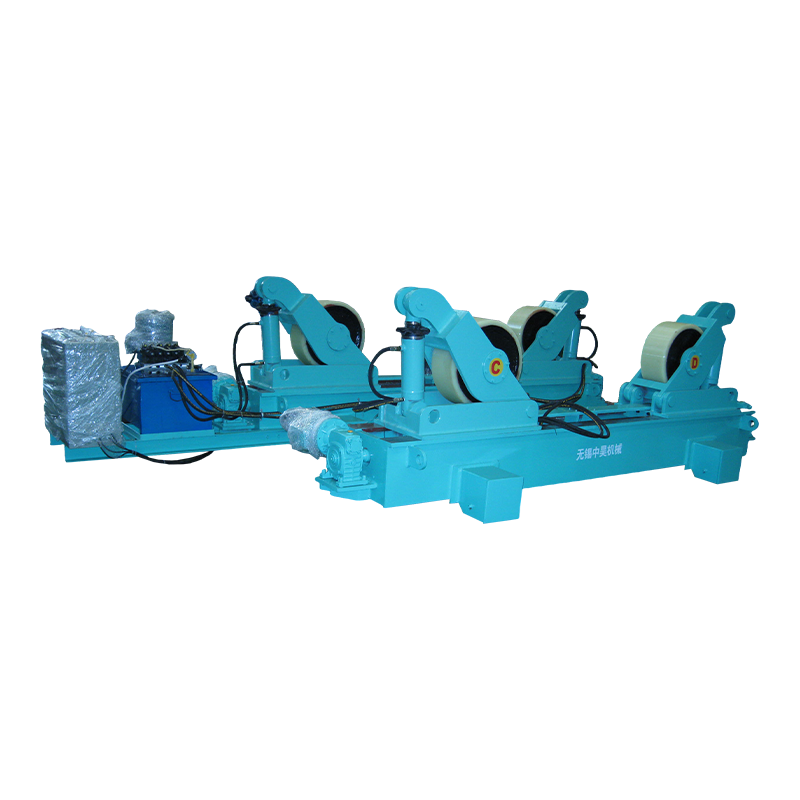
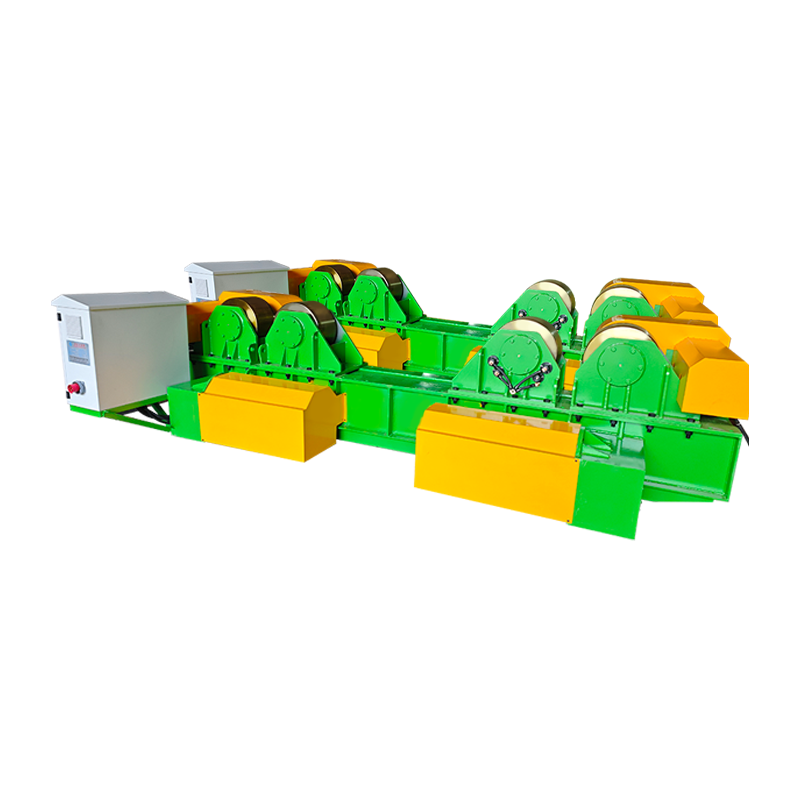
For long, heavy workpieces such as turbine shafts, large-diameter pipe spools, and structural columns, headstock-tailstock arrangements provide support at both ends while rotating the assembly. The headstock contains the drive motor and controls, while the tailstock provides an adjustable, free-spinning support. A typical configuration for structural fabrication might handle workpieces up to 4 meters in length and 2,000 kilograms in weight, rotating at speeds from 0.05 to 5 rpm. These systems are particularly effective for longitudinal stiffener welding and long-seam applications where consistent rotation speed is critical for uniform weld quality.
6. Integration with Robotic and Mechanized Welding Systems
An automated welding positioner serves as a critical enabling technology for robotic welding cells. A robot arm, despite its flexibility, cannot weld what it cannot reach. By mounting the positioner as an external axis under coordinated control, the robot gains the ability to maintain optimal torch orientation while the workpiece rotates, effectively multiplying the work envelope and accessible joint configurations.
In a coordinated robotic cell, the positioner and robot communicate through a shared controller. The robot program specifies positioner angles and rotation speeds in synchronization with torch movements. For a circumferential weld on a pipe elbow, the positioner rotates the part while the robot executes a minimal weaving pattern, achieving deposition rates of 6 to 8 kilograms per hour with consistent bead profiles. Manufacturing data from industrial automation integrators indicates that coordinated positioner-robot systems achieve overall equipment effectiveness ratings 25% to 35% higher than fixed-table robotic cells, primarily due to reduced idle time during part repositioning.
Semi-automated configurations also benefit. A mechanized submerged arc welding tractor mounted over a rotating positioner can deposit weld metal at rates exceeding 15 kilograms per hour for heavy-wall pressure vessel fabrication. The combination of continuous rotation and consistent standoff distance produces radiographic-quality welds in a single pass on materials up to 50 millimeters thick.
7. Frequently Asked Questions About Automated Welding Positioners
7.1 What size automated welding positioner do I need for my shop?
The appropriate size depends primarily on the maximum workpiece weight and dimensions you regularly handle. Select a positioner with a load capacity at least 25% above your heaviest anticipated workpiece to account for the dynamic loads imposed during acceleration and deceleration. For a fabrication shop welding structural assemblies averaging 200 kilograms with occasional 350-kilogram components, a 500-kilogram capacity two-axis positioner provides sufficient safety margin. Also consider the center of gravity distance from the faceplate—a 500-kilogram rating at 150 millimeters from the faceplate may reduce to 250 kilograms at 300 millimeters due to increased bending moment.
7.2 How long does it take to see a return on investment?
Most fabrication shops achieve payback within 12 to 18 months based on labor efficiency improvements alone. A $20,000 positioner that eliminates 10 hours of non-productive handling time per week at a $45 hourly labor rate saves approximately $23,400 annually in direct labor. When factoring in reduced rework costs, lower consumable usage from improved deposition efficiency, and decreased worker compensation claims from ergonomic improvements, the financial return often accelerates to under 10 months. Shops producing high-mix, low-volume work typically see faster payback than those with simple, repetitive assemblies requiring minimal repositioning.
7.3 Can a welding positioner be used with all welding processes?
Automated welding positioners are compatible with all major arc welding processes including gas metal arc welding, flux-cored arc welding, gas tungsten arc welding, submerged arc welding, and plasma arc welding. The key consideration is ensuring the positioner’s grounding system handles the welding current without causing bearing damage. High-quality positioners incorporate a grounding brush or slip ring rated for the maximum anticipated welding current, typically 400 to 600 amperes for heavy fabrication applications. For submerged arc welding at currents exceeding 800 amperes, verify that the manufacturer specifies appropriate current-carrying capacity for the rotary ground.
7.4 Is an automated positioner suitable for small fabrication shops?
Small shops with as few as three to five welders can justify the investment when they regularly handle assemblies requiring multiple positioning changes. Bench-top single-axis positioners with 100-kilogram capacities start around $3,500, representing an accessible entry point. A small structural fabrication shop welding agricultural equipment components can typically amortize this cost within the first year through improved throughput. The efficiency gains are most pronounced when the positioner is dedicated to a specific product family rather than used intermittently across widely varying work.
7.5 How does an automated welding positioner compare to using a cobot for small-batch welding?
A welding positioner and a collaborative robot serve complementary but distinct roles. A positioner enhances a human welder’s productivity by presenting the workpiece optimally; the welder retains full control over torch manipulation and weld quality decisions. A cobot automates the torch manipulation itself, following programmed paths. For small-batch, high-variability work where weld parameters change frequently, a skilled welder using a positioner often outperforms a cobot in both speed and quality because human judgment adapts instantly to fit-up variations. For repetitive production of consistent assemblies, the positioner-cobot combination offers the highest throughput. The investment profile differs substantially: a quality positioner costs $5,000 to $30,000, while a complete cobot welding system typically starts above $50,000.
8. The Strategic Value Beyond Direct Efficiency Gains
Beyond the measurable improvements in arc-on time and deposition rates, an automated welding positioner delivers strategic benefits that strengthen a fabrication business’s competitive position. Shops equipped with adequate positioning capability can quote more competitively on complex assemblies because their actual production costs align with the efficient flat-position welding the positioner enables. A fabricator bidding on a structural frame contract with $4,000 in quoted labor based on manual positioning assumptions may discover actual costs reaching $5,200 due to handling inefficiencies. The same contract estimated with automated positioning assumptions at $3,200 in labor more accurately reflects achievable production costs while delivering a stronger bid.
Workforce development also benefits. Skilled welders increasingly seek employers who invest in equipment that reduces physical strain and enhances productivity. A positioner-equipped welding cell signals a professional, safety-conscious operation, aiding both recruitment and retention in a labor market where qualified welding professionals remain in critically short supply.
Quality documentation and traceability improve as well. Many modern positioner controllers log rotation speeds, cycle counts, and operator inputs, providing data for process verification and continuous improvement initiatives. In industries requiring stringent quality documentation—pressure vessel fabrication under ASME code, structural welding under AWS D1.1, or military specifications—this automated data capture reduces the administrative burden of manual record-keeping while improving audit readiness.
9. Conclusion: Positioning for Productive Welding
An automated welding positioner represents one of the most cost-effective investments a fabrication operation can make to improve welding efficiency. By transforming every weld into an optimally positioned joint, these devices increase arc-on time from as low as 15% to over 50%, reduce rework costs by 60% or more, and create a safer, more ergonomic working environment. The technology scales from compact bench-top units for small shops to multi-axis, multi-ton systems for heavy industrial fabrication, ensuring applicability across the full spectrum of welding-intensive manufacturing.
The data supporting these efficiency claims is consistent and compelling: 40% to 60% improvements in operator factor, 30% to 50% increases in deposition rates, and defect rate reductions that pay for the equipment within months through rework savings alone. For any fabrication manager evaluating capital equipment investments, the question is not whether an automated welding positioner can improve efficiency, but rather how quickly the improvement will materialize in their specific production environment.