English
 русский
 Español
 عربى
عربى20T Self-Aligning Airfoil Welding Rotary Machine
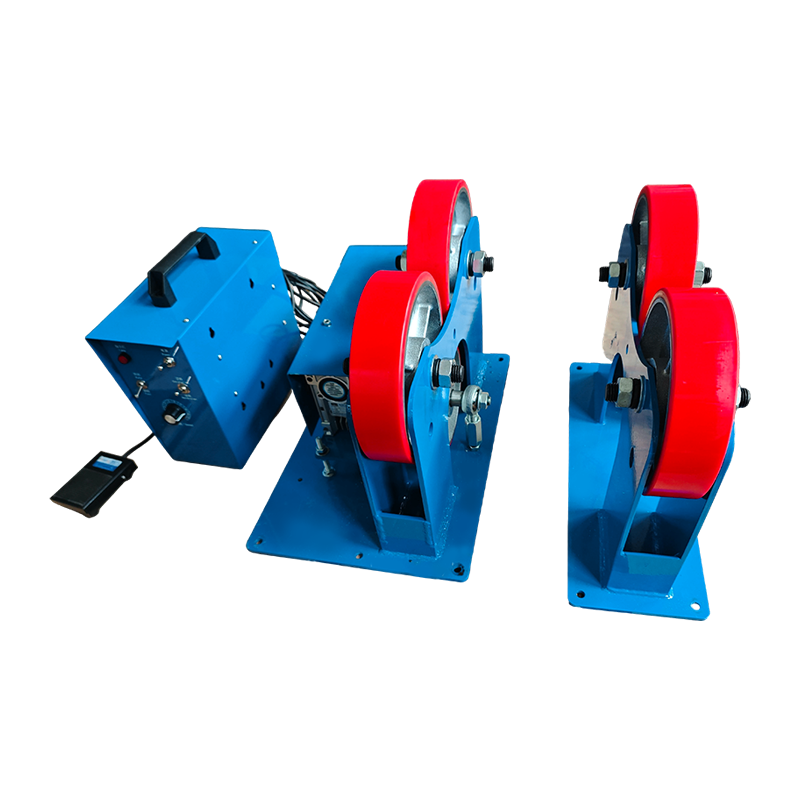
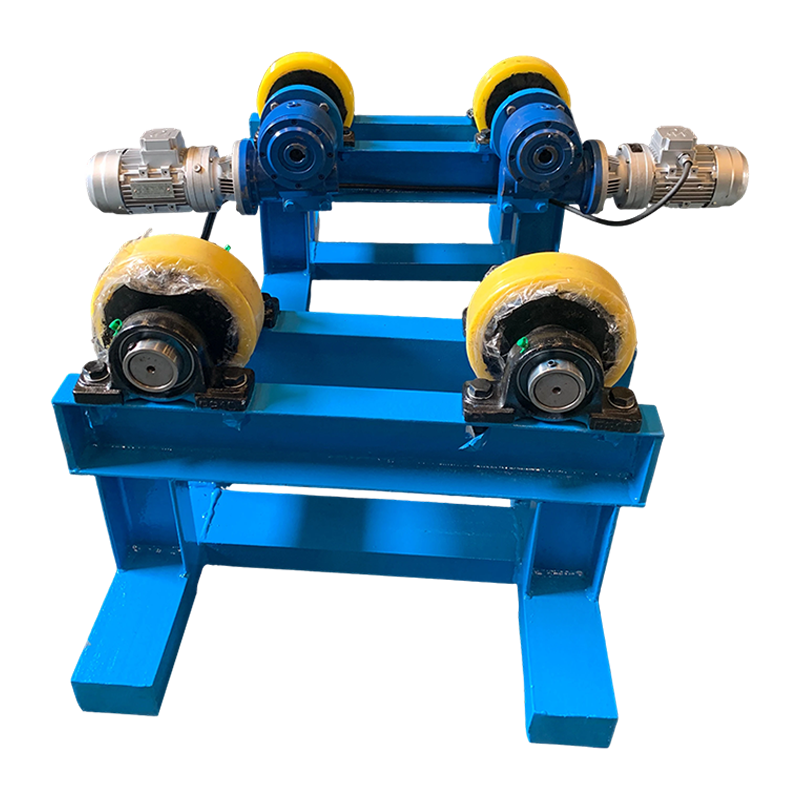
The 20T airfoil self-aligning welding rotary machine is widely used in industries such as pressure vessels, chemical equipment, wind turbine towers, p...
See Details
A standard pipe welding rotator machine typically supports a maximum weight capacity ranging from 1 ton (1,000 kg) to over 1,000 tons (1,000,000 kg), depending on the model classification and application. Light-duty rotators designed for workshop fabrication generally handle 1–10 tons, mid-range industrial units cover 10–100 tons, and heavy-duty or custom-engineered rotators are built for loads exceeding 100 tons in shipbuilding, pressure vessel manufacturing, and large-scale pipeline construction.
Selecting a welding rotator with the correct weight capacity is one of the most critical decisions in any welding operation. Exceeding the rated capacity compromises roller integrity, weld quality, and operator safety. This guide breaks down everything you need to know — from standard capacity ranges and machine types to selection criteria, safety standards, and frequently asked questions.
A pipe welding rotator machine — also called a welding turning roll or pipe rotator — is an industrial device that rotates cylindrical workpieces (pipes, pressure vessels, tanks, and shells) at a controlled speed during welding, enabling continuous circumferential welds without repositioning the workpiece manually.
A standard rotator system consists of at least one drive unit (powered roller assembly) and one or more idler units (unpowered support roller assemblies). The workpiece rests on the rollers and rotates as the drive unit turns, keeping the weld zone at a consistent downhand (flat) position — the most favorable position for quality welding.
The key performance parameters of any welding rotator are:
Pipe welding rotator machines are classified into four broad capacity tiers, each suited to distinct industrial environments and workpiece sizes. Understanding these tiers helps engineers and procurement teams match the machine to the job without over- or under-specifying.
| Capacity Tier | Weight Range | Typical Pipe Diameter | Typical Applications |
| Light-Duty | 1 – 10 tons | 60 mm – 600 mm | Small fabrication shops, pipe spools, thin-wall vessels |
| Medium-Duty | 10 – 60 tons | 200 mm – 2,000 mm | Heat exchangers, storage tanks, mid-size pressure vessels |
| Heavy-Duty | 60 – 300 tons | 500 mm – 4,000 mm | Large pressure vessels, offshore pipeline sections, wind tower sections |
| Extra Heavy / Custom | 300 – 1,000+ tons | 1,000 mm – 8,000+ mm | Shipbuilding, nuclear vessels, subsea pipeline fabrication, LNG tanks |
Classification of pipe welding rotator machines by weight capacity tier, pipe diameter range, and industrial application.
The capacity rating shown on a rotator refers to the combined load shared across all drive and idler units in the set. A single drive unit does not carry the full rated weight alone — the load is distributed. For example, a 40-ton rated system typically consists of one 40-ton drive unit paired with one or more 40-ton-rated idler units, collectively supporting up to 40 tons total.
There are three primary types of pipe welding rotators, each with distinct design features, capacity characteristics, and application profiles.
Conventional rotators use a fixed roller frame where the angle between the two support rollers is preset. They are the most common and cost-effective type, available in capacities from 1 ton to 1,000 tons. The main limitation is that roller spacing must be manually adjusted to accommodate different pipe diameters, which takes time when switching between workpiece sizes.
Self-aligning rotators feature a pivoting roller cradle that automatically adjusts the roller angle as the workpiece is lowered onto it, accommodating a wider range of pipe diameters without manual adjustment. They are widely used in job shops that handle varied pipe sizes.
Tank turning rolls are purpose-built for very large diameter, heavy cylindrical vessels such as LNG storage tanks, reactor vessels, and offshore pipeline sections. These units feature wide-base frames, multiple roller sets, and are often custom-engineered for specific project requirements.
The weight capacity of a pipe welding rotator is determined by a combination of mechanical, structural, and drive system design factors — not simply the size of the frame.
Roller diameter and material directly govern load-bearing capacity. Larger-diameter rollers distribute the workpiece load over a greater contact area, reducing point pressure and enabling higher capacity ratings. Common roller materials include:
Heavy-capacity rotators require robust welded steel frames, often fabricated from structural steel sections with thicknesses of 20 mm or more. The baseplate must be wide enough to prevent tipping under off-center loading. Units rated above 100 tons typically include anchor bolt holes for floor-fixing, and the frame steel is stress-relieved after fabrication to ensure dimensional stability under load.
The drive motor and reduction gearbox must generate sufficient torque to rotate the maximum rated load at the slowest specified speed. Rotators use worm gear, helical gear, or planetary gear reducers — with planetary gearboxes offering the highest torque density for a given footprint. Motor power in commercial rotators ranges from 0.37 kW for 1-ton units to 22 kW or more for 100-ton-plus systems.
For very long or very heavy workpieces, multiple idler units are added to distribute the load more evenly and prevent workpiece deflection (sagging). A 200-ton pressure vessel fabrication setup might use one drive unit and three or four idler units spaced along the vessel length. In this configuration, the total load is shared across all contact points, reducing the per-unit load and enabling the system to handle the full rated weight safely.
Weight capacity and workpiece diameter range are independent but interrelated specifications — a rotator rated for 20 tons may only safely accommodate pipes between 200 mm and 1,500 mm in diameter, even if a physically larger pipe weighs less than 20 tons.
The geometry of the roller-to-workpiece contact point changes with diameter. A very small diameter pipe sitting between two rollers exerts force at a steep angle, while a very large diameter pipe contacts the rollers at a shallow angle. Both extremes can cause instability or roller damage if the pipe is outside the specified diameter range, regardless of weight.
| Rated Capacity | Typical Min Diameter | Typical Max Diameter | Drive Motor (Approx.) |
| 1 ton | 60 mm | 400 mm | 0.37 kW |
| 5 tons | 100 mm | 900 mm | 0.75 kW |
| 20 tons | 200 mm | 1,800 mm | 1.5 kW |
| 60 tons | 300 mm | 3,000 mm | 4.0 kW |
| 100 tons | 500 mm | 4,000 mm | 7.5 kW |
| 300 tons | 800 mm | 6,000 mm | 15 kW |
Typical specifications for pipe welding rotator machines across common capacity ratings, showing diameter range and approximate drive motor power.
Always select a rotator rated for at least 20–30% more than the actual workpiece weight — this safety margin accounts for dynamic loading during rotation startup, uneven weight distribution along the pipe length, and any attachments or weld fixtures added during fabrication.
Follow this practical selection process:
Conventional rotators offer higher maximum capacity ceilings, while self-aligning rotators provide greater flexibility across a wider diameter range at comparable weight ratings.
| Feature | Conventional Rotator | Self-Aligning Rotator |
| Max weight capacity | Up to 1,000+ tons | Up to ~400 tons |
| Diameter flexibility | Limited — manual adjustment required | High — automatic adjustment |
| Setup time for new diameter | 10–30 minutes | < 2 minutes |
| Unit cost | Lower | Higher (15–30% premium) |
| Best production environment | Single-diameter high-volume production | Job shop, mixed-diameter production |
| Axial drift control | Requires angled roller adjustment | Typically better — geometry self-compensates |
Feature-by-feature comparison between conventional fixed-frame and self-aligning pipe welding rotator types.
Reputable pipe welding rotator machines are designed and tested in accordance with internationally recognized safety and engineering standards. Compliance with these standards is not merely regulatory — it directly determines whether the rated capacity figure on the machine is reliable and trustworthy.
Key standards applicable to welding rotator design and manufacture include:
Always request load test certificates and proof-load documentation from the manufacturer when purchasing rotators rated above 20 tons. Reputable manufacturers conduct proof-load testing at 125% of rated capacity before shipment.
The most frequent purchasing mistake is selecting a rotator based on weight alone while ignoring diameter range and workpiece length requirements. Here are the most common errors and how to avoid them:
A pipe welding rotator can only safely deliver its rated capacity when it is properly maintained — worn rollers, degraded bearings, and neglected gearboxes all reduce the effective load-bearing capacity below the nameplate rating.
Standard commercially available pipe welding rotators range from 1 ton to 1,000 tons in rated capacity. Units above 300 tons are typically custom-engineered for specific projects. For most industrial fabrication shops, models in the 5–100 ton range cover the vast majority of applications. Specialized heavy industries such as shipbuilding and nuclear vessel fabrication regularly use rotators rated at 300–1,000 tons.
Not necessarily. Over-specifying a rotator wastes budget and floor space. A 100-ton rotator used to rotate a 2-ton pipe may actually perform less smoothly at low loads than a correctly sized 5-ton unit, because speed control and torque regulation are optimized around the rated load range. Match capacity to your actual workpiece weight plus a 20–30% safety margin — no more.
Yes — this is standard practice for long, heavy workpieces. Adding idler units distributes the load across more contact points, reducing per-unit stress. However, the total system capacity is still limited by the lowest-rated component in the set. If your drive unit is rated at 40 tons and your idlers are rated at 40 tons each, the system capacity is 40 tons total — adding more 40-ton idlers does not increase the maximum load, but it does provide better support distribution for long workpieces.
Exceeding the rated capacity can cause roller deformation or fracture, bearing failure, gearbox damage, frame deflection, and in extreme cases, complete structural collapse — dropping the workpiece suddenly. Beyond equipment damage, this poses severe injury risk to personnel in the work area. Always treat the rated capacity as a hard limit, not a guideline.
In most industrial jurisdictions, welding rotators used in pressure vessel fabrication, shipbuilding, and other regulated industries must have documented load test certificates from the manufacturer. Third-party inspection agencies may also require periodic re-certification — typically annually or every two years — depending on the industry and local regulatory framework. Always confirm certification requirements with your quality and compliance team before specifying equipment.
In most rotator systems, both the drive and idler units carry load and are each assigned their own capacity rating. The system capacity rating refers to the maximum combined load across all units in a matched set. When purchasing, ensure that both drive and idler units in your system are rated to the same capacity figure — mismatched ratings create weak points in the system. Some manufacturers specify total set capacity rather than per-unit capacity, so always clarify which convention is being used.
A common industry guideline is to add one idler unit for every 3–4 meters of workpiece length beyond the first supported span. For example, a 12-meter-long vessel would typically require one drive unit plus two to three idler units. For heavy workpieces (above 20 tons) or thin-wall vessels prone to deflection, reduce the idler spacing further. The goal is to keep workpiece deflection below 1–2 mm per meter of unsupported length.
The maximum weight capacity of a standard pipe welding rotator machine spans an enormous range — from 1 ton for compact workshop units to over 1,000 tons for custom heavy-industry systems. For most fabrication environments, the practical range of 5 to 100 tons covers the overwhelming majority of applications, from pipe spool fabrication to large pressure vessel manufacture.
Selecting the right capacity requires more than reading a nameplate: you must account for total workpiece weight including fixtures, verify the pipe diameter falls within the machine's specified range, ensure adequate idler support for long vessels, and apply a 20–30% safety margin over actual load. Compliance with applicable load testing standards and a disciplined maintenance program ensure the rotator continues to deliver its rated capacity reliably throughout its service life.
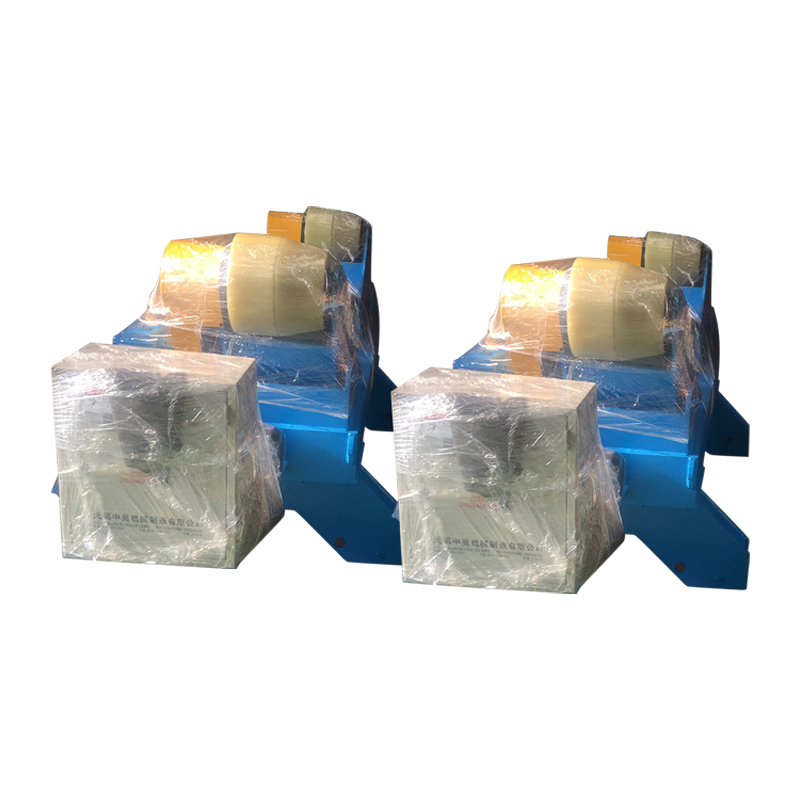
The 20T airfoil self-aligning welding rotary machine is widely used in industries such as pressure vessels, chemical equipment, wind turbine towers, p...
See Details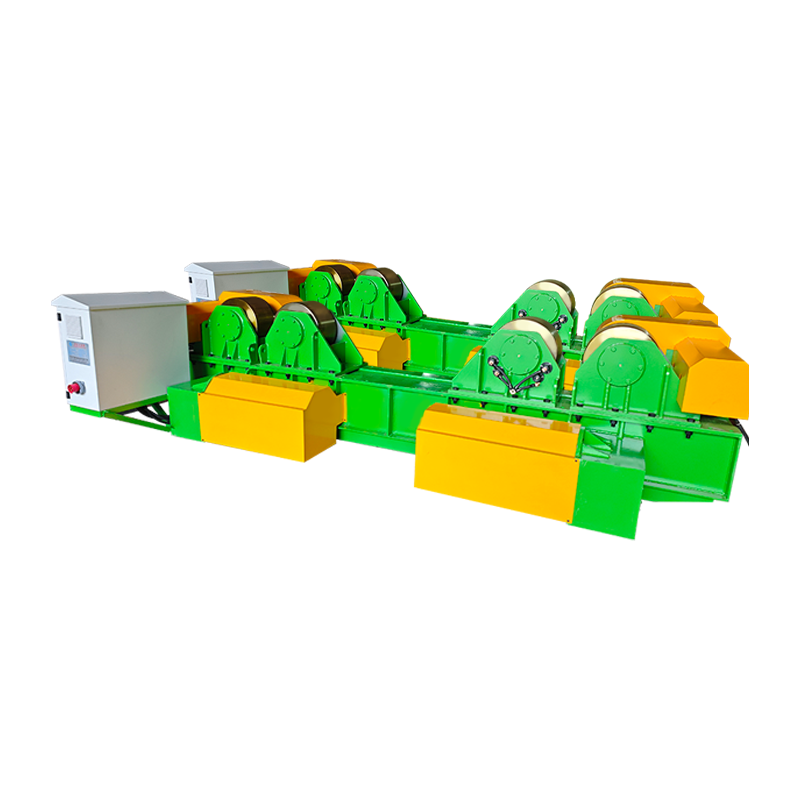
The 40t fit up welding rotator with hydraulic lifting manual orbital movement is a medium-sized welding auxiliary equipment with a load capacity of 40...
See Details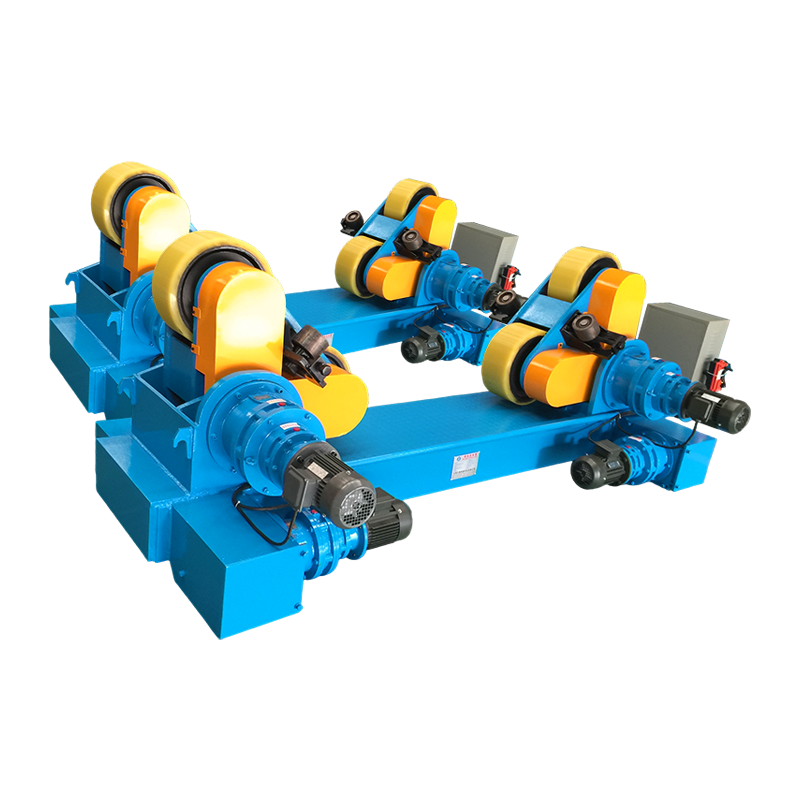
The 40T self-aligning welding rotary machine is a high-end welding positioning device specifically designed for heavy-duty cylindrical workpieces. Equ...
See Details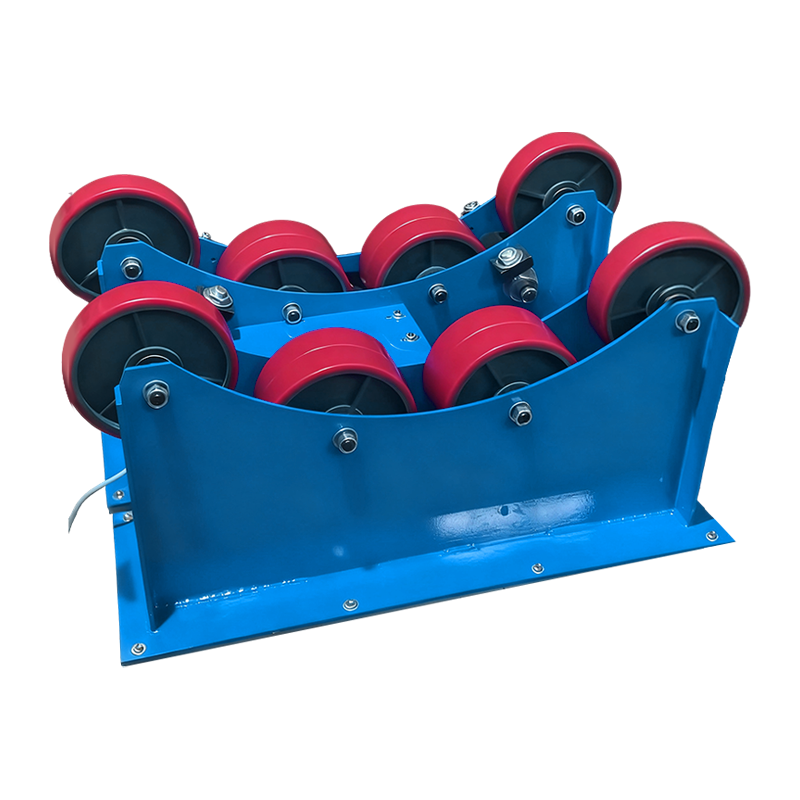
The 3t welding rotator is a welding auxiliary device consisting of a frame, power drive unit, main and driven rollers, and electrical control system. ...
See DetailsContent
Copyright 2025 Wuxi WeldNice Heavy Industry Technology Co., Ltd. All Rights Reserved Custom Automatic Welding Equipment Manufacturers



sales@weldnicefactory.com