 English
 русский
 Español
 عربى
عربى20T Self-Aligning Airfoil Welding Rotary Machine
The 20T airfoil self-aligning welding rotary machine is widely used in industries such as pressure vessels, chemical equipment, wind turbine towers, p...
See Details
Welding positioners are mechanical devices that rotate, tilt, or reposition a workpiece to place every weld joint in the optimal flat or horizontal position, while types of welding robots refer to the various automated arm configurations — articulated, SCARA, Cartesian, collaborative, and more — that execute the weld itself. Used independently, each improves weld quality and operator ergonomics. Used together in an integrated welding cell, they eliminate out-of-position welding entirely, reduce cycle times by 30–60%, and enable continuous, unattended production across industries from heavy fabrication to precision electronics.
A welding positioner is a powered workholding system that manipulates the orientation of a workpiece during welding so that joints are always presented to the welder or welding robot in the most accessible and gravity-favorable position. The primary goal is to convert overhead, vertical, and horizontal welds — which are slower, less consistent, and require higher welder skill — into flat (1G) or horizontal-fillet (2F) positions, which produce the highest-quality welds at the fastest travel speeds.
Welding positioners are classified by their axis of motion, load capacity, and application. The six most common types are:
Turntable positioners rotate the workpiece on a single horizontal axis, making them ideal for circumferential welds on cylindrical parts such as flanges, pressure vessels, and pipe spools. Load capacities range from 50 kg to over 100,000 kg for heavy industrial models. Rotation speed is typically 0.1–5 RPM, adjustable to match weld travel speed precisely.
Tilt-and-rotate positioners provide two axes of motion — a tilt axis (typically 0–135°) and a rotation axis — allowing complex parts to be repositioned to virtually any angle without unclamping. They are the most versatile standard positioner type and are widely used for structural fabrications, agricultural equipment frames, and automotive components weighing 100–10,000 kg.
Headstock-tailstock positioners support long, heavy workpieces between two driven ends — the headstock (powered) and the tailstock (support or powered). This configuration is essential for welding shafts, axles, booms, and beams where the part length exceeds 1–2 meters and must be rotated continuously. Load capacities range from 500 kg to 50,000+ kg with center distances up to 10 meters or more.
Ferris wheel positioners mount two workpiece fixtures on opposite sides of a rotating frame, allowing one part to be welded while the other is loaded or unloaded — dramatically improving arc-on time to 85–95% versus 40–60% on single-station setups. They are heavily used in high-volume robotic welding cells for automotive chassis parts, wheel hubs, and exhaust components.
Trunnion positioners rotate large, bulky assemblies — such as construction equipment booms, wind turbine nacelle frames, and ship sections — around a horizontal axis using two trunnion rings. Designed for extreme loads of 10,000–500,000 kg, they are typically floor-mounted in heavy fabrication shops with overhead crane access.
Column-and-boom manipulators combine a welding positioner with an adjustable boom that positions the welding torch over large stationary or slowly rotating workpieces. The boom provides X, Y, and Z travel of 1–10 meters per axis, making this system the standard solution for pressure vessel longitudinal seams, large tank fabrication, and offshore structural welding.
| Positioner Type | Axes of Motion | Typical Load Capacity | Primary Application |
|---|---|---|---|
| Turntable | 1 (rotation) | 50 kg – 100,000 kg | Pipes, flanges, pressure vessels |
| Tilt-and-Rotate | 2 (tilt + rotation) | 100 kg – 10,000 kg | Structural frames, ag equipment |
| Headstock-Tailstock | 1–2 (rotation) | 500 kg – 50,000 kg | Shafts, beams, long fabrications |
| Ferris Wheel (H-Frame) | 2 (frame + fixture) | 100 kg – 3,000 kg per side | Robotic cells, high-volume parts |
| Trunnion | 1 (rotation) | 10,000 kg – 500,000 kg | Heavy fabrication, construction |
| Column & Boom | 3+ (X, Y, Z + rotation) | Stationary / very large | Tanks, pressure vessels, offshore |
Table 1: Comparison of welding positioner types by motion axes, load capacity, and primary application.
The types of welding robots cover a broad spectrum of mechanical architectures, each engineered for different combinations of reach, payload, precision, and flexibility. Selecting the correct robot type is just as critical as selecting the welding process — the wrong architecture limits access, reduces repeatability, or increases cycle time unnecessarily.
Articulated robots are the dominant type in welding automation, accounting for over 70% of all installed welding robots globally. Their six rotary joints replicate the full range of motion of a human arm, enabling torch access to complex joint geometries from virtually any angle. Payload capacities range from 3 kg to 20 kg for welding torch applications, with reach envelopes of 600 mm to 3,100 mm. Positional repeatability is typically ±0.02–0.08 mm.
SCARA (Selective Compliance Articulated Robot Arm) robots operate in a horizontal plane with a vertical Z-axis, making them well-suited for spot welding on flat or gently curved assemblies such as electronics housings, thin sheet metal components, and automotive interior parts. Their rigid vertical axis provides excellent repeatability of ±0.01–0.02 mm but limits access to deeply recessed joints compared to 6-axis articulated robots.
Cartesian welding robots move along three linear axes (X, Y, Z) mounted on an overhead gantry structure, covering work envelopes of 1 m × 1 m up to 20 m × 10 m or larger. They excel at welding large flat panels, shipbuilding sections, and bridge steel where no single-arm robot has sufficient reach. Their linear motion makes programming straightforward and path accuracy extremely high — typically ±0.1 mm across large spans.
Collaborative welding robots (cobots) are designed to work safely alongside human operators without full safety guarding, using force-torque sensors to detect contact and stop instantly. Welding cobots typically offer payloads of 5–16 kg and reach of 850–1,300 mm. They are ideal for small-batch, high-mix production where frequent reprogramming is needed — setup time for a new part can be reduced to under 30 minutes using hand-guided teach programming.
Seven-axis robots add a linear track or a redundant arm joint to a standard 6-axis architecture, giving the robot an additional degree of freedom to reach around obstacles, maintain torch angle in tight spaces, and avoid singularity positions. They are increasingly used in aerospace welding, complex structural fabrications, and integrated positioner cells where the robot and positioner axes are coordinated simultaneously. Track-mounted 7-axis systems can cover linear distances of up to 50 meters.
Spot welding robots are heavy-payload articulated robots specifically configured to carry resistance spot welding guns, which typically weigh 40–150 kg. They are the backbone of automotive body-in-white production, where a single vehicle body requires 3,000–5,000 spot welds completed in under 60 seconds using a coordinated cell of 10–20 robots. Payloads range from 100 kg to 500 kg for heavy gun configurations.
| Robot Type | Axes | Payload | Repeatability | Best Welding Process |
|---|---|---|---|---|
| Articulated (6-axis) | 6 | 3–20 kg | ±0.02–0.08 mm | MIG, TIG, laser, plasma |
| SCARA | 4 | 5–20 kg | ±0.01–0.02 mm | Spot, micro welding |
| Cartesian (Gantry) | 3–5 | 20–500 kg | ±0.1 mm | SAW, MIG (large panels) |
| Collaborative (Cobot) | 6–7 | 5–16 kg | ±0.03–0.1 mm | MIG, TIG (high-mix) |
| Seven-Axis | 7 | 5–20 kg | ±0.02–0.05 mm | TIG, laser, complex geometry |
| Spot Welding Robot | 6 | 100–500 kg | ±0.1–0.2 mm | Resistance spot welding |
Table 2: Comparison of welding robot types by axes, payload, repeatability, and recommended welding process.
Integrating welding positioners with welding robots creates a coordinated multi-axis welding cell where the positioner axes are treated as external robot axes — synchronized in real time with the robot controller so that workpiece movement and torch movement occur simultaneously. This is known as coordinated motion or external axis coordination, and it delivers several critical advantages:
The productivity and quality difference between welding with and without a positioner is substantial and measurable across every key performance indicator:
| Metric | Without Positioner | With Positioner |
|---|---|---|
| Weld position | All positions (1G–6G) | Flat/horizontal (1G/2F) |
| Wire feed speed (MIG) | 4–7 m/min | 8–15 m/min |
| Deposition rate | 2–4 kg/h | 5–12 kg/h |
| Rework / defect rate | 3–8% | 0.5–1.5% |
| Arc-on time (robotic cell) | 50–65% | 85–95% |
| Operator ergonomic risk | High (overhead / awkward) | Low (flat / seated) |
Table 3: Welding performance comparison with and without positioner integration in a robotic welding cell.
Different combinations of positioner type and robot type are optimal for each industry based on part geometry, volume, and quality requirements:
Automotive body-in-white production relies on spot welding robots (6-axis, 100–500 kg payload) paired with ferris wheel positioners to achieve the throughput required for mass production. A typical body shop deploys 200–400 welding robots across multiple coordinated cells, producing a new vehicle body every 60–90 seconds.
Circumferential pipe and vessel welding uses turntable or headstock-tailstock positioners with articulated MIG or TIG welding robots. The positioner rotates the pipe while the robot maintains a fixed torch position — a technique that achieves weld quality meeting ASME Section IX and API 1104 code requirements with consistent root penetration across joints from 50 mm to 2,000 mm diameter.
Large-panel welding in shipbuilding uses Cartesian gantry welding robots with submerged arc welding (SAW) torches for high-deposition flat seam welding of hull plates up to 20 meters long. Curved hull sections and T-beam assemblies use trunnion positioners to rotate massive structural units (50–200 tonnes) while articulated MIG robots complete fillet and butt welds.
High-mix, low-volume contract fabricators benefit most from collaborative welding robots (cobots) paired with compact tilt-and-rotate positioners. A cobot welding cell can be reprogrammed for a new part in under 30 minutes, making it economically viable for batch sizes as small as 5–50 parts — far below the 500+ part threshold typically required to justify traditional robot welding cell investment.
Matching the right positioner and robot type to your application requires evaluating five core parameters:
A welding fixture is a static clamping device that holds the workpiece in a fixed position during welding. A welding positioner is a powered motion system that actively moves and rotates the workpiece during or between welds. Fixtures prioritize dimensional accuracy and repeatability; positioners prioritize joint accessibility and position optimization. In practice, fixtures are almost always mounted on positioners to gain the benefits of both.
For high-mix, low-volume applications, yes — cobots can be more cost-effective and flexible. However, cobots operate at lower speeds (typically 30–50% slower than industrial robots in welding mode due to safety speed limits when humans are present) and carry lower payloads. For high-volume dedicated production, traditional 6-axis articulated welding robots remain superior in throughput, duty cycle, and long-term cost per weld.
A standard tilt-and-rotate positioner adds 2 external axes to the robot controller, bringing the total coordinated axes of a 6-axis robot cell to 8. A headstock-tailstock with both ends driven adds 2 axes; a ferris wheel positioner (frame + fixture rotation) adds 2–3 axes. Modern robot controllers support up to 18–27 total coordinated axes, enabling complex multi-robot, multi-positioner cells.
All major arc welding processes are used with welding robots. MIG/MAG (GMAW) is the most common — approximately 65% of all robotic arc welding. TIG (GTAW) is used for stainless steel and titanium requiring highest quality. Plasma welding handles precision keyhole welding on thin materials. Laser welding is growing rapidly for automotive and electronics. Submerged arc (SAW) is used exclusively on gantry Cartesian robots for high-deposition flat welding.
For medium-volume production (5,000–50,000 parts/year), a complete robotic welding cell with positioner integration typically achieves return on investment in 18–36 months. The ROI is driven by labor cost reduction (one operator supervising 2–4 robots vs. 4–8 manual welders), reduced rework costs (defect rate drops from 5–8% to under 1.5%), and increased throughput (40–80% more parts per shift). High-volume automotive applications often achieve ROI in under 12 months.
Yes. For coordinated motion, the positioner must be configured as an external axis within the robot controller, with accurate kinematic calibration of the positioner's rotation center relative to the robot base frame. Most modern robot controllers include built-in external axis coordination software, and setup typically requires 4–16 hours of calibration and testing by a trained integrator. Once configured, the robot program automatically synchronizes positioner and torch motion — no separate positioner programming is needed.
Welding positioners and the various types of welding robots are complementary technologies that, when properly matched and integrated, deliver manufacturing capabilities neither can achieve alone. Positioners ensure every joint is always in the optimal welding position; robots deliver consistent, tireless execution at speeds and quality levels no manual process can match. Whether you are outfitting a job shop with a compact cobot-and-tilt-positioner cell or engineering a high-volume automotive spot welding line with ferris wheel positioners and 20 articulated robots, the key to success lies in correctly matching positioner type, robot architecture, and welding process to your specific part geometry, production volume, and quality requirements.
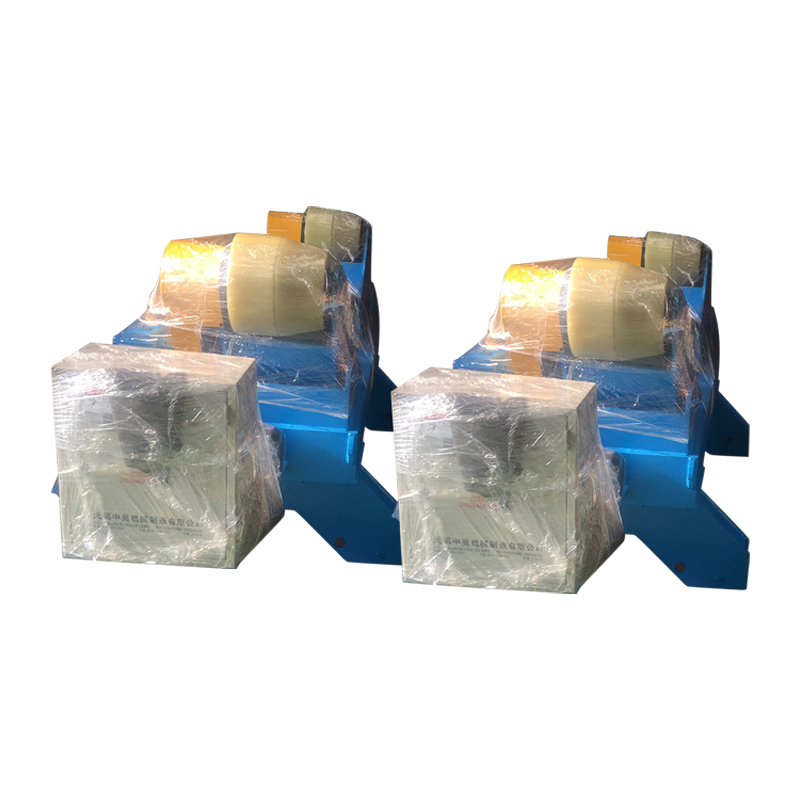
The 20T airfoil self-aligning welding rotary machine is widely used in industries such as pressure vessels, chemical equipment, wind turbine towers, p...
See Details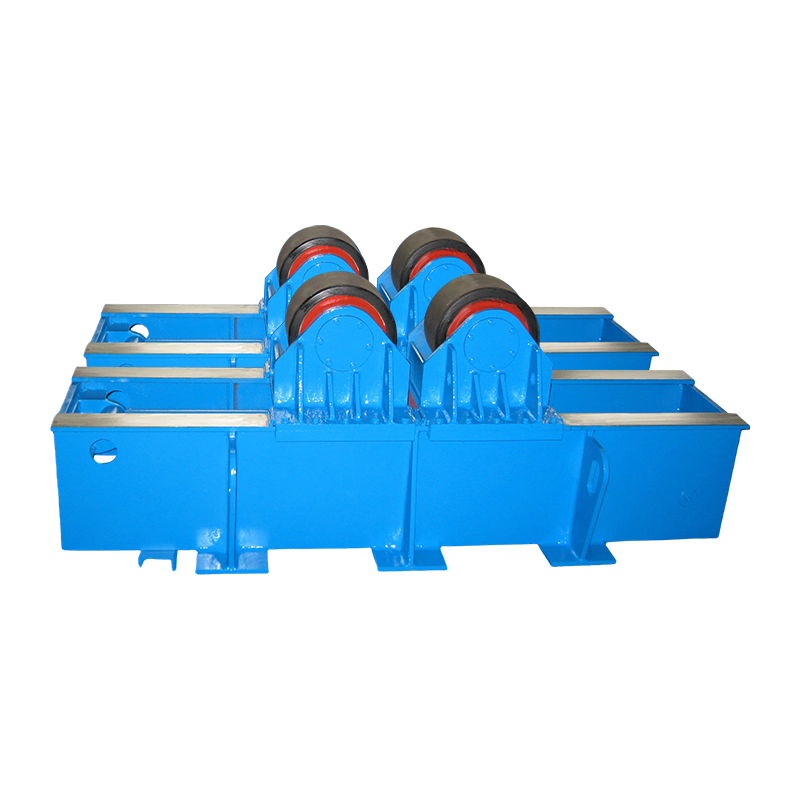
40T Fit Up Welding Rotator with Hydraulic Horizontal Pushing has a rated load of 40 tons and focuses on the assembly and welding of small and medium-s...
See Details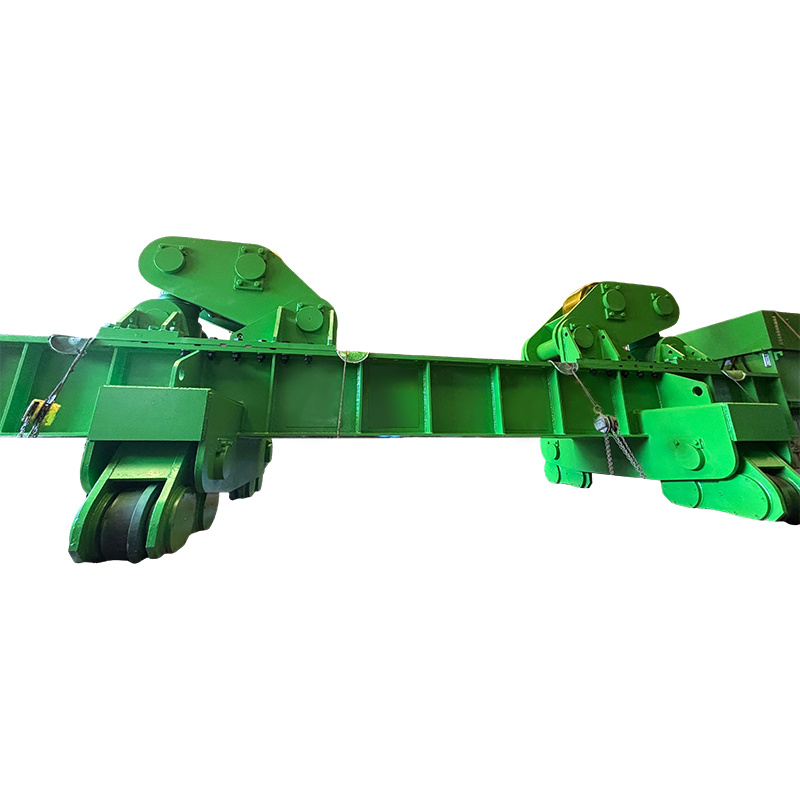
The 800T Fit Up Welding Rotator with Manual Orbital Movement is a special equipment for welding super-heavy workpieces, with a load capacity of up to ...
See Details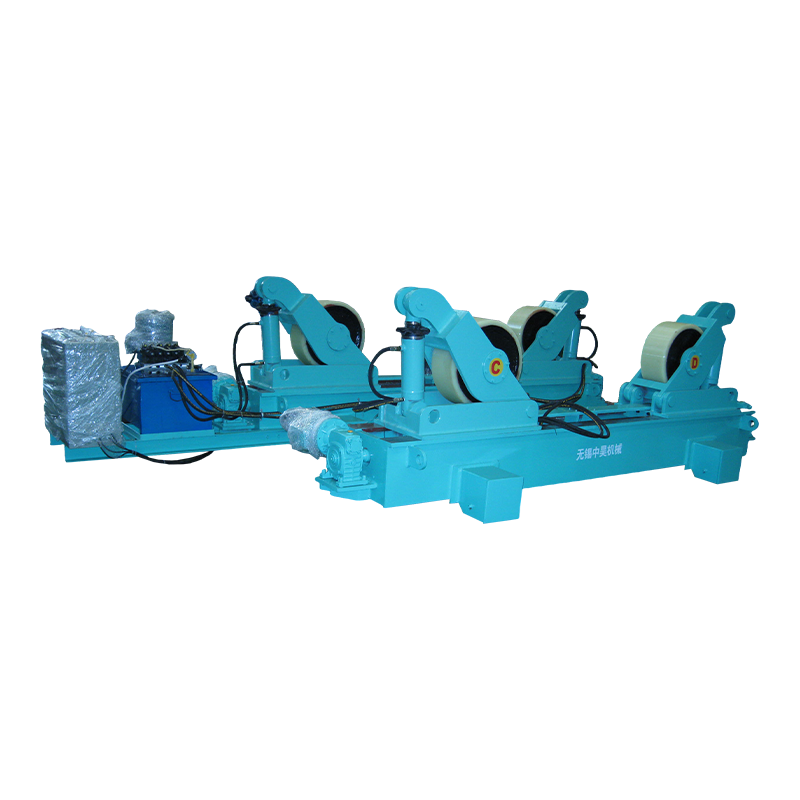
80t fit up welding rotator with manual orbital movement is a special equipment for welding medium and heavy workpieces. It can carry 80 tons and is su...
See Details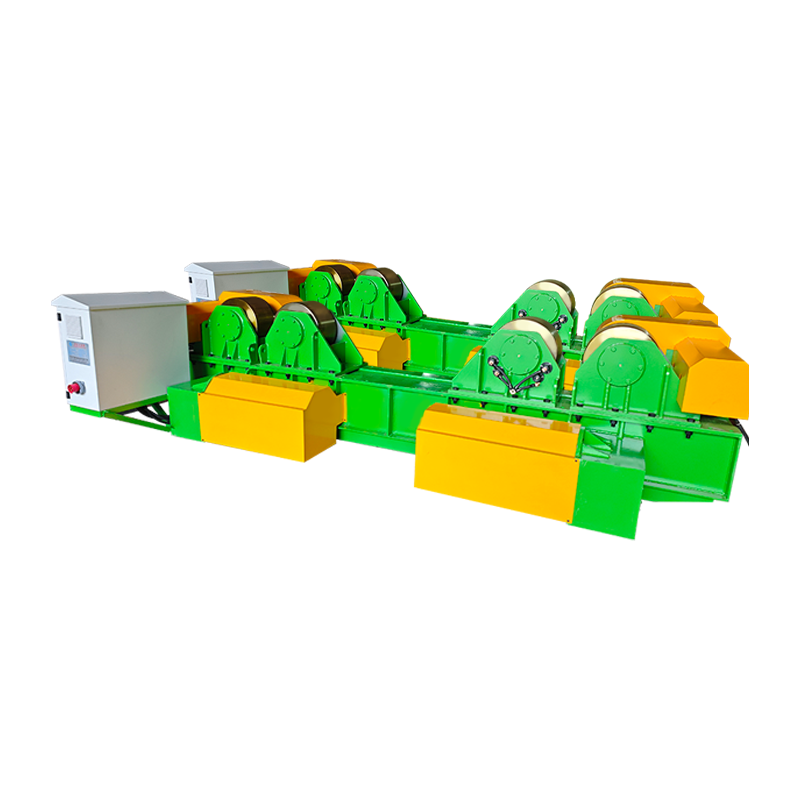
The 40t fit up welding rotator with hydraulic lifting manual orbital movement is a medium-sized welding auxiliary equipment with a load capacity of 40...
See Details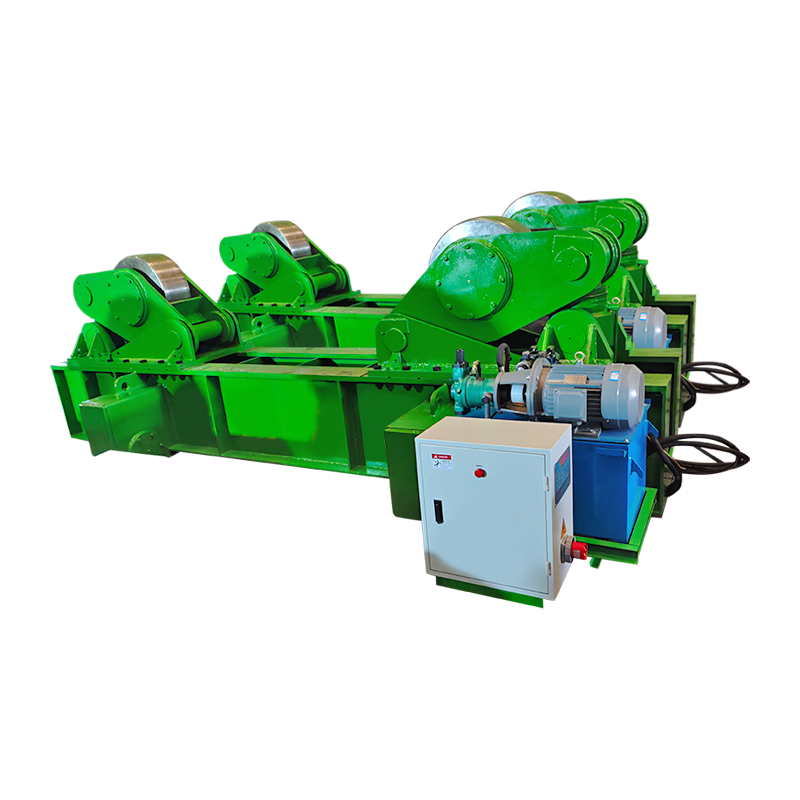
The 300t fit up welding rotator with manual orbital movement has a 300-ton load-bearing capacity and can stably support large cylindrical workpieces, ...
See DetailsContent
Copyright 2025 Wuxi WeldNice Heavy Industry Technology Co., Ltd. All Rights Reserved Custom Automatic Welding Equipment Manufacturers



sales@weldnicefactory.com