 English
 русский
 Español
 عربى
عربى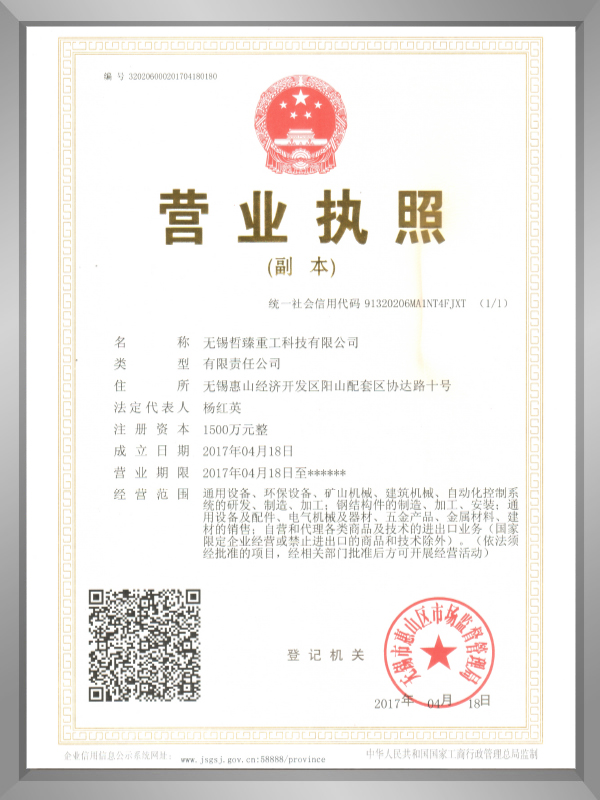
In heavy-duty industries such as energy equipment manufacturing and large-scale pressure vessel fabrication, the primary challenge is not just the weld itself, but the safe and precise manipulation of the workpiece. A 15T Conventional Welding Positioner is a heavy-duty powerhouse designed to handle...
READ MORE
Self Aligning Welding Rotator Manufacturer
1 set of self aligning welding rotator is composed of 1 driving roator and 1 idler rotator, each has 4 rollers. Single motor driven or double motors driven is available.
information to be updated
About Us
Wuxi WeldNice Heavy Industry Technology Co., Ltd.
Wuxi WeldNice Heavy Industry Technology Co., Ltd. produces and operates various welding roller frames, manipulators, shifters, CNC flame/fine plasma cutting machine series, automatic welding tooling series, special welding and cutting machines and overlay welding series, tanker, H-beam and wind power wind tower production lines,etc.
As a professional China Self Aligning Welding Rotator Manufacturer and ODM Self Aligning Rotator Company, It produces over 500 sets of various welding equipment annually. The products are mainly exported to several dozen countries including the United States, Germany, Japan, Spain, Italy, the United Kingdom, South Korea, Australia, and Canada. The cooperating clients include wind power, construction industry, machinery equipment, etc., including more than 10 world-famous enterprises. It has become an important supplier of welding equipment for them in China.
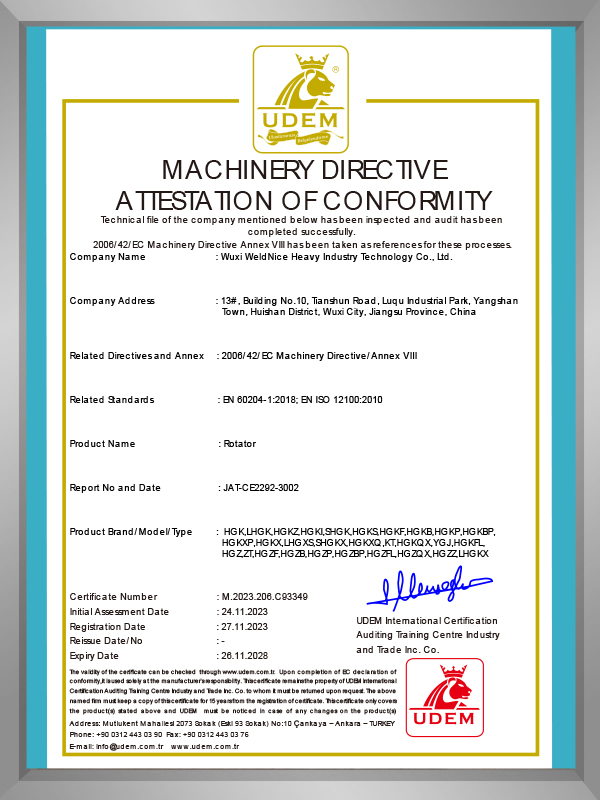
Certificate Of Honor
News
-
-
In the realm of machinery manufacturing and pressure vessel production, the ability to maintain a consistent welding angle is often the difference between a high-strength joint and a costly defect. The 100KG Conventional Welding Positioner is engineered as a universal solution for these high-precis...
READ MORE -
In the fabrication of boilers and pressure vessels, the ability to rotate cylindrical workpieces with precision is the difference between a high-integrity weld and a structural failure. The Welding Rotator (also known as a Welding Turning Roller or Roller Frame) is an essential specialized tool for...
READ MORE
Message Feedback
Self Aligning Welding Rotator Industry knowledge
The Self Aligning Welding Rotator is a type of automated auxiliary equipment designed for welding cylindrical workpieces. Its core function is to support and drive the rotation of workpieces via rollers, keeping the weld seam in an optimal welding position at all times, thus ensuring the stability of welding quality and operational efficiency. The Self Aligning Welding Rotator is widely used in heavy equipment manufacturing sectors such as pressure vessels, wind towers, and storage tanks. Moreover, the automatic centering design of the Self Aligning Welding Rotator effectively addresses the industry pain points of difficult workpiece positioning and poor coaxiality associated with traditional welding positioners.
Wuxi WeldNice Heavy Industry Technology Co., Ltd. is located in the Yangshan Supporting Zone of Huishan Economic Development Zone, Wuxi City. Adjacent to the scenic Taihu Lake in the south and the Beijing-Hangzhou Grand Canal in the north, this location boasts convenient land and water transportation. Established in 2004, the company covers an area of approximately 10 acres. Equipped with advanced production and processing equipment, complete testing facilities, and a comprehensive quality assurance management system, it integrates design, R&D, manufacturing, and sales into a single entity, functioning as a professional welding equipment manufacturer that provides cutting-edge products to numerous domestic and international clients. Leveraging over 20 years of industry experience, the company offers a diverse range of Self Aligning Welding Rotators with options of single-motor or dual-motor drive, delivering customized OEM/ODM solutions for customers in sectors including wind power tower manufacturing, storage tank production, and pressure vessel fabrication.
1. Core Product Principles
1. Core Product Principles
1.1 Structural Composition
Each set of Self Aligning Welding Rotator consists of 1 driving rotator and 1 idler rotator, with each unit fitted with 4 rollers.
1.2 Working Principle
- The driving rotator is powered by an electric motor, which drives the rollers to rotate through a reducer. The frictional force between the rollers and the workpiece is harnessed to drive the cylindrical workpiece to rotate at a constant speed.
- The idler rotator operates as a driven unit following the rotation of the workpiece. Its automatic centering structure can adaptively adjust the roller spacing according to the workpiece diameter, ensuring the coaxiality of workpiece rotation.
- The single-motor drive configuration is suitable for welding small-to-medium diameter, light-load workpieces, while the dual-motor drive configuration meets the requirements of stable rotation for large-diameter, heavy-load workpieces.
2. Typical Application Cases
| Application Industry | Workpiece Type | Selected Specification | Application Effect |
|---|---|---|---|
| Wind Power Generation | Wind Turbine Tower | Dual-motor Driven Self Aligning Welding Rotator | Enables automatic welding of circumferential seams for 10–50m long tower barrels, with coaxiality error ≤ 0.5mm, improving welding efficiency by 40% |
| Pressure Vessels | Liquefied Petroleum Gas Storage Tanks | Single-motor Driven Self Aligning Welding Rotator | Suitable for welding storage tanks with a diameter of φ1–3m, achieving uniform weld formation and a qualification rate of 99.8% |
| Petrochemical Equipment | Large-diameter Pipes | Dual-motor Driven Self Aligning Welding Rotator | Meets the welding requirements of thick-walled pipes, maintains a stable rotation speed of 0.1–10r/min, and supports multi-layer and multi-pass welding |
In response to the above industry requirements, Wuxi WeldNice Heavy Industry Technology Co., Ltd. provides one-stop solutions. All Self Aligning Welding Rotators are manufactured under a comprehensive quality assurance system and undergo rigorous load testing and precision calibration prior to delivery.
3. Detailed Comparison of Single-motor vs. Dual-motor Drive Models
| Comparison Dimension | Single-motor Driven Self Aligning Welding Rotator | Dual-motor Driven Self Aligning Welding Rotator |
|---|---|---|
| Power Configuration | Single motor + reducer, driving only the driving rotator | Dual motors + reducer, with synchronous drive of the driving rotator by dual motors |
| Applicable Workpieces | Diameter φ0.5–4m, weight ≤ 50 tons | Diameter φ1–10m, weight ≤ 200 tons |
| Rotation Accuracy | Coaxiality error ≤ 0.8mm | Coaxiality error ≤ 0.3mm |
| Control Method | Manual speed regulation | Variable frequency speed regulation, supporting PLC linkage control |
| Energy Consumption Level | Low, suitable for small-to-medium batch production | Moderate, suitable for mass production of heavy workpieces |
| Customization Support | Basic OEM support available | In-depth ODM support available, compatible with welding robot linkage |
Frequently Asked Questions (FAQ)
- Q: How does the automatic centering function of the Self Aligning Welding Rotator adapt to workpieces of different diameters?
A: The idler rotator of the equipment adopts a spring or lead screw adjustment structure, which can automatically expand and contract the roller spacing according to the workpiece diameter without the need for repeated manual adjustment. The applicable diameter range covers the rated specification range of the equipment, and the positioning accuracy meets industry welding standards.
- Q: In which scenarios do dual-motor drive models outperform single-motor drive models?
A: Dual-motor drive models feature stronger power output, enabling them to drive larger-diameter and heavier workpieces. Additionally, the synchronous control of dual motors can effectively prevent workpiece deviation during rotation, making them suitable for high-precision welding applications such as wind towers and large storage tanks. Single-motor drive models are more suitable for cost-effective welding operations of small-to-medium-sized workpieces.
- Q: Can Wuxi WeldNice Heavy Industry Technology Co., Ltd. provide a linkage solution between the Self Aligning Welding Rotator and welding robots?
A: Yes. The company has a professional R&D team that can provide PLC linkage control transformation for the Self Aligning Welding Rotator based on the customer's existing welding robot model, realizing precise coordination between workpiece rotation and welding actions, and improving the level of automation.
- Q: How to resolve roller slipping issues in the equipment? A: First, check whether the contact area between the workpiece and the rollers is sufficient, and adjust the position of the idler rotator appropriately to increase the number of contact points. Second, inspect the wear condition of the roller surface; if wear is severe, replace the rollers in a timely manner. Finally, confirm whether the motor speed is too high, and reduce the speed to increase the frictional force between the workpiece and the rollers.
Copyright 2025 Wuxi WeldNice Heavy Industry Technology Co., Ltd. All Rights Reserved Self Aligning Welding Rotator Manufacturer Custom Self Aligning Welding Rotator Company

-

-

-
sales@weldnicefactory.com