 English
 русский
 Español
 عربى
عربىH beams and I beams are not interchangeable. The simplest way to understand the difference: an H beam has wide, parallel flanges and a thick web, which makes it stronger and heavier; an I beam has narrower, tapered flanges and a thinner web, making it lighter, more economical, and better suited for simple bending loads. If you are comparing H beam vs I beam for a structural project, choose H for heavy vertical loads and columns, and I for long horizontal spans where weight and cost matter.
What Is an H Beam?
An H beam is a structural steel member whose cross-section resembles a capital H. Its flanges are wide, flat, and parallel, and the web is typically thicker than the web of an I beam. Because the flange width is often close to the section height, H beams are also called wide-flange beams, universal columns, or W-shapes.
H beams are available in hot-rolled and welded built-up forms. The welded version lets fabricators create custom sizes and hybrid sections, which is useful when a project requires unusual flange width or web thickness. Common standards include ASTM A992 for structural steel, EN 10025 for European profiles, and JIS G3101 in Japan. For high-rise buildings, bridge piers, and industrial plants, H beams are often the default choice for columns and main girders.
What Is an I Beam?
An I beam, also known as a universal beam or standard beam, has a cross-section shaped like a capital I. The flanges are narrower and have a slight taper on the inside face, while the web is thinner and taller relative to the flange width. This shape is very efficient at resisting bending when the load is applied across the web.
I beams are usually hot-rolled as a single section, although cold-formed or fabricated versions exist. They are lighter than H beams of similar nominal height, so they cost less per metre and are easier to handle. Typical applications include floor joists, roof purlins, light steel frames, and support beams in machinery. The tapered flange makes an I beam easy to identify at a glance.
H Beam vs I Beam: Key Differences at a Glance
If you only need a quick answer, the table below summarises the most important comparisons between H beams and I beams.
| Feature | H Beam | I Beam |
|---|---|---|
| Cross-section shape | Letter H | Letter I |
| Flange design | Wide, parallel, flat flanges | Narrower flanges with internal taper |
| Web thickness | Thicker | Thinner |
| Weight | Heavier for the same height | Lighter |
| Load capacity | Higher axial and shear load capacity | More efficient for simple bending |
| Span performance | Best for columns and short spans | Better for long horizontal spans |
| Manufacturing | Hot-rolled or welded from plates | Usually hot-rolled in one piece |
| Typical cost | Higher | Lower |
| Common uses | Columns, bridge girders, high-rise steel frames | Floor beams, light frames, machinery supports |
Weight and Load-Bearing Capacity Compared
H beams are generally heavier and stronger than I beams of the same material grade. The wider flanges and thicker web add more material to the section, increasing its moment of inertia and reducing stress under load.
For example, a 150-mm wide-flange H beam might weigh around 22 kg per metre, while a similar nominal-height I beam might weigh about 18 kg per metre. The extra weight of the H-beam pays off when the member must carry compression, bending, or torsion in a column or heavily loaded girder. In contrast, an I-beam can support a long span with less dead weight, which reduces foundation loads and handling cost.
Engineers often compare section modulus and radius of gyration when designing a structure. Higher values mean greater resistance to bending and buckling. H beams generally provide higher section moduli in most orientations, but I beams remain attractive when bending is the dominant load and weight is a concern.
Manufacturing and Availability
H beams are manufactured either as hot-rolled wide-flange shapes or as welded built-up sections. The welded version gives fabricators the flexibility to create custom sizes and hybrid sections, which is useful when a project demands an unusual flange width or web thickness.
I beams, on the other hand, are almost always hot-rolled as a single section. The tapered flange shape is formed directly in the rolling mill. Because the material flows into a shape that is efficient for bending, I beams are usually less expensive to produce and more widely stocked in standard sizes.
In practical terms, you will find more ready availability of I beams in small and medium sizes, while large H beams may need to be ordered from a mill or fabricated locally. Lead time and minimum order quantity can be significant factors in procurement.
Key Standards and Dimensional Tolerances
Structural steel beams are produced to international standards that define allowable deviations in mass, depth, flange width, web thickness, and straightness. Two widely used documents are ASTM A6/A6M in North America and EN 10034 for European structural sections.
For example, ASTM A6 limits the mass deviation for a single beam to about 2.5% over or under the theoretical value. The depth tolerance is typically ±3 mm for sections up to 400 mm deep, and flange squareness is controlled within a few degrees. EN 10034 has comparable tolerances but uses SI units and different class limits.
When you compare H beam vs I beam for procurement, always request a mill test certificate. This certificate records the heat number, chemical composition, mechanical properties, and measured dimensions. It is also your primary evidence if a load test or a third-party inspection reveals nonconformance.
When to Use H Beams vs I Beams
The decision between an H beam and an I beam should be based on load path, span, connection details, and total installed cost. Here are the most practical rules of thumb:
- Choose an H beam for columns, transfer girders, and any member that must resist high axial compression or heavy concentrated loads.
- Choose an I beam for floor beams, roof joists, and light-to-medium frame members where the main load is bending across the web.
- Choose an H beam when you need a clean, flat flange surface for simple bolted or welded connections.
- Choose an I beam when weight savings and material cost are more important than maximum section strength.
Both sections can be welded, but the parallel flanges of an H beam make it easier to fit cover plates, stiffeners, and end plates without additional tapering work. In steel fabrication shops, the majority of automated welding lines are designed around wide-flange H-beam geometries.
Welding Considerations for Structural Beams
Welding is where the physical difference between H and I beams becomes most noticeable. The wide, parallel flanges of an H beam allow welding torches to travel along straight, continuous lines, which is ideal for submerged arc welding and automated processes. An I beam requires more careful torch angle control on the tapered flange surfaces.
One of the biggest challenges when welding long beams is positioning the workpiece so that every weld can be made in the flat or horizontal-vertical position. A high-precision double-column welding positioner is commonly used to rotate and tilt the beam, allowing the welder or the welding robot to reach both sides of the web without manual repositioning.
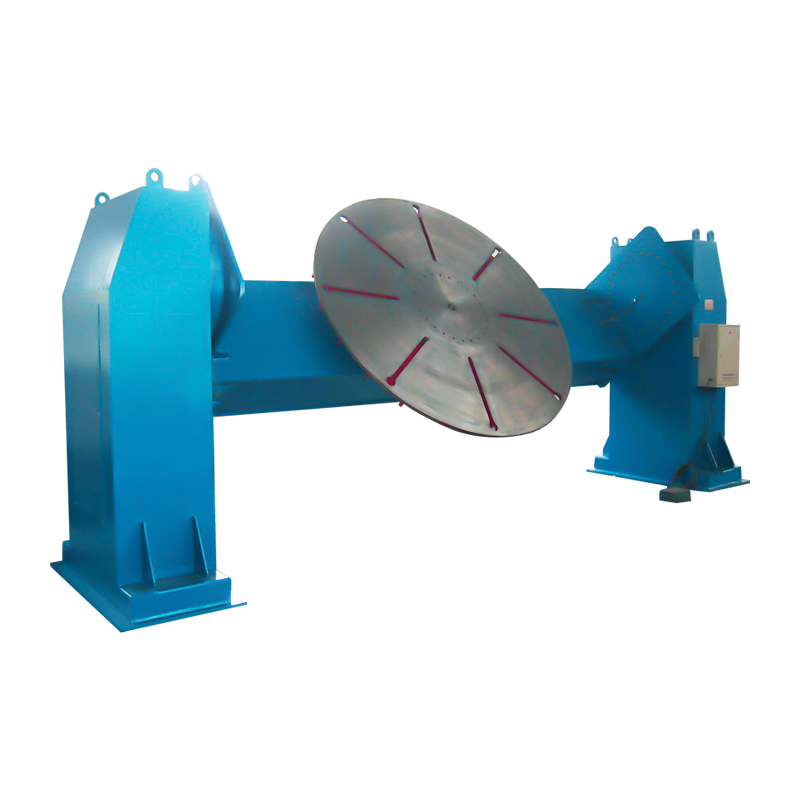 High Precision Double Column Welding Positioner for Large BeamsThis precision double-column positioner rotates and tilts heavy beams for flat or horizontal-vertical welding, complementing automated setups to improve weld access and reduce manual repositioning.View Product →
For very long seams running along the length of a beam, a column-and-boom welding manipulator paired with a turning roll or positioner keeps the welding head stable and reduces operator fatigue. Fabricators who adopt this kind of automated welding for large metal structures typically see more uniform weld quality and a lower reject rate.
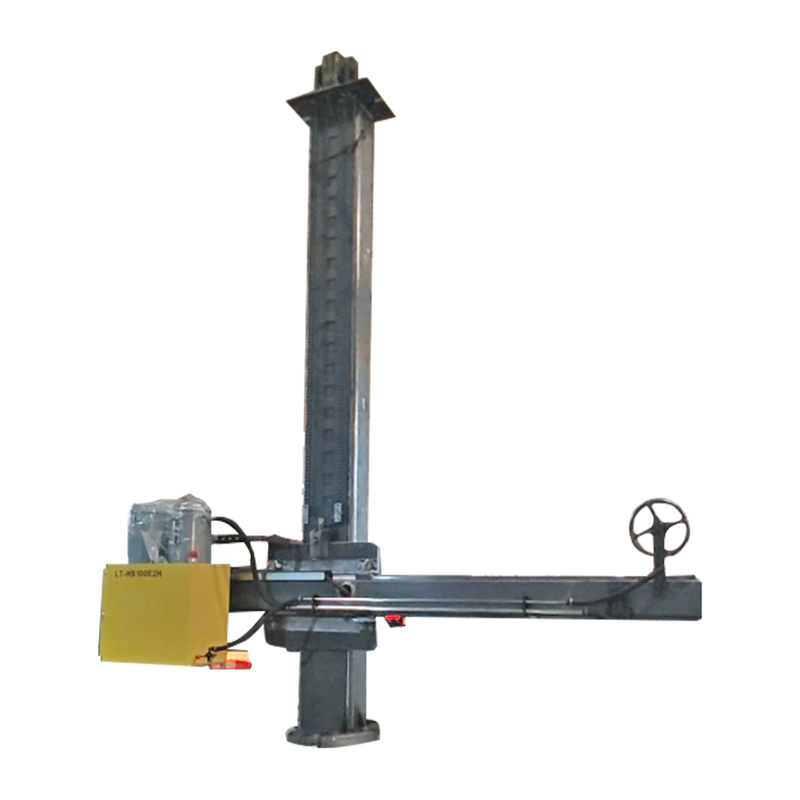 Customized Column & Boom Welding Manipulator with Electric Orbital MovementThis customized column-and-boom manipulator provides stable, motorized orbital movement for long seams, reducing fatigue and improving weld uniformity when paired with positioners or rotators.View Product →
Before welding, check the fit-up gap and the bevel angle. Dimensional tolerances for structural beams are usually defined by standards such as ASTM A6 or EN 10034; if the flange is not square or the web has excessive sweep, weld distortion and joint mismatch will appear.
How to Choose Between H Beam and I Beam
To make the final selection, compare the design forces against the section properties at the required steel grade. Work with an engineer to check axial capacity, bending capacity, deflection, and buckling resistance. The decision is rarely about beam type alone; it includes fabrication, transport, and installation costs.
Here are some procurement points that buyers often overlook:
- Verify the actual weight and dimensions from the mill certificate, not just the nominal name.
- Ask whether the section is stocked locally or must be imported; a long lead time can stall the project.
- Factor in welding time and consumables. An H beam may have higher material cost but lower welding and fit-up labour.
- For welded projects, confirm that the flange and web thicknesses match the welding procedure specification you plan to use.
If your welding shop is not set up to handle long and heavy beams, the wrong positioner or manipulator can turn a simple weld into a safety issue. Talk to a welding equipment supplier early in the design phase, and ask for a layout that matches the largest structural member you expect to weld.
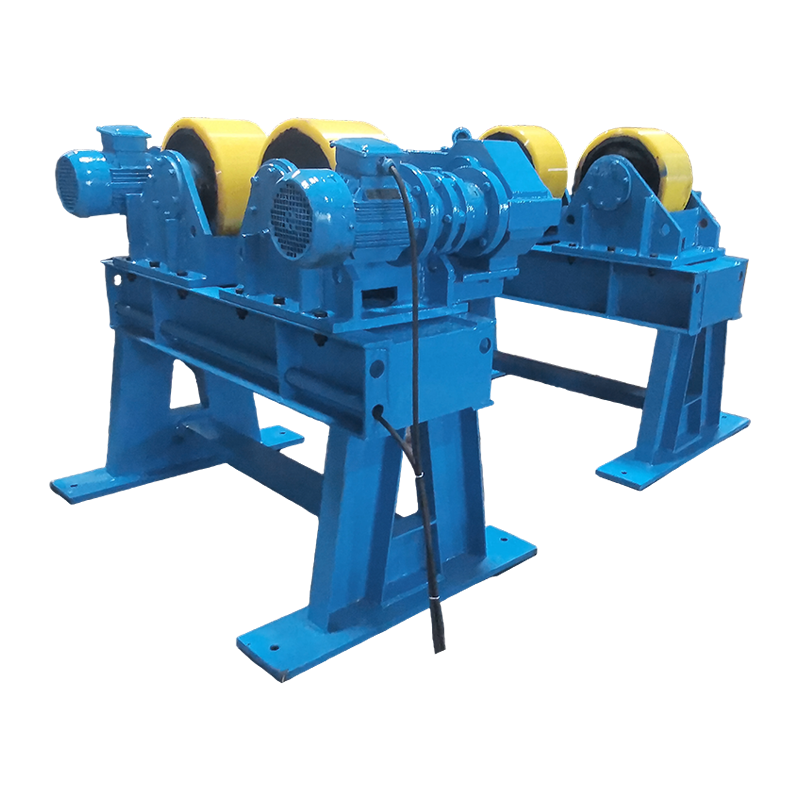
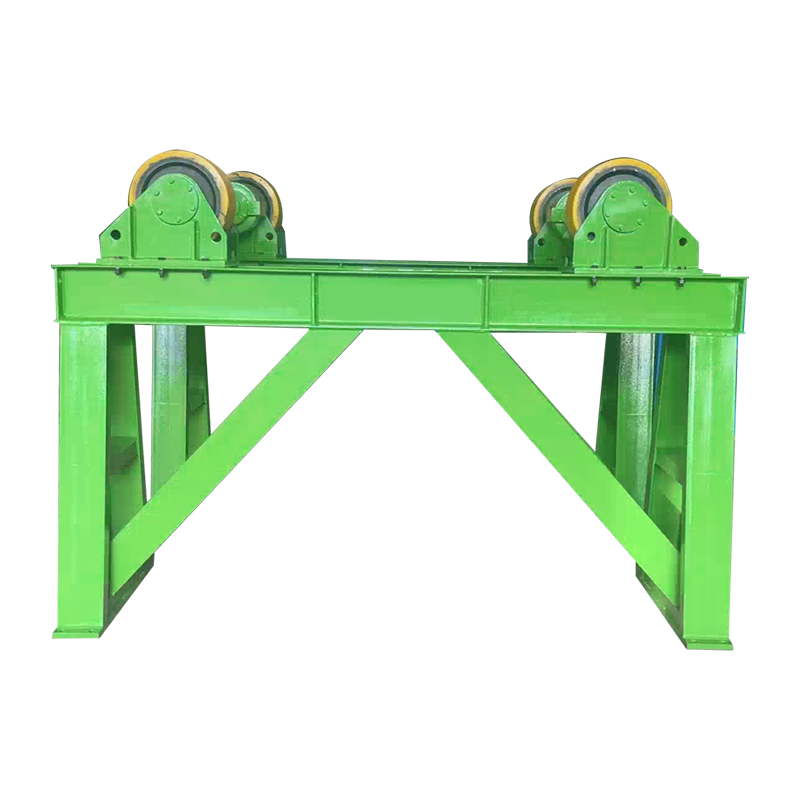
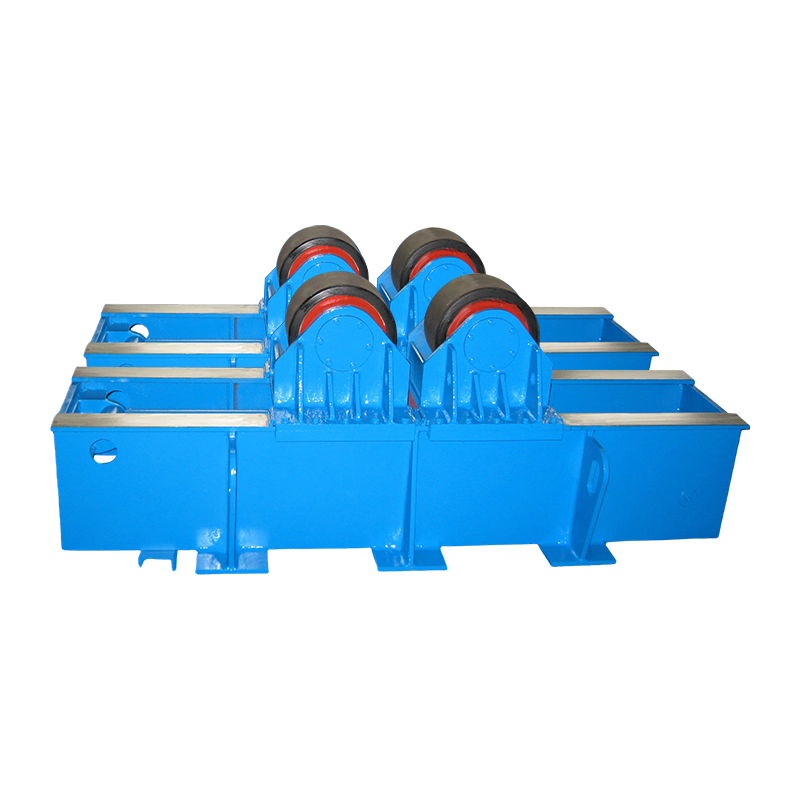
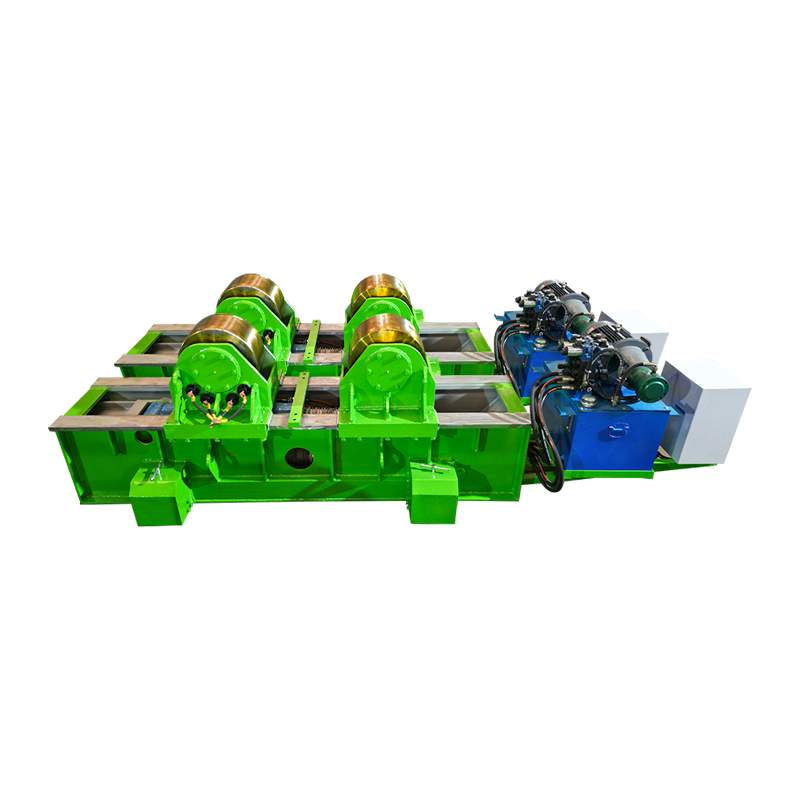
If your project is a steel frame combined with pressure vessels, tanks, or pipe sections, consider a welding rotator as well. A power-driven rotator keeps cylindrical parts turning at a controlled speed so the welder can produce uniform circumferential welds without walking around the workpiece.
 10-Ton Electric Orbital Welding Rotator with LiftingA 10-ton rotator with motorized orbital movement and electric lifting keeps cylindrical workpieces turning at controlled speed, enabling uniform circumferential welds without walking around the part.View Product →
Frequently Asked Questions
Can an I beam be used as a column?
Technically yes, but an I beam is less efficient than an H beam under pure axial compression. The narrow flanges and thinner web make it more likely to buckle about the weak axis. Use an I beam as a column only for light, temporary structures; otherwise, choose an H beam.
Which is stronger, H beam or I beam?
In most comparisons, an H beam is stronger because it contains more material and has wider flanges, giving it higher bending and axial resistance. The exact answer depends on the grade, weight per metre, and section dimensions.
Are H beams more expensive than I beams?
Usually yes. H beams use more steel per metre, and large sizes may require special rolling or fabrication. However, the overall installed cost can be lower if the H-beam design saves labour or reduces the number of members required.
Can H beams and I beams be welded together?
Yes. Both sections are weldable with standard carbon-steel procedures. The key is to prepare the joint correctly, especially where the tapered flange of an I beam meets a flat flange of an H beam. Fit-up and bevel angles should follow the welding procedure specification.
How do I read an H-beam or I-beam size?
A typical designation, such as W150×22 or S150×18.6, lists the nominal depth first and the weight per metre second. Always check the exact dimensions in the manufacturer's handbook because nominal values may differ from actual dimensions.
In summary, choose an H beam when you need high load capacity, a stable flange for connections, and heavy-duty structural performance. Choose an I beam when weight savings, cost, and long-span bending efficiency are the priority. By matching the section to the load path and welding method, you will avoid expensive failures and keep fabrication straightforward.