 English
 русский
 Español
 عربى
عربىWhen a buyer evaluates welding equipment, the first question is rarely about duty cycle or amperage. It is about which process fits the workpiece. Here is the conclusion up front: MIG is the faster, easier, lower-cost process for thicker steel sections; TIG is the precise, high-quality process for thin or aesthetic-critical work. The structural reason is simple. MIG feeds a consumable wire electrode through the gun continuously, so the wire is both electrode and filler. TIG uses a non-consumable tungsten electrode, and the operator feeds filler rod by hand.
The difference between MIG and TIG welding goes beyond the electrode. It drives deposition rate, heat control, operator skill, cost per meter, and the defects you can expect. MIG is a production process; TIG is a craft process. Shops that understand the distinction avoid buying the wrong machine, quoting the wrong procedure, or rejecting parts welded with the correct method.
What Is MIG Welding?
MIG welding, formally gas metal arc welding (GMAW), is a semi-automatic process in which a spooled wire electrode is driven through the welding gun at a preset speed. The wire is both the electrode and the filler metal: the arc melts the wire into the joint, and shielding gas from the nozzle protects the molten pool from oxygen and nitrogen in the air.
How MIG Welding Works
- A wire feeder pushes the electrode through the gun liner and contact tip.
- The arc forms between the wire and the workpiece, melting both.
- Shielding gas, usually argon/CO2 for steel, covers the weld pool.
- The operator guides the gun; the machine controls wire speed and arc length.
Advantages of MIG Welding
- High deposition rates, so thick-section work is completed quickly.
- Beginner-friendly operation: one hand guides the gun, the machine handles feed and arc length.
- Tolerates light mill scale and rust better than TIG.
- Lower operating cost for carbon steel fabrication.
- Continuous wire feed allows long, uninterrupted welds.
Disadvantages of MIG Welding
- Produces spatter; cosmetic joints usually need grinding or brushing.
- Heat input is harder to fine-tune, so sheet below 1.5 mm can burn through easily.
- Positional welding is more difficult without a pulsed or synergic power source.
- Incorrect gas coverage or wire settings introduce porosity quickly.
What Is TIG Welding?
TIG welding, formally gas tungsten arc welding (GTAW), uses a non-consumable tungsten electrode to sustain the arc. The tungsten does not melt into the joint. Instead, the welder feeds a separate filler rod into the molten pool while controlling heat with a foot pedal.
How TIG Welding Works
- The tungsten electrode establishes the arc; it is not consumed.
- Shielding gas, typically pure argon, flows over the weld pool.
- The operator manually feeds filler rod into the leading edge of the pool.
- Foot pedal control adjusts heat continuously through the weld.
Advantages of TIG Welding
- Highest weld quality: clean, dense beads with no spatter, frequently meeting X-ray standards.
- Precision heat and filler control suit material from 0.5 mm upward.
- Welds nearly all metals, including aluminum, stainless, titanium, and copper.
- No flux or slag, so finished welds are smooth and easy to clean.
- Allows autogenous welding without filler on edge and corner joints.
Disadvantages of TIG Welding
- Slow deposition rates make heavy-section welding impractical.
- Steep learning curve that needs coordinated two-hand and foot-pedal operation.
- Consumables cost more: tungsten, gas lenses, cups, and high-purity argon.
- Not economical for thick carbon steel where speed and cost per meter dominate.
MIG vs TIG Welding: Side-by-Side Comparison
Evaluated on the same shop-floor criteria, the differences become clear.
| Factor | MIG Welding | TIG Welding |
|---|---|---|
| Electrode | Consumable wire electrode | Non-consumable tungsten electrode |
| Filler metal | The wire itself, automatically fed | Separate rod, manually fed |
| Shielding gas | Argon/CO2 mix or CO2 for steel | Pure argon, sometimes argon-helium |
| Heat control | Machine-set, limited adjustment | Continuous foot pedal adjustment |
| Typical thickness | 1.5 mm to 25 mm or more | 0.5 mm to 6 mm ideal |
| Travel speed | High | Low to moderate |
| Skill level | Basic, short training | Advanced, steady hands |
| Weld appearance | Spatter, may need grinding | Clean, smooth, no spatter |
| Relative cost | Lower equipment and consumables | Higher gas, torch, and labor cost |
| Best for | Structural steel, frames, production runs | Stainless, aluminum, thin sheet, visible joints |
How to Choose Between MIG and TIG Welding
Choose MIG when the joint is thick, the part repeats, and speed drives your cost. Choose TIG when appearance, metallurgy, or thin material matters more than cycle time.
Selection Criteria
- Material thickness: above 3 mm, MIG deposition rate pays off; below 3 mm, TIG preserves the base metal.
- Weld visibility: visible polished joints favor TIG; painted or hidden structural welds favor MIG.
- Production volume: high volume favors MIG; low-volume, high-value parts justify TIG.
- Aluminum and stainless: TIG handles oxide and heat control on thin sections; pulsed MIG suits thicker aluminum.
- Operator skill: MIG suits general welders; TIG requires trained operators.
A Quick Decision Filter
- Is the material thinner than 3 mm? Use TIG.
- Is the weld visible and appearance-critical? Use TIG.
- Is the part large, thick, or high-volume? Use MIG.
- Do you need X-ray or code quality? Use TIG with a qualified procedure.
- Are you repairing cast aluminum? Use TIG.
Work Positioning and Automation for Consistent Welds
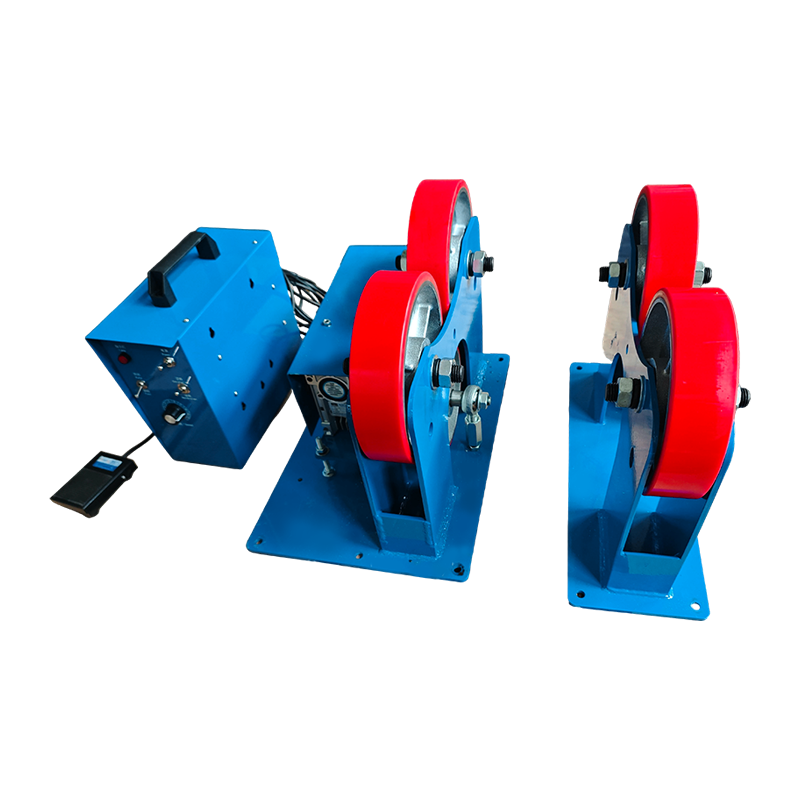
Whichever process you choose, weld quality improves dramatically when you remove the joint from difficult positions. A welding positioner rotates and tilts the part so the operator can run a MIG or TIG bead in the flat position, the most productive and least defect-prone orientation. This matters especially for TIG, where hand-fed filler needs a stable work angle.
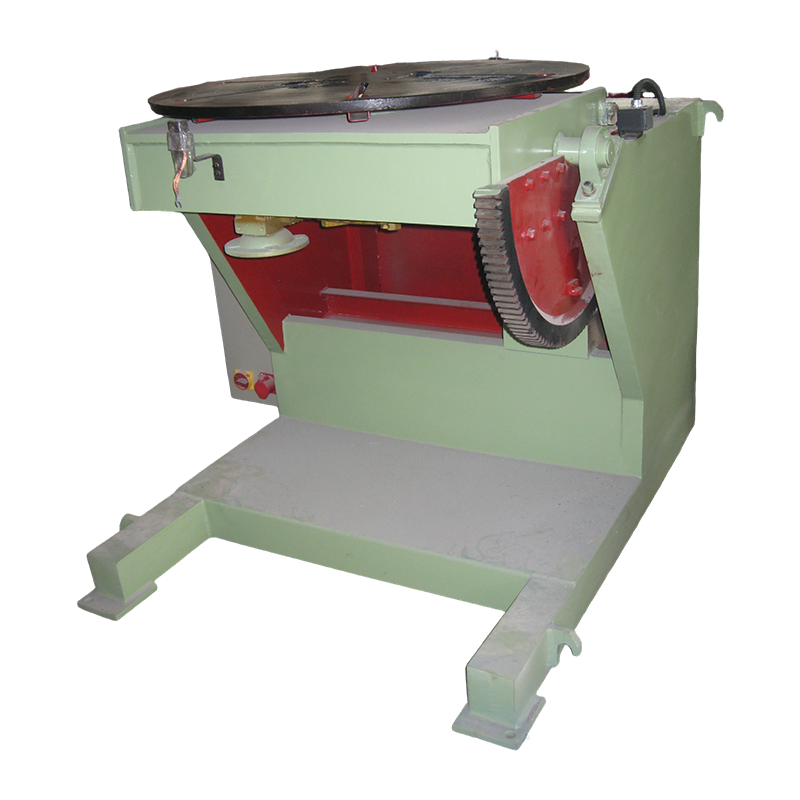 1T Conventional Welding Positioner for Stable Flat-Position WeldsThis compact positioner rotates and tilts workpieces up to one ton, letting operators run MIG or TIG beads in the flat position. It suits small and medium parts where consistent torch angle and travel speed improve weld quality.View Product →
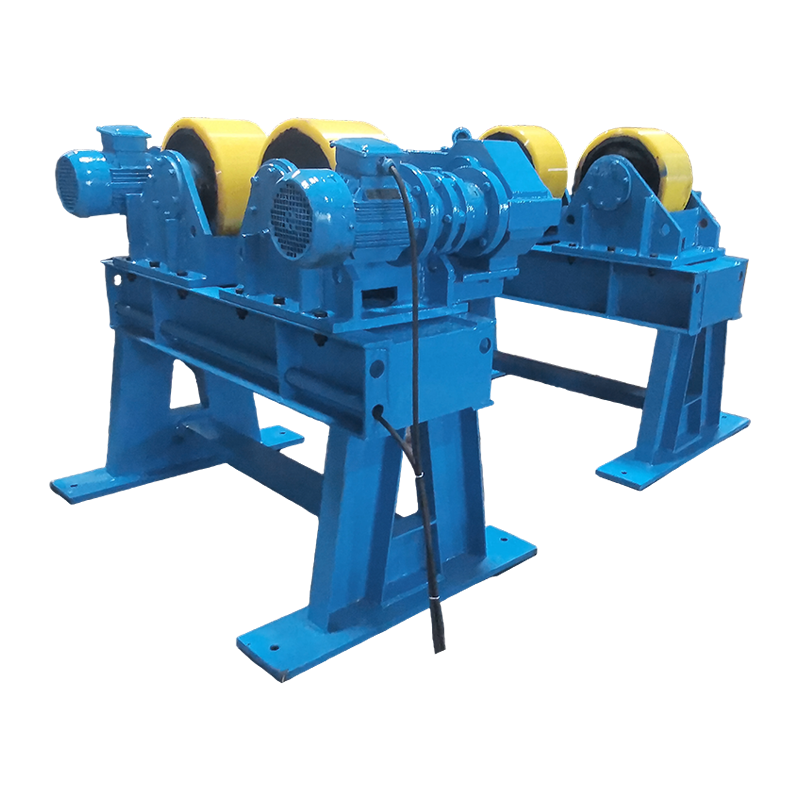
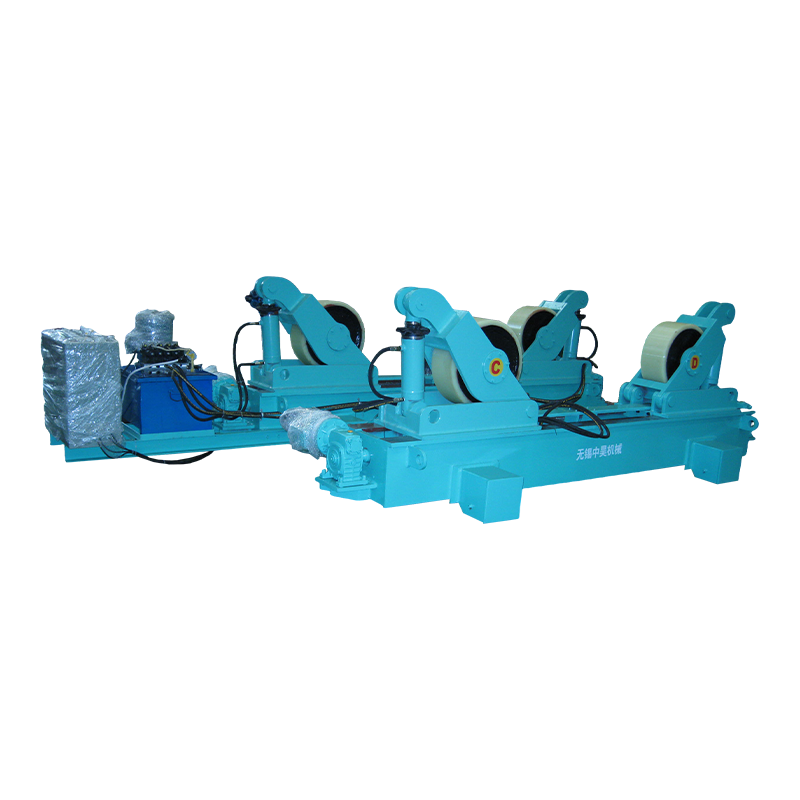
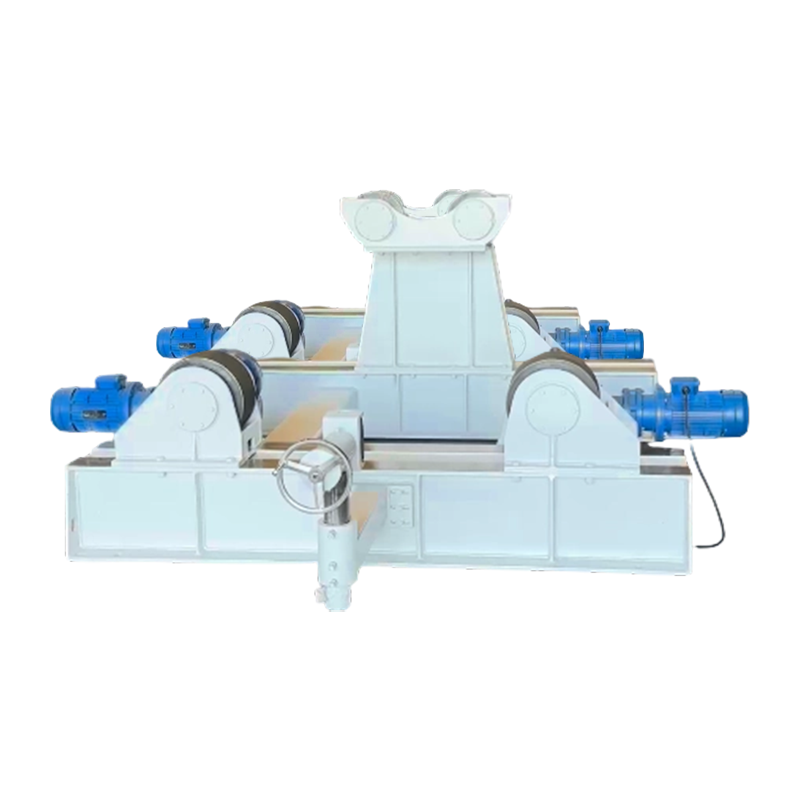
For cylindrical workpieces such as tanks, pipes, pressure vessels, and wind tower sections, welding rotators turn the shell while the torch stays fixed, converting a long circumferential seam into a continuous flat-position weld. MIG fill passes and TIG root passes benefit from consistent travel speed, and anti-drift designs keep the seam aligned. This is why welding rotators in tank and pipe manufacturing are standard on modern fabrication lines.
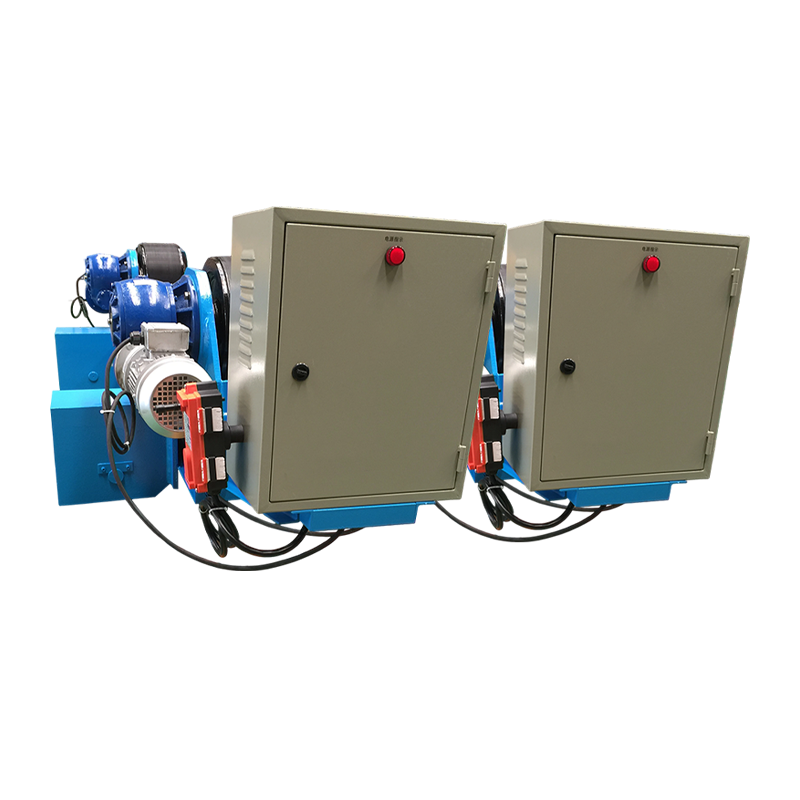 10T Adjustable Welding Rotator with Anti-Drift for Cylindrical SeamsThis rotator handles ten-ton cylindrical workpieces, turning shells steadily while the torch stays fixed. Its anti-drift system keeps long circumferential seams aligned, making it ideal for tanks, pipes, and pressure vessels needing continuous flat-position welds.View Product →
On large assemblies, a column boom carries the torch at a fixed height and reach, removing the operator's arm weight from the equation. A TIG column boom is configured for precise filler feed and gas coverage, which matters for repeatable welds on large parts. When you plan to automate either process, positioning equipment is the first investment to consider.
 TIG Column and Boom for Precise Torch Positioning and AutomationThis column-and-boom unit supports TIG welding by accurately adjusting torch position, travel, and oscillation. It helps maintain argon coverage and repeatable bead quality on large assemblies, reducing manual effort and preparing for automated production.View Product →
If you are specifying a new production line, discussing your workpiece envelope with a welding equipment manufacturer early prevents rework and speeds up qualification.
Cost Considerations
On equipment cost, MIG is the lower entry point: a solid MIG machine costs less than an equivalent TIG machine with AC output, and wire consumables are cheaper than tungsten and high-purity argon. The dominant production cost, however, is labor time. A TIG weld can take three to four times longer than the same joint made with MIG. When you compare cost per meter of finished weld, MIG wins on carbon steel; TIG wins where MIG would create defects that require rework.
Frequently Asked Questions
Can one machine do both MIG and TIG?
Many multi-process machines offer MIG and DC TIG, but changeover requires swapping the torch, changing gas, and adding a TIG torch with a valve. AC TIG for aluminum needs a machine with AC output, which raises cost. Multi-process units suit small shops; production lines favor dedicated machines.
Is TIG stronger than MIG?
A correctly made MIG weld and a correctly made TIG weld can both meet the same strength requirements. The difference is consistency: TIG produces fewer internal flaws and better heat-affected-zone control, which matters for code work. On ordinary carbon steel, a sound MIG weld is just as strong.
Which is easier for a beginner?
MIG is easier because the machine controls wire feed and arc length. A beginner can make an acceptable MIG weld after hours of practice, while TIG takes weeks of consistent practice.
Why is TIG commonly used for aluminum?
Aluminum has an oxide layer that melts far above the base metal. TIG alternating current cleans the oxide while giving precise heat control, preventing burn-through on thin aluminum. MIG can weld aluminum but is more prone to porosity on thin sections.
How does material thickness affect the choice?
Below roughly 3 mm, TIG gives the control needed to avoid burn-through and distortion. Above 3 mm, MIG deposition rate delivers a clear productivity advantage. Many fabricators weld thin-wall tubing with TIG and change to MIG or flux-cored for structural plate.
The difference between MIG and TIG welding is not about which process is better; it is about matching the process to the material, the joint, the production volume, and the available skill. MIG delivers speed, simplicity, and lower cost on thick steel. TIG delivers precision, quality, and clean cosmetic results on thin or reactive metals. Evaluate the workpiece before you buy a machine, and invest in positioning equipment early; it improves both processes more than any other shop-floor upgrade.