 English
 русский
 Español
 عربى
3T Conventional Welding Positioner with Additional Vertical Lathe Chucks
The 3T Conventional Welding Positioner with Additional Vertical Lathe Chucks is a device for positioning and rotating workpieces during welding. Its c...
See Details
Buy a MIG welder if you weld thin sheet indoors and want speed, clean beads and a short learning curve. Buy a stick welder if you work outdoors, on rusty or dirty steel, or need a machine that starts on a generator and survives a site. That is the honest one-line answer to the MIG vs stick welder question, and it holds for most fabrication and repair work.
The rest of this guide explains why the split falls where it does: deposition rate, penetration profile, wind and contamination tolerance, duty cycle and running cost. The goal is to let you match a process to the joints you actually weld, rather than to a spec sheet in a showroom.
MIG is the faster, cleaner process on thin sheet, and stick is the tougher, more forgiving process on thick, dirty or outdoor work.
MIG (gas metal arc welding) pushes a continuous solid wire through a gun and protects the arc with shielding gas. Once the wire feed speed, voltage and gas flow are set, the machine feeds the filler for you. Stick (shielded metal arc welding) uses a flux-coated electrode that burns to create its own gas shield, and the slag that forms afterwards protects the cooling bead.
That single mechanical difference drives almost everything else: travel speed, cleanup time, wind tolerance, minimum thickness, and the skill each process demands from the person holding the stinger or the gun.
| Job or condition | Better choice | Reason |
|---|---|---|
| 1 to 3 mm body panels, ducting, guards | MIG | Low heat input and short arc, minimal distortion and no slag to chip |
| Outdoor site work in wind | Stick | The flux shield cannot be blown away; gas shielding can |
| Rusty, painted or oily plate | Stick | The arc burns through light contamination that would cause MIG porosity |
| 6 to 10 mm structural fillets in flat position | MIG (or flux-cored) | Much higher deposition per hour in the same position |
| Vertical-up root on pipe | Stick | Fast-freeze slag supports the puddle on a vertical face |
| Thin aluminium | MIG | Stick electrodes for aluminium are impractical at small thickness |
| Repair work with limited power | Stick | A 3.2 mm electrode runs on roughly 90 to 130 A from a modest supply |
Use the table as a filter, not a rulebook. If your work is 80 percent thin sheet and 20 percent site repair, one process clearly earns the bench space; if it is the other way round, the answer flips.
MIG gives you a continuous arc, so your main job is keeping the wire at the leading edge of the puddle.
Wire feed speed sets the current and voltage sets the arc length, while gas flow typically sits between 12 and 18 litres per minute. The transfer mode changes with current: short-circuit transfer below roughly 3 mm and low amperage, globular in the middle, and spray transfer at higher currents with an argon-rich mix. Short-circuit suits thin sheet and out-of-position work; spray deposits metal fast and penetrates deeply but is normally limited to flat and horizontal positions.
Stick hands heat control to the operator, because arc length directly changes voltage and current.
A constant-current power source with a drooping characteristic keeps the current stable as the arc length varies. Electrode class matters more than most buyers expect: 6013 is easy to strike and re-strike for general work, 6010 and 6011 give a forceful, deep-digging arc on dirty steel, and 7018 is a low-hydrogen electrode that must be kept dry in a heated quiver or baked on the maker's schedule. Every stick bead also costs you slag removal, and that chipping time is a real labour line in any cost estimate.
MIG wins on speed and finish, stick wins on tolerance to conditions, and the two are closer than most people assume on strength.
| Factor | MIG | Stick |
|---|---|---|
| Consumable | Solid or flux-cored wire on a spool | Flux-coated electrodes, 2.5 to 5 mm |
| Shielding | Gas bottle, regulator and flowmeter | Built into the electrode coating |
| Deposition rate | Roughly 2 to 4 kg per hour in spray transfer | Roughly 1 to 2.5 kg per hour, limited by electrode size |
| Practical minimum thickness | About 0.8 mm with care | About 1.5 to 2 mm before burn-through risk rises |
| Penetration shape | Wide and shallow in short-circuit; deeper in spray | Narrow and deep, especially with cellulosic electrodes |
| Cleanup | Light spatter removal, occasional wire brushing | Slag chipping on every pass |
| Wind and weather | Poor without a shelter | Good, the shield is self-generated |
| Learning curve | Shorter; the machine feeds filler for you | Longer; arc length and travel angle are manual skills |
| Positions | Strong flat and horizontal, workable vertical-down on thin sheet | Strong in all positions including vertical-up and overhead |
| Filler efficiency | About 95 percent of the wire becomes weld metal | About 60 to 70 percent after stub loss and spatter |
| Extra running cost | Shielding gas and regulator rental | Electrode stubs and slag removal labour |
MIG pays for itself first in any shop that welds thin material in volume.
Stick remains the default on site because it tolerates everything a workshop does not: wind, dirt, moisture and neglect.
MIG penetrates adequately, but the depth depends on transfer mode rather than on the process name.
Short-circuit MIG is a cold process by nature: the wire touches the puddle, pinches off and deposits metal with limited fusion depth, which is why lack of fusion is the classic MIG defect on plate above 6 mm. Spray transfer changes the picture because the arc is stable and the current high enough to fuse sidewalls properly, but it is largely a flat and horizontal technique. Stick electrodes, particularly cellulosic types, concentrate current in a narrow arc that digs a finger-shaped penetration profile even on dirty steel.
For vertical-up work, stick with a fast-freeze electrode lets you hold a small puddle and climb steadily. MIG can weld vertical-up too, using lower wire feed speed, a slight weave and a pause at the toes, but the margin for error is thinner. Overhead, stick is generally the more controllable option because arc length adjusts instantly while a MIG gun gives you no such feedback.
Whichever process you choose, the qualified procedure governs: on pressure and structural work, the welding procedure specification and the operator qualification decide acceptance, not the process label on the machine.
Duty cycle is the number that decides whether a machine suits your production rate, and it is usually quoted at a flattering amperage.
A typical compact MIG set rated 200 A at 60 percent duty cycle can weld for six minutes out of ten at that current, less at higher settings or in a hot workshop. Small inverter stick sets often quote 100 percent duty at 100 to 130 A, which covers 3.2 mm electrodes continuously. Check the rating at the amperage you will actually use, and check the input supply: single-phase 230 V machines suit a small shop, while three-phase 400 V units hold voltage better under sustained load.
On tanks, pipe spools, shafts and vessels, a rotator or positioner that turns the joint into flat position usually delivers a bigger gain than switching processes.
Flat position lets you run higher current without the puddle running away, which lifts deposition rate and improves bead profile with either MIG or stick. For cylindrical work, a powered rotator with anti-drift control holds steady rotation speed and stops the workpiece creeping along the rollers, so the weld stays at a consistent angle.
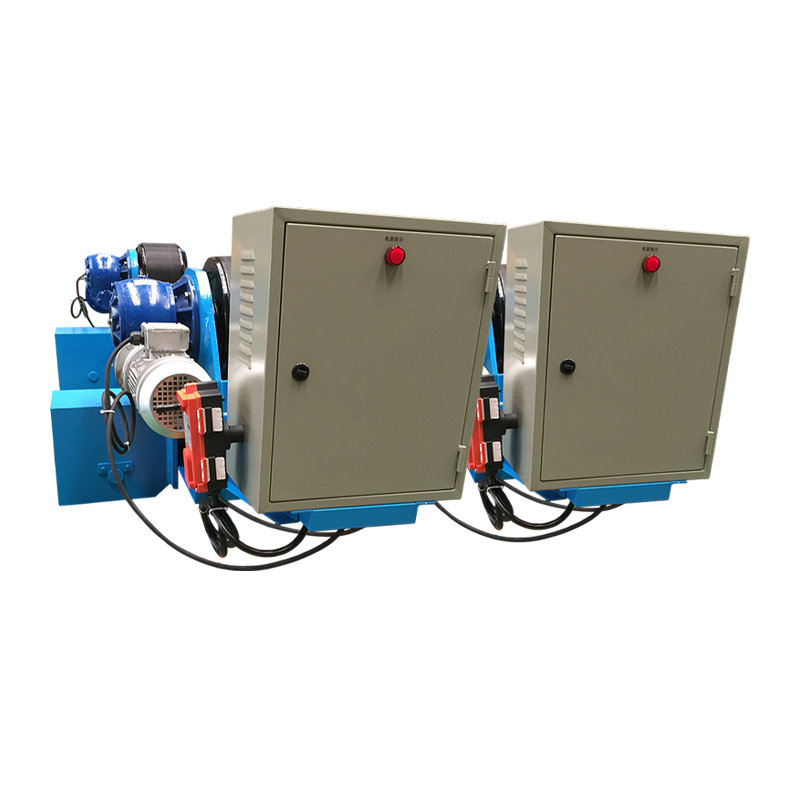 10T Adjustable Welding Rotator with Anti-Drift ControlThis 10-ton adjustable rotator uses sensor and PLC anti-drift correction to hold stable rotation during circumferential and longitudinal seam welding of cylindrical workpieces.View Product →
A conventional positioner serves the same purpose for fabricated parts that need tilting and rotation rather than continuous turning, and for heavy vessel sections a fit-up rotator handles both alignment and rotation before the first pass is laid.
 3T Conventional Welding Positioner for Fabricated PartsThis 3-ton positioner tilts and rotates workpieces up to 3000 kg to keep seams in flat position, with variable-frequency rotation and remote or foot control.View Product →
Sizing follows workpiece weight with a healthy margin, and the choice between self-aligning, adjustable and fit-up designs comes down to how much diameter variation you expect. The full welding rotator range covers 1 t to 1000 t class loads, and the practical effect on tank and pipe fabrication is covered in this look at how rotators change tank and pipe manufacturing.
 120T Fit-Up Welding Rotator for Large Cylindrical WorkpiecesThis 120-ton master-slave rotator supports assembly and welding of large cylinders, with adjustable roller spacing and variable-speed drive for wind towers and pressure vessels.View Product →
A short, honest audit of your own work beats any generic recommendation.
Neither process is inherently stronger; a qualified procedure for either can exceed the base metal strength. Stick is more tolerant of contamination and gives deeper penetration on thick, dirty steel, while a poorly set short-circuit MIG bead on plate is where lack of fusion usually appears.
Only multiprocess machines with a dedicated stick mode and the correct output characteristic. A standard MIG-only set has a constant-voltage supply that is unsuitable for stick electrodes.
MIG is easier for most beginners because the machine feeds filler and the arc stays lit. Stick demands independent control of arc length, travel angle and speed, so expect several weeks of practice before beads are consistent.
Both work above 10 mm, but the practical route differs. Stick uses large electrodes and multiple passes with slag removal between them; MIG in spray transfer or flux-cored wire deposits faster with fewer stoppages.
Solid wire requires gas, usually an argon and CO2 mix, or straight CO2 for deeper penetration on carbon steel. Self-shielded flux-cored wire runs without a bottle and tolerates wind, which makes it the practical outdoor alternative to stick.
Running cost depends on your mix of labour, gas and filler. Solid wire converts about 95 percent of its weight into weld metal against roughly 60 to 70 percent for stick, but gas, regulator rental and bottle handling eat into that advantage on low-volume work.
Pick the process that matches the joints you weld most often, then spend the remaining budget on positioning equipment that keeps those joints flat and repeatable. A modest MIG set on a rotating workpiece will out-produce a larger machine fighting gravity, and a stick set with a good positioner will do the same on heavy vessel work. Decide with thickness, location and duty cycle in front of you, and the MIG versus stick argument usually resolves itself in a few minutes.
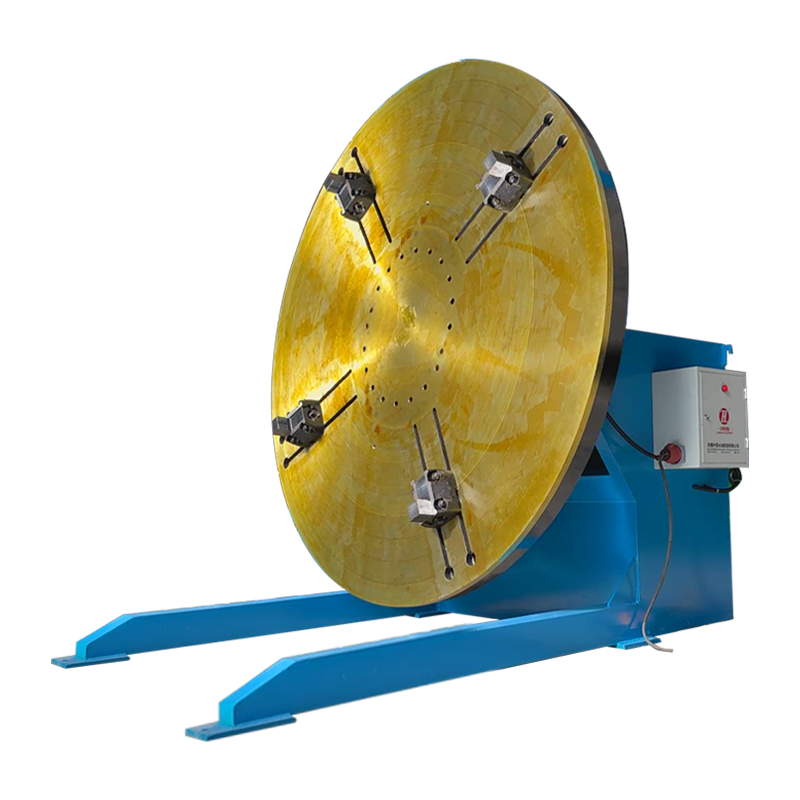
The 3T Conventional Welding Positioner with Additional Vertical Lathe Chucks is a device for positioning and rotating workpieces during welding. Its c...
See Details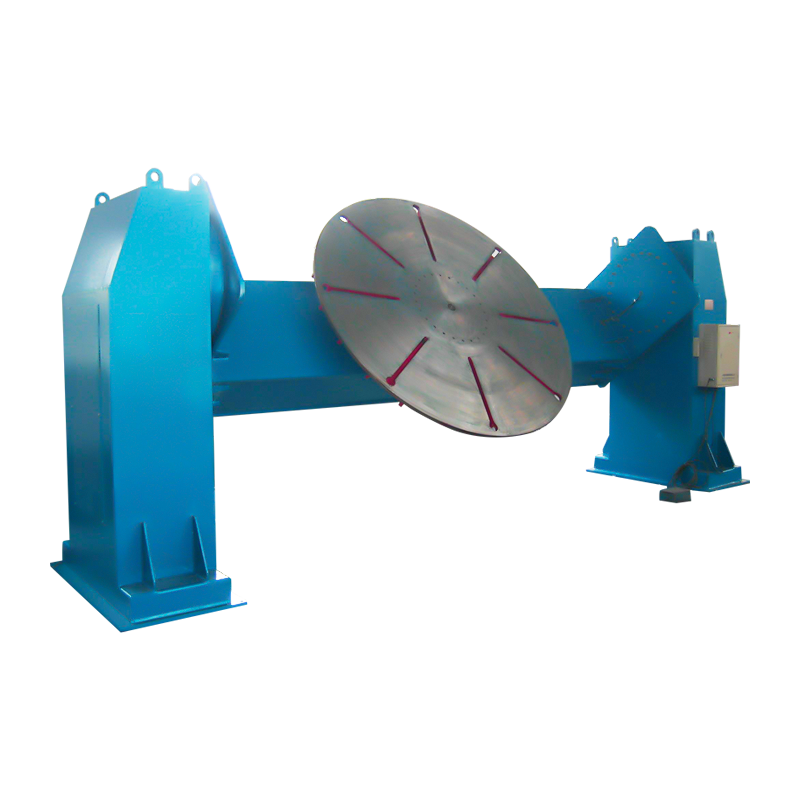
The High Precision Double Column Welding Positioner for Special Work Piece is a precision welding positioning device specifically designed for workpie...
See Details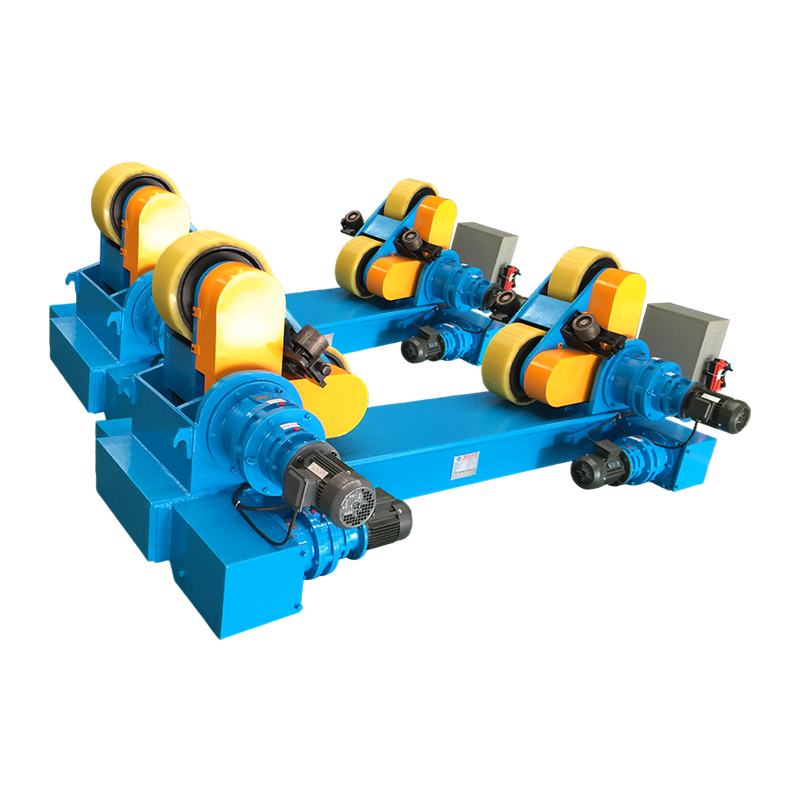
The 40T self-aligning welding rotary machine is a high-end welding positioning device specifically designed for heavy-duty cylindrical workpieces. Equ...
See Details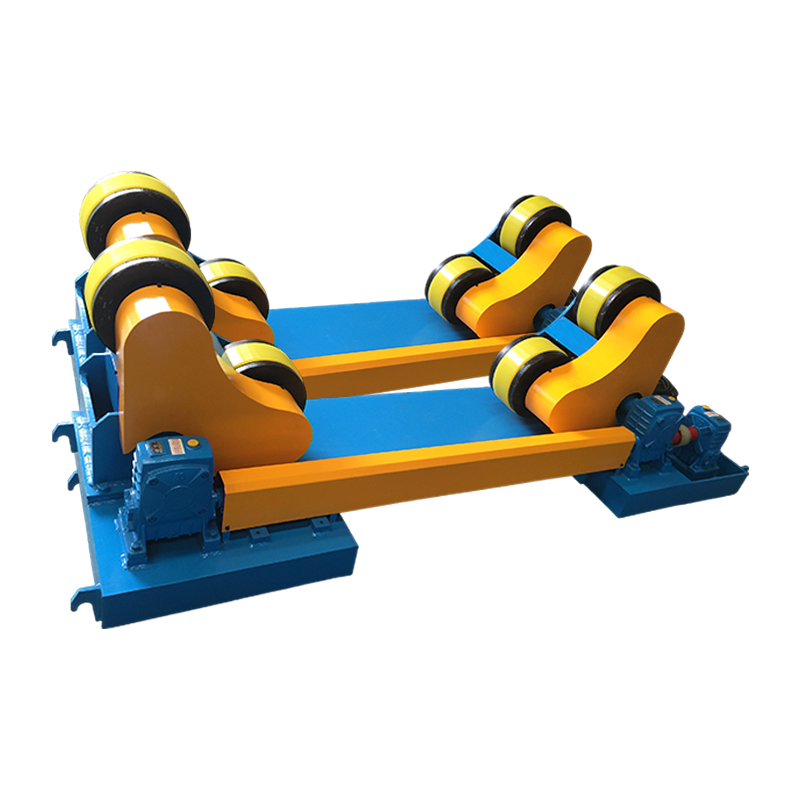
The 10T self-aligning welding rotary machine (with manual track movement and extended version) is a high-performance device specifically designed for ...
See DetailsContent
Copyright 2025 Wuxi WeldNice Heavy Industry Technology Co., Ltd. All Rights Reserved Custom Automatic Welding Equipment Manufacturers



sales@weldnicefactory.com