 English
 русский
 Español
 عربى
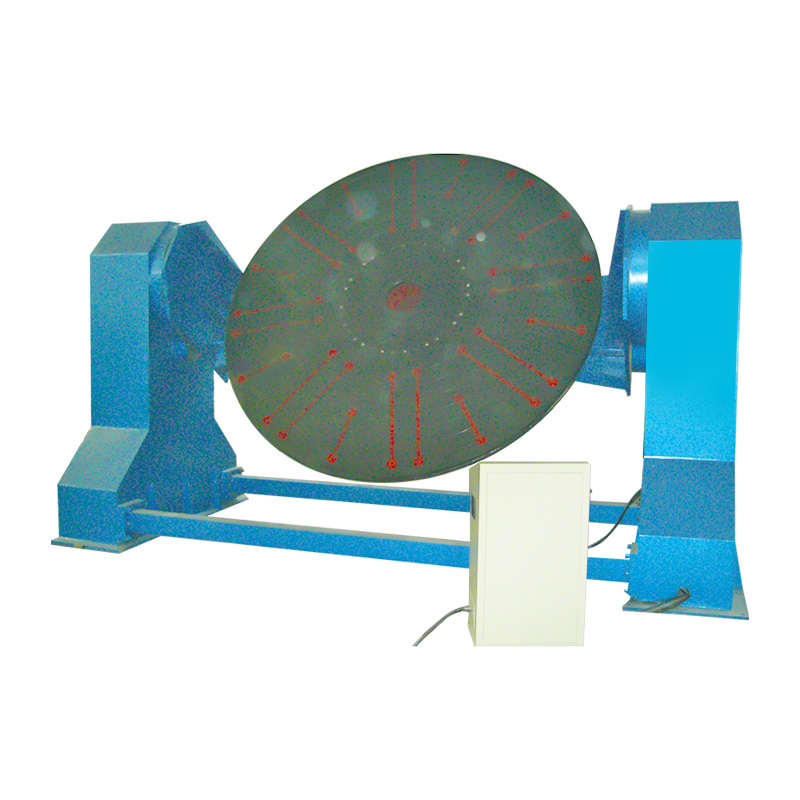
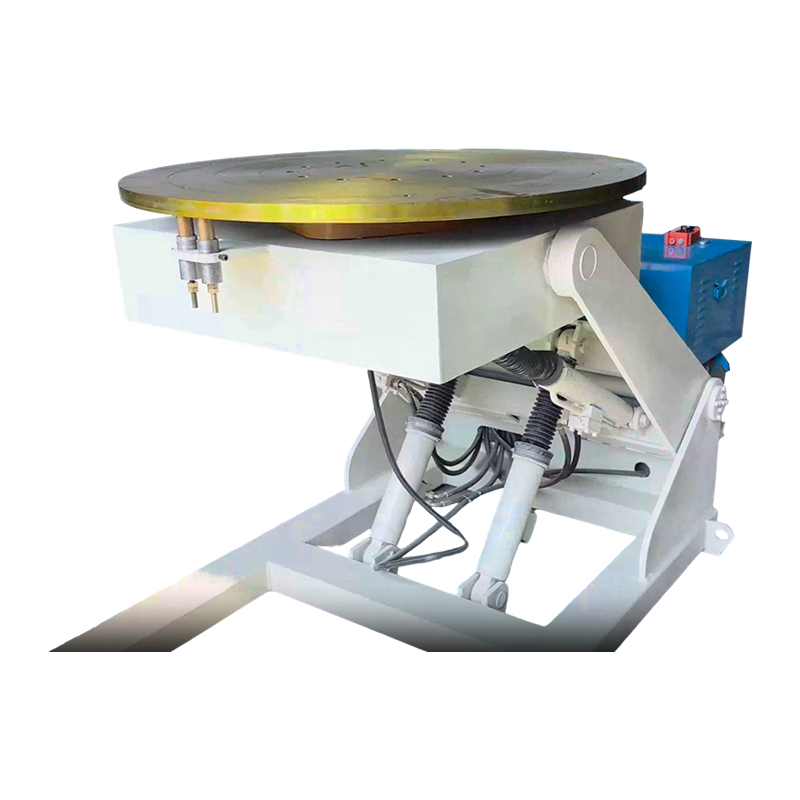
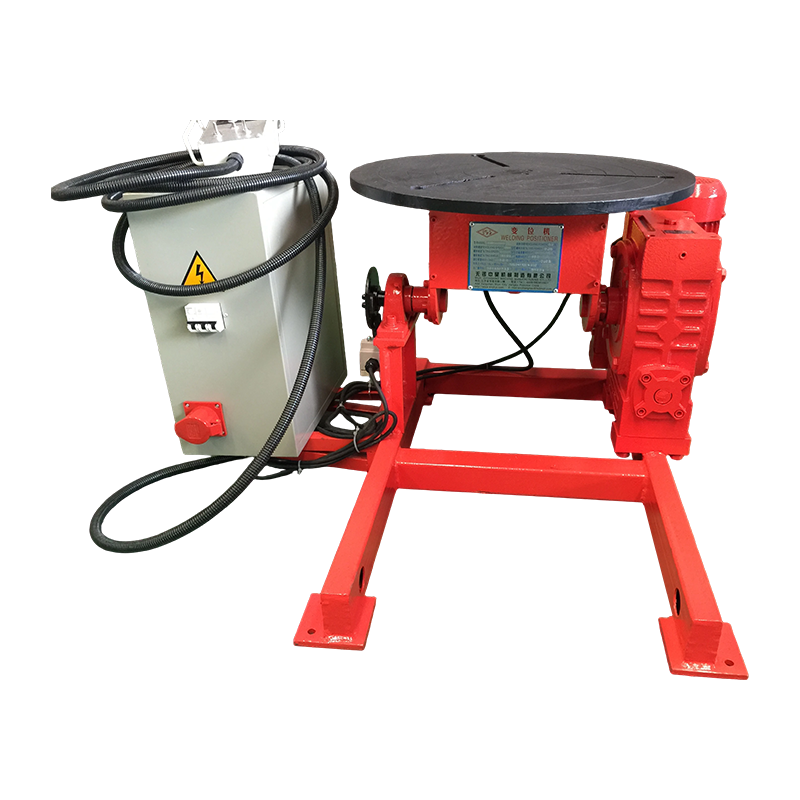
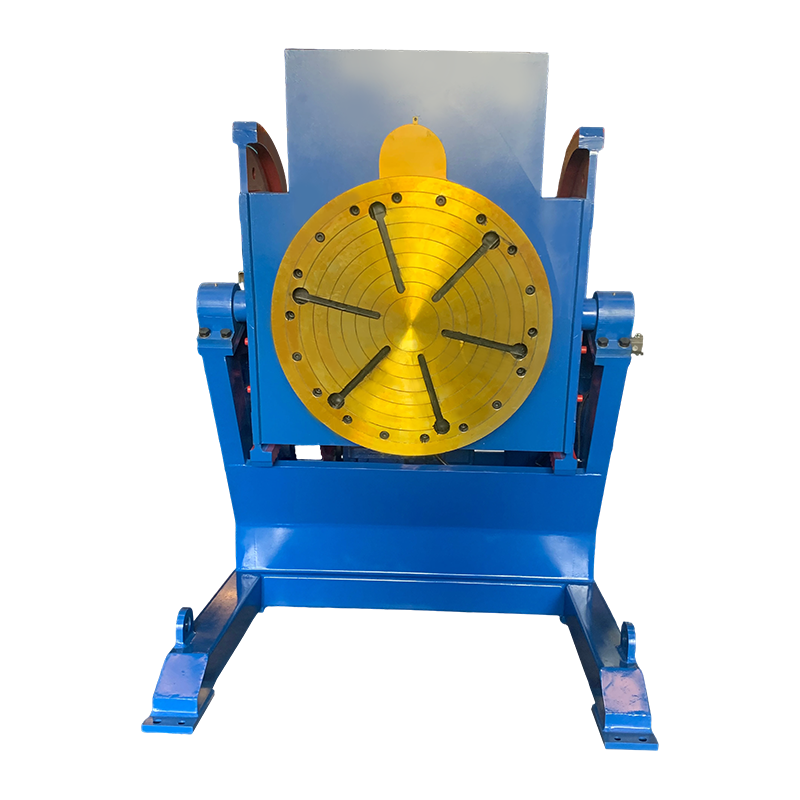
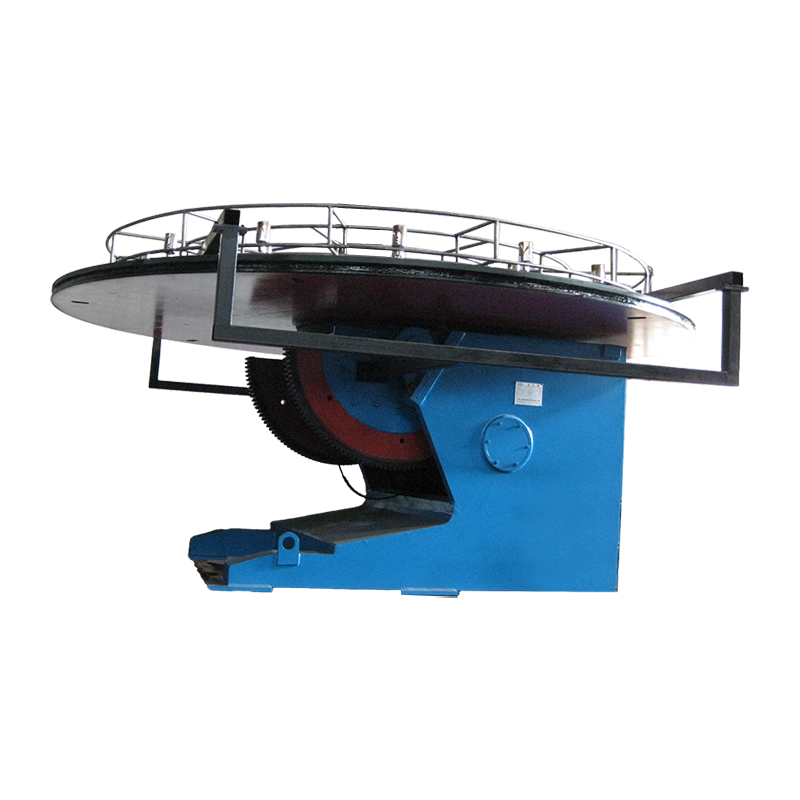
عربىA welding positioner turntable is a motorized rotary workholding device that rotates and tilts a workpiece to the optimal angle, allowing welders to perform flat or horizontal welds rather than struggling with overhead or vertical positions. In practical terms, this single piece of equipment can reduce welding time by 30–50%, cut rework rates by up to 40%, and dramatically improve bead consistency — making it one of the highest-ROI investments a fabrication shop can make.
Whether you are welding pressure vessels, pipe flanges, structural frames, or custom assemblies, a welding turntable positioner keeps the weld joint in the ideal "1F" (flat) or "2F" (horizontal) position at all times — eliminating the dangerous and skill-intensive overhead and vertical weld positions that account for the majority of welding defects in industrial settings.
How Does a Welding Positioner Turntable Work?
A welding positioner turntable operates through a combination of a motorized chuck or faceplate, a tilt mechanism, and a variable-speed controller. The workpiece is clamped securely to the rotating table, which then turns at a programmable speed while the welder — or an automated torch — deposits a consistent bead along the rotating joint.
Core Components Explained
- Faceplate / Chuck: The rotating work surface, typically ranging from 200 mm to 1,500 mm in diameter, with T-slots or threaded holes for fixture mounting.
- Tilt Axis: Allows the table to incline — usually from 0° to 135° — so the weld joint is always presented at the flattest possible angle.
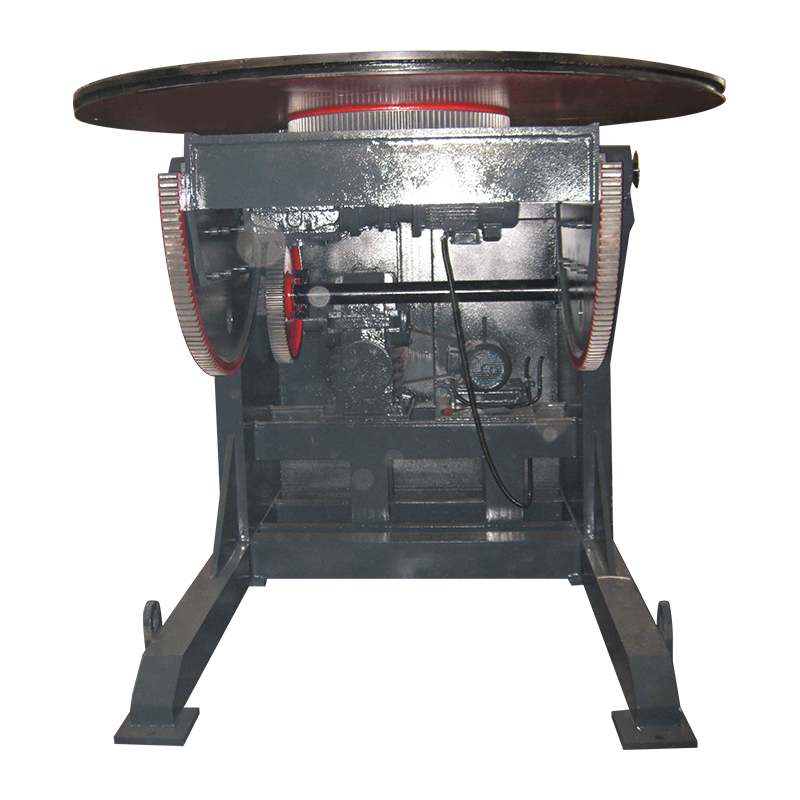
- Drive Motor & Gearbox: Provides the torque needed to rotate heavy loads smoothly. Servo or AC motors with a worm-gear reducer are standard on precision models.
- Speed Controller (VFD): Variable frequency drive allows rotation speed adjustments from as slow as 0.1 RPM for precision welding to several RPM for lighter fixtures.
- Slip Ring / Ground Connection: Provides welding current return path through the table, protecting the bearings from arc damage.
The combination of rotation and tilt means that for virtually any cylindrical or symmetrical part, the welder remains stationary while the work comes to them — a fundamental ergonomic shift that reduces operator fatigue and dramatically improves arc-on time.
What Types of Welding Positioner Turntables Are Available?
The market offers several distinct categories of welding positioner turntables, each engineered for specific load capacities, part geometries, and automation levels. Choosing the wrong type is the single most common — and costly — mistake buyers make.
| Type | Typical Load Capacity | Tilt Range | Best For | Relative Cost |
|---|---|---|---|---|
| Bench-Top Turntable | 5–50 kg | Fixed or 0–90° | Small components, pipe fittings, instrumentation | $ |
| Floor-Standing Positioner | 50–2,000 kg | 0–135° | Pressure vessels, flanged assemblies, frames | $$ |
| Headstock-Tailstock Positioner | 500–20,000 kg | 360° rotation | Long shafts, large diameter pipes, wind towers | $$$ |
| Positioner + Manipulator Combo | 1,000–50,000 kg | Full programmable | Automated welding cells, robotic integration | $$$$ |
| Pipe Welding Turntable | 100–5,000 kg | Horizontal axis | Oil & gas, petrochemical pipework | $$–$$$ |
| Table 1: Comparison of Common Welding Positioner Turntable Types by Application | ||||
Which Specifications Matter Most When Selecting a Welding Turntable Positioner?
The four specifications that determine whether a welding positioner turntable will actually perform in your application are load capacity, off-center load rating, rotation speed range, and tilt torque — not just the headline "load capacity" figure that many buyers focus on exclusively.
1. Load Capacity vs. Eccentric (Off-Center) Load
A positioner rated at 1,000 kg can carry that load only when the center of gravity is directly on the table centerline. In real fabrication, parts are rarely perfectly centered. Most manufacturers specify an eccentric load rating — for example, a 1,000 kg unit may only handle 600 kg at 200 mm eccentricity. Always request the eccentric load chart and measure your workpiece's approximate center of gravity before purchasing.
2. Rotation Speed Range
For manual MIG or TIG welding, you typically need a surface speed at the weld joint of 150–400 mm/min. For automated SAW (submerged arc welding), speeds up to 1,500 mm/min may be required. Verify that the positioner's RPM range — converted to surface speed at your part's radius — covers your welding process parameters.
3. Tilt Angle and Tilt Torque
A tilt range of 0° to 135° is the industry standard for general-purpose positioners. However, the tilt torque rating at maximum angle is equally critical — a unit may be capable of tilting 135° empty but lack the torque to hold position with a heavy, eccentric load. Confirm the rated tilt holding torque in N·m for your expected maximum eccentricity.
4. Ground Current Capacity (Welding Current Return)
The welding positioner turntable must carry the full welding return current through a dedicated grounding circuit — typically a carbon brush and slip ring assembly rated for 300–600 A on medium-duty units. Undersized or poorly maintained ground connections cause arc pitting in bearings, leading to premature failure and expensive downtime.
What Productivity and Quality Gains Can You Expect From a Welding Positioner Turntable?
Quantified productivity improvements from welding positioner turntables are well-documented across industries: shops consistently report measurable, rapid payback periods ranging from 6 to 18 months depending on part volume and complexity.
| Metric | Manual Repositioning | With Positioner Turntable | Improvement |
|---|---|---|---|
| Arc-On Time (% of shift) | 20–30% | 50–70% | +40–50 pp |
| Weld Defect / Rework Rate | 8–15% | 2–5% | –60–70% |
| Setup & Repositioning Time (per part) | 45–90 min | 10–20 min | –75% |
| Welder Injury / Strain Reports | Baseline | Significantly Reduced | –30–50% |
| Deposition Rate (kg/hr) | 1.5–2.5 | 2.5–4.5 | +60–80% |
| Table 2: Productivity & Quality Metrics Before and After Welding Positioner Turntable Adoption | |||
These gains stem from a single fundamental advantage: flat position welding (1F) consistently produces higher-quality welds at higher speeds than any other position. Gravity assists puddle formation, penetration is more uniform, and welder fatigue is minimized — all of which translate directly to lower cost per weld.
Which Industries Rely Most Heavily on Welding Positioner Turntables?
Welding positioner turntables are indispensable across any sector that produces cylindrical or symmetrical welded assemblies — which, in practice, encompasses the majority of modern heavy manufacturing.
- Oil & Gas / Petrochemical: Pressure vessel fabrication, flange-to-pipe welding, heat exchanger shell welding. Compliance with ASME Section VIII standards demands radiographically sound welds — a positioner is essentially mandatory.
- Power Generation: Boiler drum welding, steam header fabrication, turbine component assemblies where weld integrity is a safety-critical requirement.
- Structural Steel & Construction: Column base plates, pipe-to-flange joints, hollow section connections used in bridges, high-rise buildings, and offshore platforms.
- Automotive & Heavy Equipment: Drive shaft assemblies, wheel hub welding, hydraulic cylinder barrel fabrication — high-volume, repeatable welds with tight dimensional tolerances.
- Shipbuilding: Pipe spools, pump casings, propeller shafts, and deck penetration fittings — where access constraints make repositioning by crane both slow and hazardous.
- Aerospace & Defense: Rocket motor casings, aircraft structural frames, armored vehicle hull components — where every gram of weld filler and every defect has mission-critical implications.
Manual vs. Automated Welding Positioner Turntable: Which Should You Choose?
The decision between a manually operated and a fully automated welding turntable positioner depends primarily on your batch size, part complexity, and acceptable per-part cost — not simply on your overall production volume.
| Factor | Manual / Foot-Pedal Controlled | CNC / PLC Automated |
|---|---|---|
| Ideal Batch Size | 1–50 pieces | 50+ pieces |
| Programming Requirement | None | Moderate to High |
| Capital Investment | Low ($2,000–$20,000) | High ($20,000–$200,000+) |
| Weld Repeatability | Operator-dependent | ±0.1 mm or better |
| Operator Skill Required | Certified welder | Machine operator + programmer |
| Integration with Robots | Not applicable | Fully compatible via I/O or fieldbus |
| Table 3: Manual vs. CNC Automated Welding Positioner Turntable — Decision Framework | ||
For most job shops producing a wide variety of parts in small batches, a manual welding positioner turntable with variable speed foot pedal control delivers the best balance of flexibility and cost-effectiveness. High-volume producers of standard assemblies — particularly those already operating robotic welding cells — should strongly consider a full CNC positioner or servo-driven synchronised positioner for seamless robot integration.
What Should You Check Before Buying a Welding Positioner Turntable?
Buyers who perform a structured pre-purchase evaluation avoid the most common — and expensive — specification mismatches that plague shop floors worldwide.
- Define your heaviest and most eccentric workpiece — not your average part. The positioner must handle your worst case with a safety factor of at least 1.5×.
- Measure your welding current. Confirm the positioner's ground return circuit is rated for your peak amperage (e.g., 500 A for heavy MIG, 600 A for SAW).
- Check the faceplate diameter against your smallest fixture. An oversized faceplate with no T-slots close to center makes small parts difficult to fixture safely.
- Verify speed range in surface units. Convert the RPM spec to mm/min at your typical part radius and confirm it covers your wire feed / travel speed requirements.
- Request IP rating for the environment. For outdoor, marine, or high-spatter environments, specify IP54 or higher for the control electronics.
- Confirm certification and compliance. CE marking (EU), UL listing (North America), or relevant national standards should be verified for your jurisdiction.
- Ask about spare parts lead time and local service. A positioner with a 6-month spare parts lead time is a production liability, regardless of its initial quality.
How Do You Maintain a Welding Positioner Turntable for Maximum Service Life?
Proper maintenance extends the service life of a welding positioner turntable from a typical 5–7 years to 15 years or more — a difference that represents tens of thousands of dollars in avoided capital expenditure.
Daily Checks
- Inspect the ground brush contact pressure and carbon brush wear; replace when worn to 50% of original length.
- Check faceplate for weld spatter accumulation — clean T-slots to prevent fixture misalignment.
- Verify that the workpiece ground clamp is securely connected to the positioner chassis, not the faceplate.
Monthly Maintenance
- Lubricate the main bearing and worm gear drive per manufacturer specification — typically NLGI #2 lithium-complex grease.
- Check all fastener torque on the tilt pivot — vibration from heavy parts frequently loosens these over time.
- Inspect motor cooling vents and VFD heat sink for spatter or dust blockage.
Annual Overhaul
- Perform a full load test and document rotational speed consistency across the full RPM range.
- Replace slip ring brushes and inspect the slip ring surface for grooving — a grooved ring has increased contact resistance and must be skimmed or replaced.
- Check bearing play with a dial indicator; replace main bearings if radial runout exceeds manufacturer's limit (typically 0.05–0.10 mm).
Frequently Asked Questions About Welding Positioner Turntables
Q: Can a welding positioner turntable be used with MIG, TIG, and SAW processes?
Yes. A welding positioner turntable is process-agnostic — it simply rotates and positions the workpiece. However, the required speed range differs: TIG welding of thin-wall pipe typically needs very slow, precise rotation (0.1–1 RPM), while SAW on large-diameter vessels may need 2–5 RPM. Confirm the speed range covers your specific process before purchasing.
Q: What is the difference between a welding positioner and a welding rotator?
A welding positioner turntable supports the workpiece from one end using a chuck or faceplate and can tilt the part in addition to rotating it — making it suitable for a wide range of part geometries. A welding rotator uses driven and idler rolls to support long, cylindrical parts (pipes, pressure vessel shells) along their length, rotating them without tilting capability. Positioners are more versatile; rotators are better for very long parts.
Q: How do I calculate the correct load capacity for my application?
Take your heaviest expected workpiece weight, add the estimated fixture weight, multiply by 1.5× as a safety factor, and find the center of gravity offset from the table centerline. Use this eccentric load value — not the raw weight — to select the correct rated capacity. For example: a 400 kg part on a 150 kg fixture, center of gravity 180 mm off-center, requires a positioner rated for at least 835 kg eccentric load (550 kg × 1.5).
Q: Can a welding positioner turntable integrate with robotic welding systems?
Yes — servo-driven welding positioner turntables with digital I/O or fieldbus interfaces (EtherCAT, PROFINET, DeviceNet) can be fully synchronized with robot controllers as an "external axis," allowing the robot and positioner to move simultaneously for complex seam-following applications. This is standard practice in high-volume automotive and pressure vessel manufacturing cells.
Q: What is the typical price range for a welding positioner turntable?
Entry-level bench-top units with capacities up to 50 kg are available for $800–$3,000. Mid-range floor-standing positioners rated for 250–1,000 kg typically cost $5,000–$25,000. Heavy-duty units rated for 2,000–10,000 kg with servo drives range from $30,000–$150,000+. Full automated cells with robot integration can exceed $250,000. The vast majority of job shops find that a mid-range unit delivers the best value.
Q: Is a welding positioner turntable safe for one operator to use?
Yes, when properly loaded and within rated capacity. Safety best practices include: always securing the workpiece with at least three clamping points before tilting, never exceeding the rated eccentric load, ensuring the ground circuit is connected before any welding arc, and using a physical tilt-lock pin when working on a tilted load for extended periods. Consult the manufacturer's safety manual and your local occupational health regulations for jurisdiction-specific requirements.
Conclusion: Is a Welding Positioner Turntable Worth the Investment?
The evidence is clear: a correctly specified welding positioner turntable is one of the most cost-effective productivity tools available to fabrication shops of any size. By converting overhead, vertical, and other difficult weld positions into flat or horizontal positions, it simultaneously increases deposition rates, reduces rework, improves welder safety, and accelerates throughput — typically paying back its full purchase price within 6 to 18 months of consistent use.
Whether you are equipping a two-person specialty shop or scaling up a high-volume automated welding cell, there is a welding turntable positioner engineered for your specific load, process, and budget. The key is to define your requirements precisely — weight, eccentricity, speed, current, and future automation goals — before comparing specifications, and to treat the positioner not as a commodity but as precision production equipment that deserves the same engineering rigor as your welding process itself.
Shops that approach the selection process this way consistently report not just faster payback, but a fundamental improvement in the quality and consistency of every weld they produce.