 English
 русский
 Español
 عربى
عربىStick welding, formally known as Shielded Metal Arc Welding (SMAW), is a manual arc welding process that joins metals by striking an electric arc between a flux-coated consumable electrode and the workpiece. It is the most widely taught and applied welding method in the world because it works on dirty, rusty, or painted surfaces, requires no external shielding gas, and the entire kit fits into a small carrying case.
If you are evaluating welding processes for a repair shop, a fabrication line, or an outdoor construction site, stick welding deserves your attention first—not because it is the newest technology, but because it is the most forgiving and portable option available. This guide explains the process in plain terms, compares it with the alternatives, and points to the equipment decisions that matter in a production environment.
What Exactly Is Stick Welding?
Stick welding is a manual arc welding process that uses a consumable electrode covered with flux to lay the weld. The electrode, commonly called a "stick" or "rod," serves double duty as both the filler metal and the shielding system.
During welding, the heat of the arc melts the electrode core and the base metal. At the same time, the flux coating burns and decomposes into a protective gas cloud, while another part of the coating becomes liquid slag that floats over the molten weld pool. This gas and slag shield the weld from oxygen and nitrogen in the atmosphere, which would otherwise cause porosity, brittleness, and other weld defects.
Because the flux provides its own shielding, stick welding is fundamentally different from MIG or TIG, which require a separate supply of shielding gas from a cylinder.
Key Names and Abbreviations
You will see stick welding referred to by several titles in datasheets and technical documents. They all describe the same process.
- SMAW (Shielded Metal Arc Welding): the formal name used in standards such as AWS A3.0.
- Manual Metal Arc Welding (MMA or MM AW): the common term in Europe, Asia, and Australia.
- Flux Shielded Arc Welding: an older term that emphasizes the flux coating.
- "Stick welding": the everyday shop-floor term that describes the rod-shaped electrode.
How Stick Welding Works: Step by Step
Stick welding creates a weld by maintaining a short electric arc between the rod tip and the base metal, while the rod core melts and deposits filler metal into the joint. The process works because the weld is protected from atmospheric contamination by a combination of gas and slag, generated by the burning flux coating.
- The welder clamps the electrode into the electrode holder and connects the ground clamp to the workpiece to complete the electrical circuit.
- When the electrode tip touches the workpiece and is then lifted slightly, a short circuit ignites the arc.
- The arc melts both the base metal and the electrode core, forming a molten weld pool.
- The flux coating burns, releasing shielding gas, and forms a layer of liquid slag that covers the weld pool.
- The welder moves the electrode along the joint line, maintaining an arc length roughly equal to the electrode's core wire diameter.
- As the weld solidifies, the slag layer hardens on top and must be chipped off after each pass.
Arc length control is the key skill variable. Too long an arc reduces shielding and causes spatter; too short an arc can freeze the electrode to the workpiece. Skilled welders typically hold the electrode at a 15–20 degree drag angle and keep a tight, controlled arc.
Essential Stick Welding Equipment
The basic stick welding setup is smaller and cheaper than any other arc welding process, which is why it is the default choice for maintenance and field work. A complete station needs only four core components, plus personal protective gear.
| Component | Function | Selection Notes |
|---|---|---|
| Power source | Provides constant current at the required amperage | AC, DC, or dual-process (AC/DC) machines; output range from 40 A to 400 A depending on job |
| Electrode holder | Grips the electrode and carries welding current | Choose a fully insulated holder rated at least 300 A |
| Ground clamp | Connects the workpiece to the return side of the circuit | Heavy copper clamp with a strong spring; poor grounding causes arc instability |
| Electrode | Provides filler metal and flux protection | Classified by AWS into E60xx, E70xx, and E80xx grades |
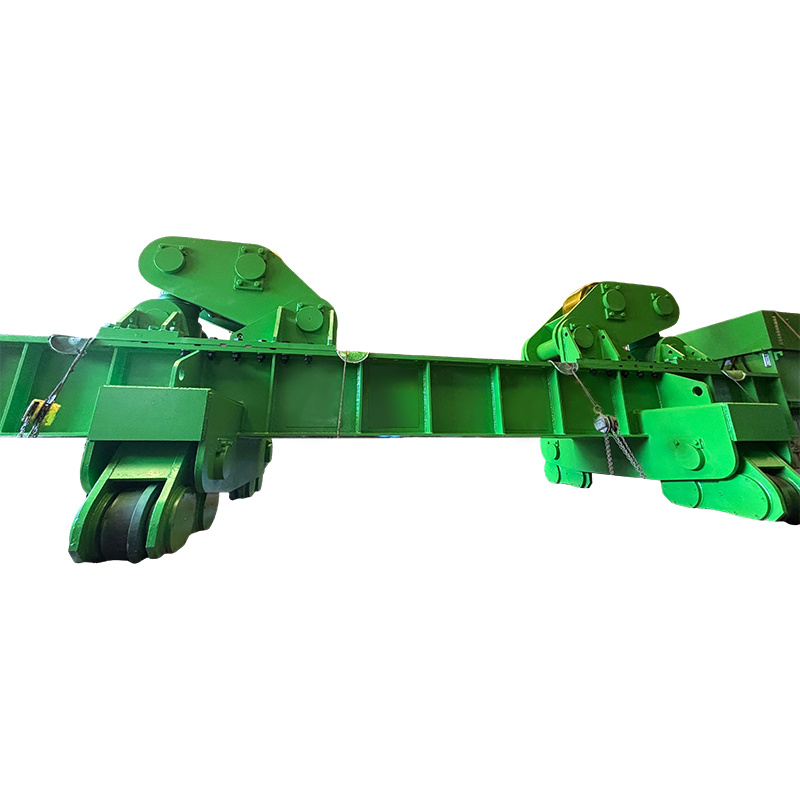
In a workshop or manufacturing setting, the power source is often a multi-process inverter machine that also supports MIG and TIG welding. On large cylindrical work such as tanks, pipes, or wind tower sections, the hand-held stick process is frequently replaced by automated setups where a welding manipulator positions the torch and an electric-rotation customized column boom maintains a precise travel speed over a rotating workpiece.
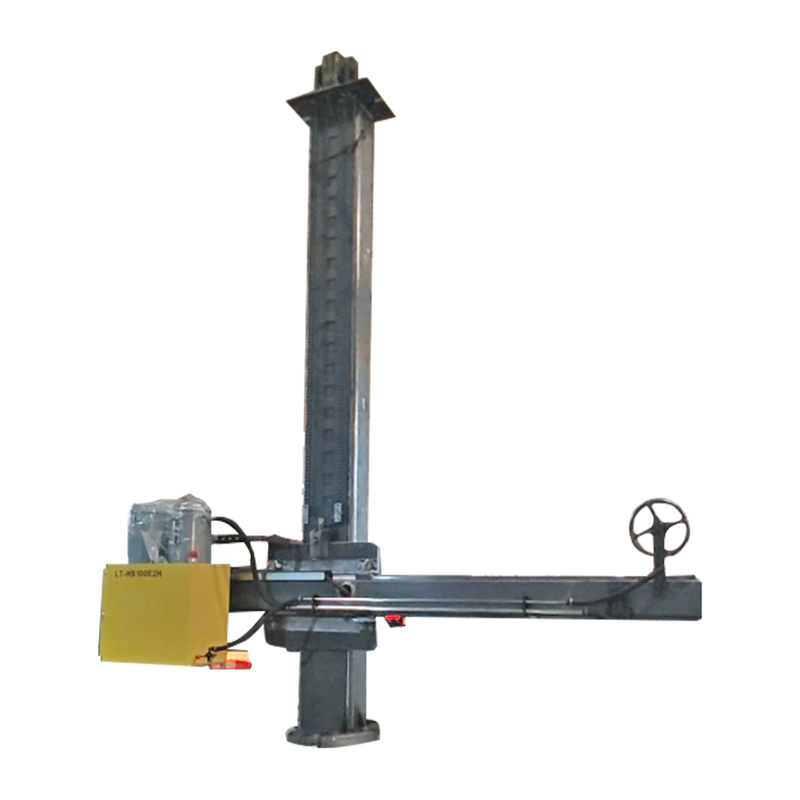 4030-Customized Column & Boom with Electric Orbital Movement Suppliers, OEM/ODM Wuxi WeldNice Heavy Industry Technology Co., Ltd is China 4030-Customized Column & Boom with Electric Orbital Movement suppliers and OEM/...View Product →
Stick Welding Electrodes: Choosing the Right Rod
Electrode selection is the single most important technical decision in stick welding, because the rod determines weld strength, penetration depth, position capability, and required polarity. The primary variable is the flux coating formulation, not the metal composition.
Common AWS Electrode Classes and Their Applications
| AWS Class | Current | Coating Type | Typical Applications |
|---|---|---|---|
| E6010 | DC+ | Cellulose sodium | Deep penetration, all positions; preferred for pipeline welding and root passes on API 5L pipe |
| E6011 | AC or DC | Cellulose potassium | Same deep-penetrating characteristics as E6010 but usable with AC; common for repair and galvanized surfaces |
| E6013 | AC or DC | Rutile (titanium dioxide) | Smooth bead appearance, light penetration; well suited to thin sheet metal and clean plate |
| E7018 | DC+ (AC acceptable) | Low hydrogen | Strong, crack-resistant welds on structural steel, pressure vessels, and thick sections; must be stored dry in an oven |
| E7024 | AC or DC | Iron powder | High deposition rate in flat and horizontal fillet welds; often used in shipbuilding and heavy fabrication |
For general structural work on carbon steel, E7018 is the industry default because it provides excellent toughness and resists hydrogen cracking. For outdoor work on rusty or painted steel where deep penetration matters more than bead appearance, E6010 or E6011 is the safer choice.
Advantages and Disadvantages of Stick Welding
Stick welding is not the fastest or prettiest process, but its combination of simplicity, portability, and tolerance for imperfect surfaces keeps it in daily use across every industrial sector. The trade-off is lower productivity and a higher skill ceiling compared to semi-automatic processes.
Advantages of Stick Welding
- Excellent for outdoor and field work: no shielding gas means wind has no negative effect on weld quality.
- Works on dirty, rusty, and painted surfaces: the flux aggressively cleans the weld zone, while MIG and TIG require near-pristine surfaces.
- Low equipment cost: a decent inverter stick welder costs far less than a comparable MIG or TIG setup with gas cylinders.
- High portability: a small inverter machine weighs under 10 kg and runs from a standard generator, making it a natural fit for remote sites.
- Welds a wide range of metals: carbon steel, stainless steel, cast iron, and some alloys can be joined by simply changing the electrode.
- No wire feeder or gas cylinders to maintain: fewer moving parts means fewer breakdowns.
Disadvantages of Stick Welding
- Frequent stops: each electrode lasts only 30–60 seconds of actual arc time, so productivity is lower than MIG or flux-cored welding.
- Slag removal is mandatory: every pass must be chipped and brushed, adding labor time and making multi-pass welds slower.
- Higher skill requirement: arc length, travel angle, and rod manipulation directly control quality, and a beginner can produce visible defects within seconds.
- Lower deposition rate: typical deposition is 1–3 kg per arc hour versus 3–6 kg for MIG, meaning higher labor cost per meter of weld.
- Limited to thicker material: welding sheet metal below 3 mm is difficult because the high current and arc force burn through easily.
Stick Welding vs. MIG, TIG, and Flux-Cored Welding
Stick welding is the right choice when portability and tolerance for surface contamination matter more than speed and bead aesthetics. Each of the four mainstream arc processes serves a distinct production niche, and the comparison below shows where stick welding sits.
| Criterion | Stick (SMAW) | MIG (GMAW) | TIG (GTAW) | Flux-Cored (FCAW) |
|---|---|---|---|---|
| Shielding | Flux coating, no gas | External gas (CO₂ or argon mix) | External gas (argon or helium) | Internal flux; may use additional gas |
| Wind resistance | Excellent | Poor | Very poor | Good to excellent |
| Speed | Slow–medium | High | Slow | Highest |
| Skill required | High | Low–medium | Very high | Medium |
| Typical thickness | 3 mm and above | 0.8–6 mm (most common) | 0.5–4 mm | 3 mm and above |
| Equipment cost | Lowest | Medium | High | Medium |
For someone welding steel structures outdoors, stick is the obvious starting point. For repetitive thin-gauge work in a clean shop, MIG provides roughly twice the speed at half the skill requirement. And for aesthetic-critical joints in stainless or aluminum, TIG remains the standard. The choice is therefore less about "which process is best" and more about "what are the actual job-site conditions."
Where Stick Welding Is Used Today
Stick welding remains the default process in heavy construction, pipeline work, ship repair, structural steel erection, and general maintenance—anywhere the work piece cannot be moved into a clean workshop with gas bottles and a wire feeder.
Main industries and scenarios
- Structural steel and construction: joining I-beams, columns, and bracing on site where wind rules out MIG, for example in the welding techniques used in the construction industry.
- Pipeline fabrication: E6010 root passes followed by E7018 fill passes are the international standard for cross-country pipelines.
- Shipbuilding and ship repair: thick steel plate and poor surface prep in dry docks favor stick or flux-cored welding.
- Wind power and heavy equipment manufacturing: where precision and low defect rates matter, robotic or mechanized versions of the process combine a positioner with a column boom, as described in the welding technology used in wind power generation.
- Mining, agricultural, and construction equipment repair: quick on-site fixes with universal electrodes like E6011 or E7018.
In the energy industry, many manufacturers of wind tower sections use a submerged arc or MIG-based automatic process for long seams, but still rely on stick welding for tacking, root passes, and repair work. The same shop often has a welding rotator to spin the tower section while the welder keeps the arc in the flat position.
Automation and Mechanized Stick Welding
While stick welding is fundamentally a manual skill, many manufacturers mechanize the process to remove the human variable from long, repetitive joints. The goal is not to replace the welder but to let one operator manage a far longer arc-on time than is possible with a hand-held rod.
In a mechanized stick welding cell, the workpiece rotates under a fixed torch, or the torch travels along the joint on a carriage. This eliminates the two biggest sources of weld defects: arc length variation and travel speed inconsistency. The equipment that makes this possible is essentially the same positioning machinery used for other arc processes.
The role of welding positioners and rotators
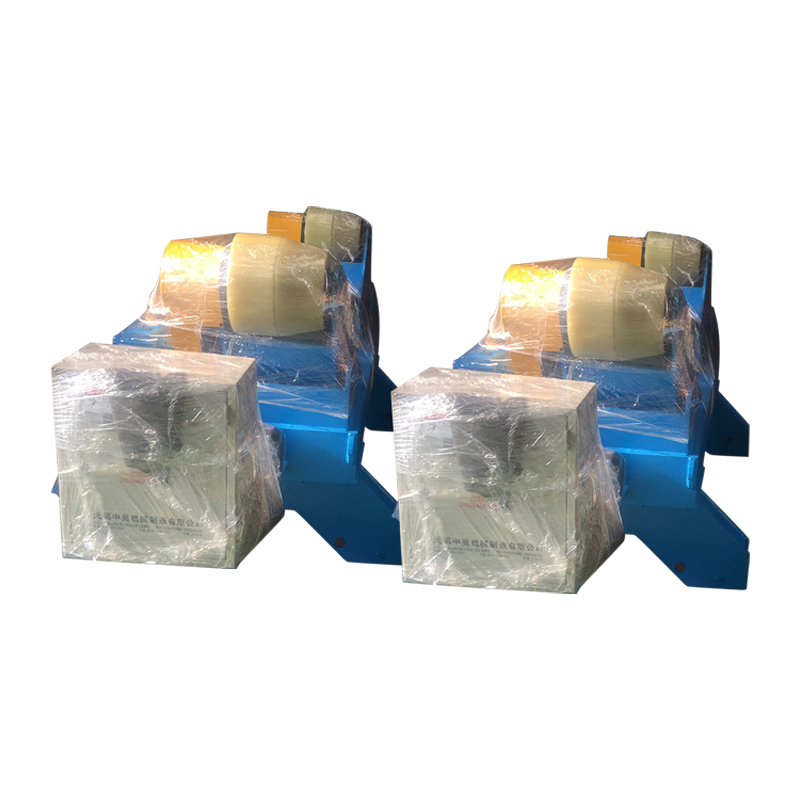
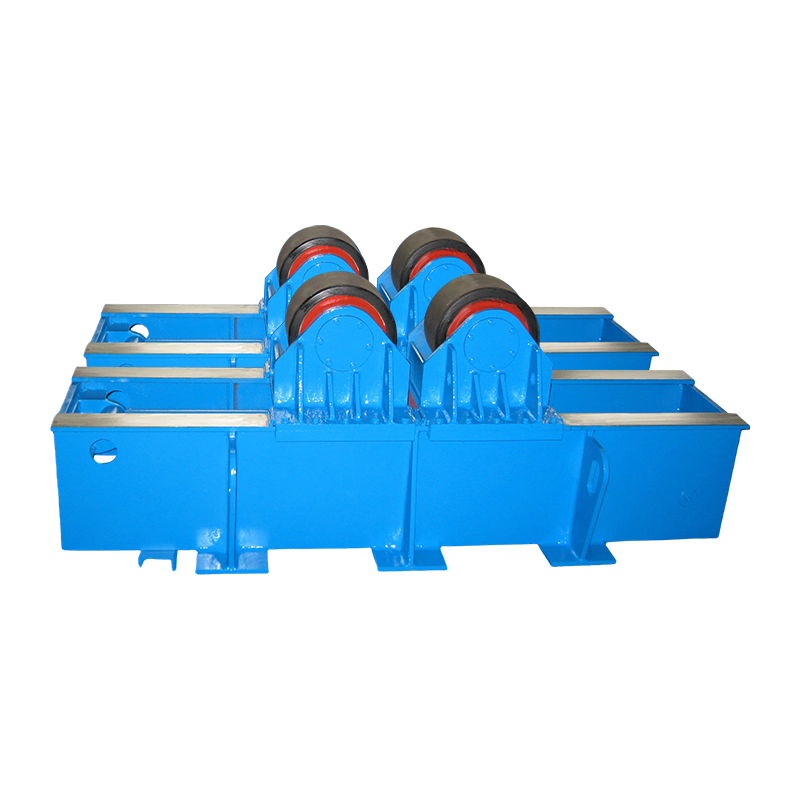
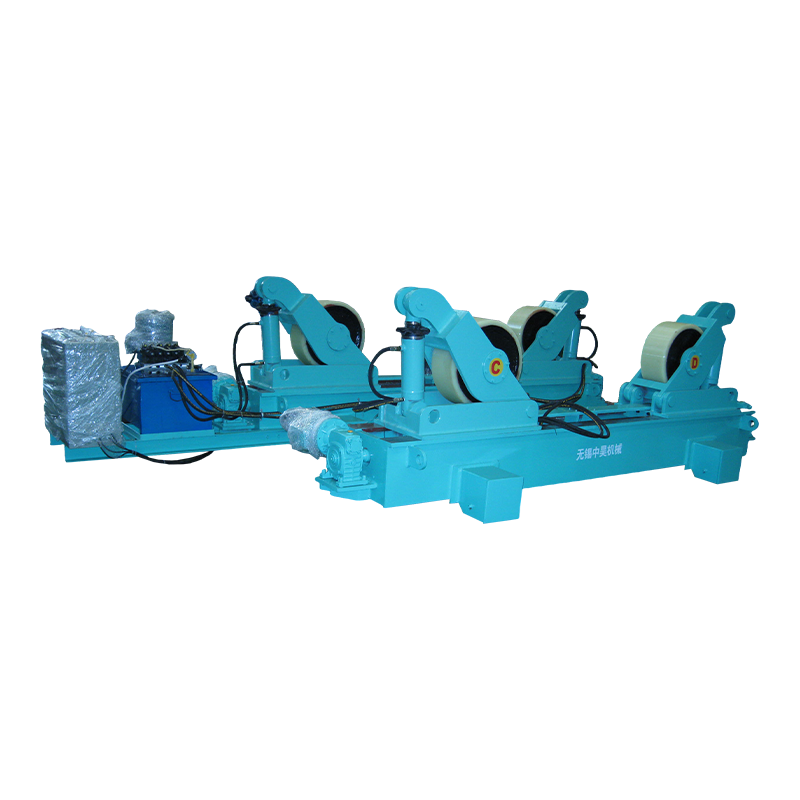
For cylindrical work—pressure vessels, tanks, pipes, and wind tower sections—a 100-ton fit-up welding rotator with manual orbital movement rotates the assembly at a preset speed while a fixed or traversing torch performs the weld. This keeps the molten pool in the ideal flat position, increases travel speed, and lowers the likelihood of slag inclusion and lack of fusion.
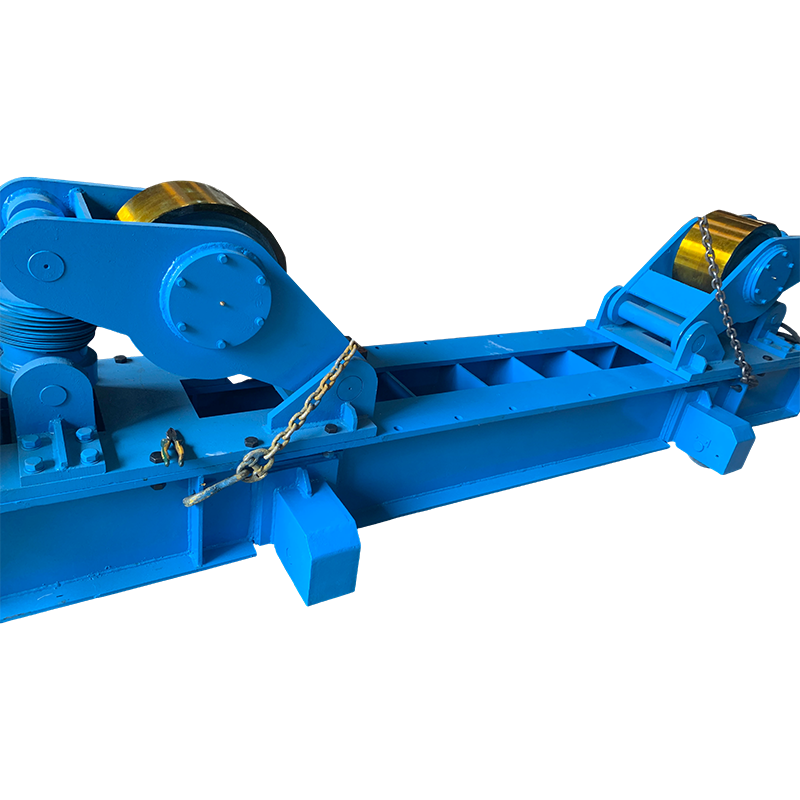 100T Fit Up Welding Rotator with Manual Orbital Movement Suppliers, OEM/ODM FactWuxi WeldNice Heavy Industry Technology Co., Ltd is China 100T Fit Up Welding Rotator with Manual Orbital Movement suppliers and OEM/ODM ...View Product →
For complex box-sections, flanges, and workpieces that need welding on multiple faces, a welding positioner with customized loading capacity tilts and rotates the part so the welder always works in the flat or horizontal position. This approach also extends to the production of metal tanks and pipes, as explained in the article how welding rotators transform metal tank and pipe manufacturing.
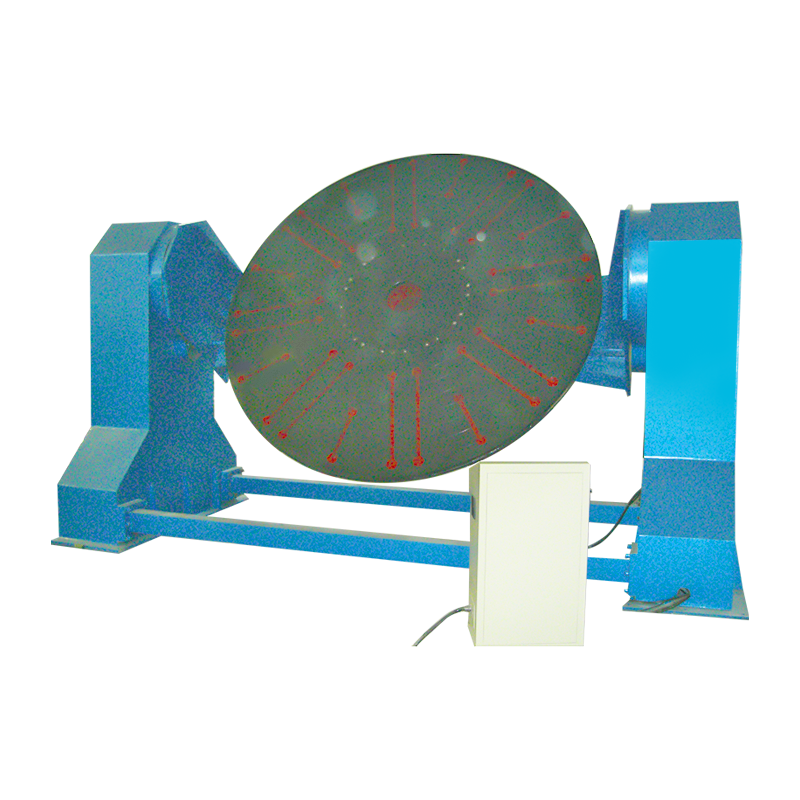 Welding Positioner with Customized Loading Capacity Suppliers, OEM/ODM Factory -Wuxi WeldNice Heavy Industry Technology Co., Ltd is China Welding Positioner with Customized Loading Capacity suppliers and OEM/ODM facto...View Product →
Combining a column boom, a rotator or positioner, and a mechanized carrier creates a complete automated welding station that can raise deposition rate by 200–400% compared to manual stick welding, while producing far more consistent weld quality. Large fabricators with high output requirements increasingly buy this package instead of expanding their manual workforce.
Stick Welding Safety: What Must Not Be Overlooked
Stick welding produces intense ultraviolet radiation, molten metal spatter, and fume containing metal oxides and flux by-products. Personal protective equipment is the only barrier between the welder and these risks, and small lapses can cause serious injuries.
- Eye protection: always wear an auto-darkening welding helmet with a shade between 9 and 13; the exact shade depends on current level.
- Body protection: flame-resistant welding jacket or leather sleeves, because spatter can travel 3 meters or more.
- Gloves and sleeves: insulated leather gauntlets that protect against both heat and electric shock.
- Ventilation: weld outdoors or use local exhaust ventilation; chromium, nickel, and manganese fume have long-term health effects.
- Electrical safety: never change electrodes with wet gloves, and use an insulated electrode holder with a properly grounded work piece.
Fume management deserves more attention than it usually gets. Stick electrodes containing nickel or chromium release hexavalent chromium fumes, classified as a carcinogen. Low-hydrogen electrodes are comparatively safer but still require adequate extraction in confined spaces.
Common Stick Welding Questions
Is stick welding good for beginners?
Yes, stick welding is a reasonable starting point because the equipment is inexpensive and the process forgives surface contamination. However, the learning curve is steeper than MIG, because a beginner must develop a steady hand for arc length and travel angle before producing acceptable beads.
Why is my stick welding rod sticking to the metal?
Sticking occurs when the arc is too short or the amperage is too low. Increase the current setting by 10–15%, or maintain a slightly longer arc by lifting the rod tip away from the plate. Starting on a scrap piece to dial in the amperage also helps.
Can stick welding be done on stainless steel?
Yes, using AWS E308L or E316L electrodes. The flux provides the shielding, so the process works outdoors, but the lower travel speed may increase the heat-affected zone compared to TIG welding.
How thick can stick welding weld?
With adequate preheating and multiple passes, stick welding can join steel sections of any thickness. In practice the comfortable single-pass range is 3–10 mm. Anything above that uses a root pass followed by hot and fill passes, which is standard procedure for pipes and structural joints.
What is the correct polarity for stick welding?
Most electrodes run on DC reverse polarity (electrode positive), which gives deeper penetration. AWS classifications list the recommended polarity in the electrode name: E6010 indicates DC+, E6011 works on AC or DC+, and E7024 works on either AC or DC but produces higher deposition on AC.
Bottom Line: Is Stick Welding Still Worth Using in a Modern Fabrication Shop?
Stick welding remains the most practical choice when the job site cannot accommodate shielding gas, when the steel surface is questionable, or when capital cost must stay low. For production shops that already use automated processes, stick welding still serves the less glamorous but essential jobs: tack welding, repair passes, and joints inside confined spaces.
What has changed is the surrounding equipment. Modern inverter power sources make arc starts easier and spatter lower than the transformer machines of the 1980s. Mechanized positioning equipment now allows a fabricator to turn a manual process into a semi-automated one, which closes much of the productivity gap with MIG welding.
The practical advice from an equipment perspective is to decide based on the joint position and volume of work. For a small repair shop doing mixed jobs, a quality inverter stick welder and a basic welding positioner may be all that is needed. For a large manufacturer producing tanks, wind tower sections, or pressure vessels, the intelligent long-term purchase is a mechanized station in which a rotator handles the workpiece and the welder controls the arc under stable conditions. That combination respects the strengths of stick welding—versatility, shielding, and low capital cost—while eliminating its biggest weakness: inconsistent manual travel speed.