 English
 русский
 Español
 عربى
عربىA structural steel H beam is a hot-rolled or welded steel section with an H-shaped profile, formed by two parallel wide flanges connected to a vertical web. Its wide flanges distribute loads laterally and resist buckling in two axes, which is why it is the default section for steel building columns, primary frames, and heavy industrial beams. Specifying one in practice means giving four dimensions in millimetres, a steel grade, a standard, and a theoretical weight per metre.
What Is a Structural Steel H Beam?
A structural steel H beam is an open-profile member whose cross-section resembles the capital letter H. The vertical element is the web, and the two horizontal elements are the flanges. H beams are manufactured either hot-rolled as a single piece or built-up by welding three steel plates together. The defining geometry is the flange width, which is nearly equal to the section height and gives the member high stiffness in both the strong and weak axes.
Key characteristics of a structural H beam:
- Parallel flange surfaces simplify bolted connections and welding compared with tapered I sections.
- Wide flanges provide lateral stability and reduce the effective buckling length of columns.
- The symmetric cross-section works efficiently under compression, bending, and combined axial plus moment loading.
- Standard metric H beams range from roughly 100 mm to 1000 mm in section height.
H Beam vs. I Beam: Key Differences and How to Choose
The fastest way to tell the two sections apart is the flange: an H beam has wide parallel flanges, while an I beam has narrower flanges with a tapered inner surface. That geometry controls how each section carries load.
| Property | H Beam | I Beam |
|---|---|---|
| Flange shape | Wide and parallel | Narrower, tapered inner face |
| Cross-section shape | H | I |
| Section height vs. width | Similar values | Height much larger than width |
| Primary load direction | Bidirectional | Unidirectional |
| Typical member role | Columns, transfer beams | Floor beams, purlins |
| Manufacturing | Rolled or welded | Hot-rolled |
Use an H beam when the member must resist moment or compression in two directions, such as a building column or a transfer beam under a heavy wall. Use an I beam for a simple span that bends mainly in one direction, such as a floor beam or a bridge cross-member, where lighter self-weight reduces cost. For column applications, an H beam typically requires less steel than an I beam of equal capacity, making it the more economical choice.
How to Read H Beam Size Designations
A metric H beam designation lists four dimensions: section height by flange width by web thickness by flange thickness, all in millimetres. H 300 × 300 × 10 × 15 means a 300 mm high section with 300 mm wide flanges, a 10 mm web, and a 15 mm flange. When comparing sections, check flange thickness and width first because they govern most of the bending capacity; web thickness controls shear capacity and local buckling resistance.
H Beam Size and Weight Reference Table
Theoretical weight is the cross-sectional area in square metres multiplied by the density of structural steel, 7850 kg/m³. Mill tolerances cause small variations, so treat the values below as a preliminary design reference.
| Designation (mm) | Section Height (mm) | Flange Width (mm) | Web Thickness (mm) | Flange Thickness (mm) | Weight (kg/m) |
|---|---|---|---|---|---|
| H 100 × 100 × 6 × 8 | 100 | 100 | 6 | 8 | 17.2 |
| H 150 × 150 × 7 × 10 | 150 | 150 | 7 | 10 | 31.1 |
| H 200 × 200 × 8 × 12 | 200 | 200 | 8 | 12 | 49.9 |
| H 300 × 300 × 10 × 15 | 300 | 300 | 10 | 15 | 94.0 |
| H 400 × 400 × 13 × 21 | 400 | 400 | 13 | 21 | 172.0 |
| H 500 × 200 × 10 × 16 | 500 | 200 | 10 | 16 | 89.6 |
| H 600 × 200 × 11 × 17 | 600 | 200 | 11 | 17 | 106.0 |
Common Standards and Steel Grades for H Beams
H beams are produced under different regional standards, so match the standard to the design code used at the erection site.
| Region | Standard | Common Grades | Notes |
|---|---|---|---|
| Europe | EN 10025 | S235JR, S275JR, S355JR | S355JR is the default for welded steel structures |
| United States | ASTM A992 / A572 | Gr.50 | A992 covers wide-flange shapes |
| China | GB/T 11263 | Q235B, Q355B | HW suits columns; HM suits beams; HN suits light frames |
| Japan | JIS G3101 | SS400, SM490A | SS400 is the general structural grade |
Confirm impact energy requirements for cold regions and check whether the mill certificate is issued to the latest standard edition. A common procurement risk is assuming that identical chemistry from different mills performs the same way, so always require a test certificate with yield strength, tensile strength, elongation, and impact values.
H Beam Applications by Size Range
The practical range of H beam sizes maps directly to building scale.
H 100 to H 200
In this range, H beams appear in mezzanine floors, low-rise steel frames, staircase stringers, machine supports, and prefabricated residential structures. Their light weight keeps transportation and crane handling cost low.
H 250 to H 400
This is the workhorse range for single-storey industrial buildings: primary columns and rafters, crane runway beams, bridge cross-girders, and plant platforms.
H 400 to H 600 and above
Heavy sections in this class form the columns of high-rise buildings, main frames of steel workshops, turbine halls, and large portal frames. They are also specified in port equipment and transmission towers.
Rolled vs. Built-Up H Beams and Welding Considerations
Hot-rolled H beams are economical when the required size falls within the mill's standard production program. When a project needs a non-standard depth, a higher steel grade such as S460 or Q460, or a specific web-to-flange ratio, fabricators use a built-up H beam: three plates welded together with two continuous longitudinal fillet welds.
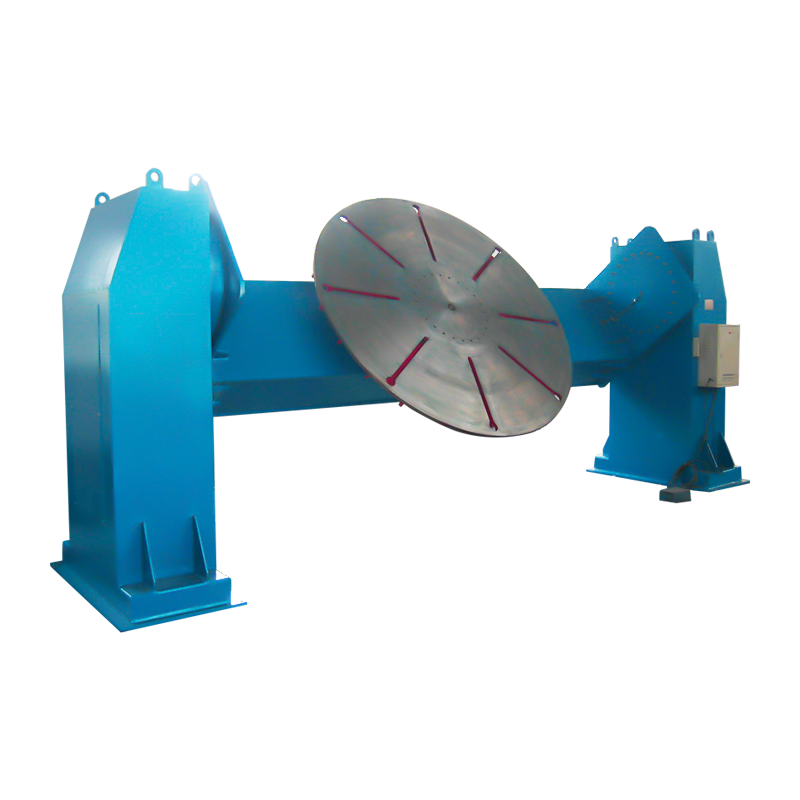
Because these welds run the full beam length, weld speed and consistency drive both cost and distortion. Submerged arc welding is the preferred method, and large metal structure manufacturers increasingly turn to automated welding for these long seams. A SAW column and boom welding manipulator maintains a constant arc and travel speed, which reduces rework compared with manual welding.
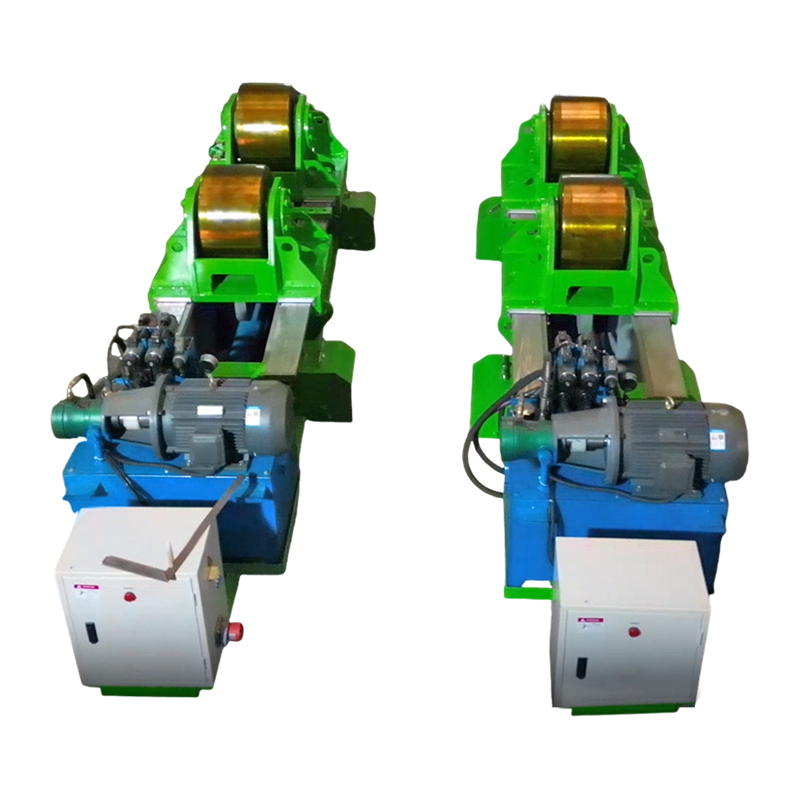
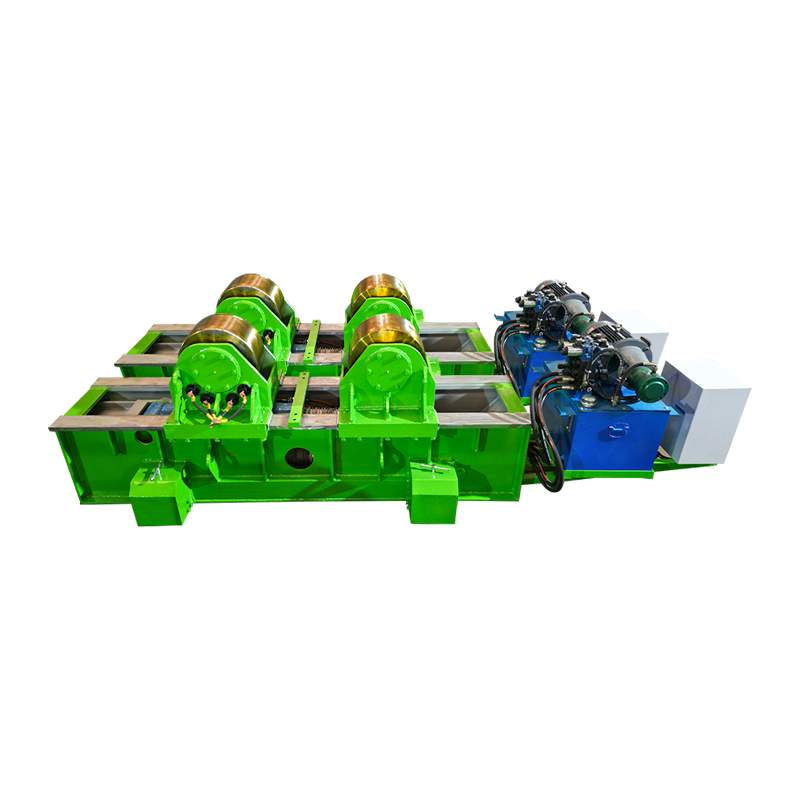
 SAW Column & Boom Manufacturers, CompanyWuxi WeldNice Heavy Industry Technology Co., Ltd is China SAW Column & Boom manufacturers and company, Customization supported, The compa...View Product → 10-ton conventional welding positioner for structural beam assembly and tack welding
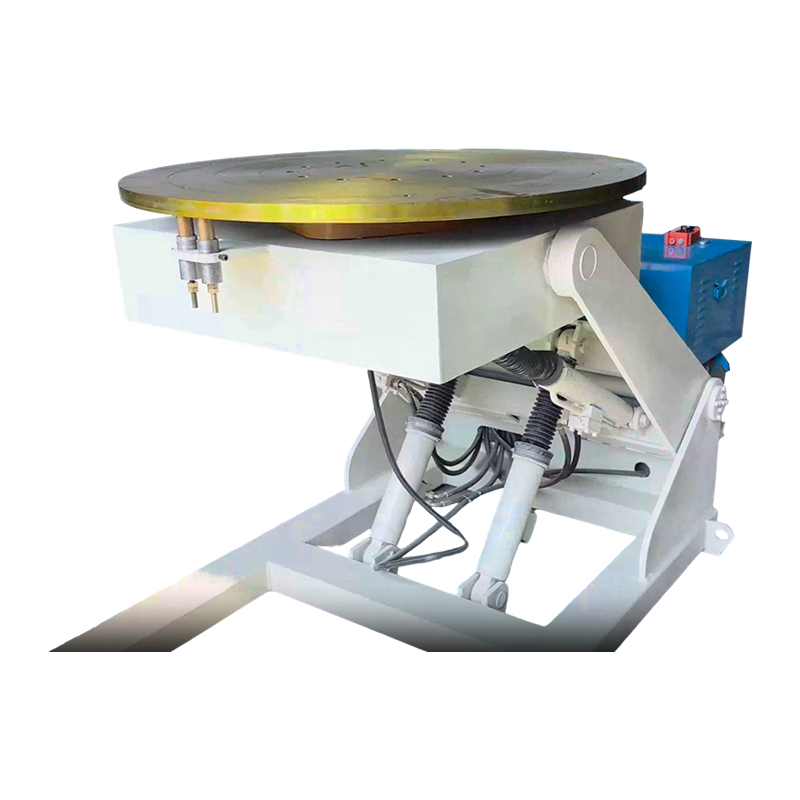
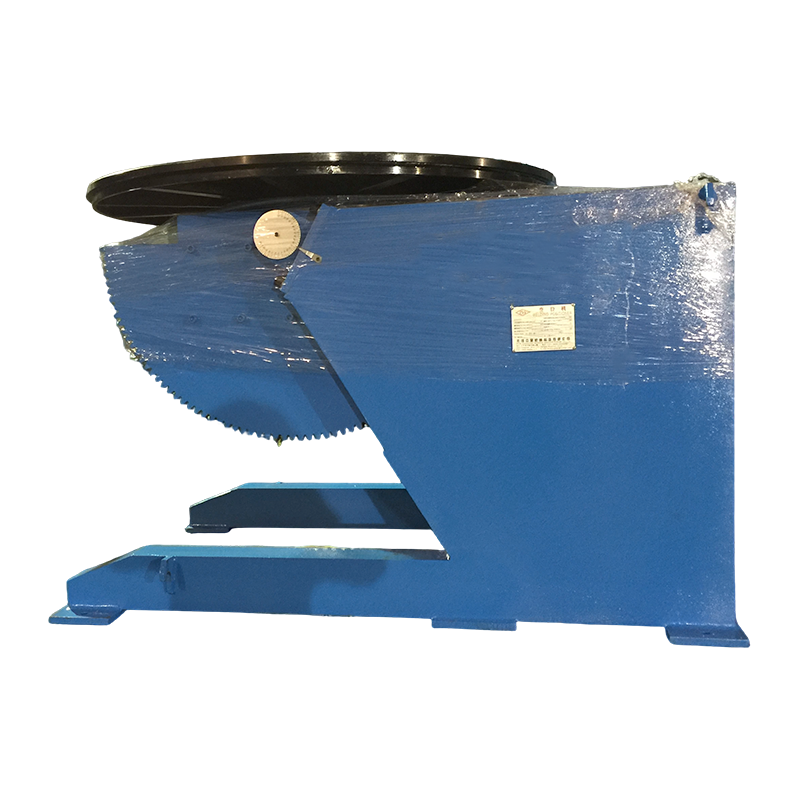 10T Conventional Welding Positioner Suppliers, OEM/ODM Factory - Wuxi WeldNice HWuxi WeldNice Heavy Industry Technology Co., Ltd is China 10T Conventional Welding Positioner suppliers and OEM/ODM factory, The 10T Conv...View Product →
For shorter members, stiffeners, and base plates, a welding equipment manufacturer with H-beam fabrication experience can bring every joint into the downhand position and improve deposition rate and bead shape. A correctly welded built-up H beam performs as well as a rolled section in most structural applications, provided the welds are sized for full load transfer and verified by non-destructive inspection.
How to Select the Right H Beam Size
Start selection with the load envelope, not with a size guess. Apply the design code in your region, then follow these steps:
- List all dead, live, wind, and seismic loads acting on the member.
- Determine the unsupported length and bracing conditions for each axis.
- Calculate the required section modulus and moment of inertia for bending members, or the required gross area and radius of gyration for compression members.
- Enter the standard size table and choose the smallest section that satisfies strength, deflection, and local buckling limits.
- Verify the selected section against combined axial plus bending checks.
- Check web and flange thickness for connection detailing, especially for end-plate or moment connections.
- Confirm plate availability and welding requirements if you plan to replace a rolled section with a built-up one.
A common sourcing error is ordering a heavier section than needed because bigger feels safer. A heavier beam increases dead load, foundation cost, and steel budget, and can even increase deflection because of its own weight. Base the purchase on the calculation output, not on visual intuition.
Frequently Asked Questions
Here are the answers to the questions engineers and steel buyers ask most often about structural H beams.
What is the main difference between an H beam and an I beam?
The main difference is flange geometry. An H beam has wide parallel flanges, giving it higher stiffness about the weak axis, while an I beam has narrower tapered flanges and is designed mainly for unidirectional bending. Choose an H beam for columns and bidirectional moment connections; choose an I beam for simple floor and roof spans.
How much weight can a structural steel H beam support?
Load capacity depends on the section dimensions, span or column length, steel grade, support conditions, and lateral bracing. A single H 300 × 300 × 10 × 15 column can carry hundreds of kilonewtons under normal building conditions, but the exact figure must be derived from a buckling check. Always calculate with the relevant standard instead of relying on a rule of thumb.
Can structural steel H beams be welded?
Yes. Hot-rolled H beams are routinely welded using shielded metal arc, MIG, flux-cored, and submerged arc welding. Use a filler metal matched to the base grade, observe preheat requirements for thick flanges, and protect the joint in cold weather conditions.
Is a built-up H beam as strong as a hot-rolled beam?
A built-up H beam achieves equivalent strength when the plate grades are correct, the longitudinal fillet welds are sized for full load transfer, and weld quality is verified by inspection. The main advantage of a built-up section is the freedom to specify non-standard heights and optimized plate thicknesses that a rolling mill does not offer.
Which steel grade should I order for an outdoor structure?
For exposed structures in cold climates, choose a grade with guaranteed impact toughness such as S355J2 or Q355D. For heated internal structures, standard structural grades like S235JR or Q235B are usually sufficient. Local design codes set the governing minimum requirements.
Final Recommendations
Specify every H beam by its full designation, standard, steel grade, and length, and ask the supplier to confirm the theoretical weight per metre and the tolerances of the relevant standard. For non-standard welded sections, use a fabrication line equipped with automated welding equipment to control heat input, straightness, and productivity. The selection rule is simple: match the section to the load path, verify with a calculation, and purchase against a recognised standard.