English
 русский
 Español
 عربى
عربى1.5T Tilt Welding Positioner
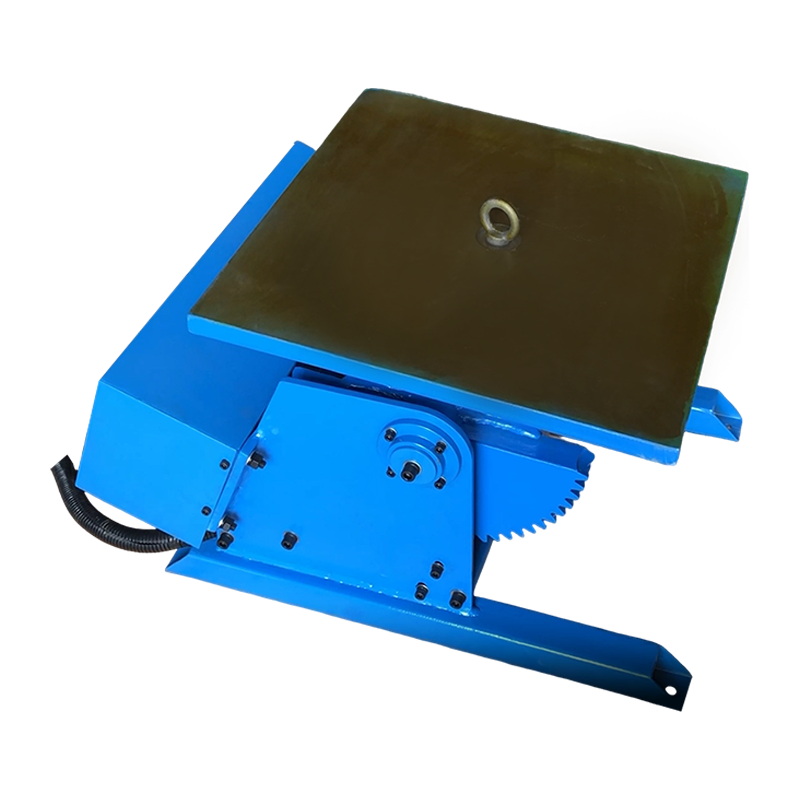
The 1.5T Tilt Welding Positioner is a device used to position and rotate workpie...

WeldNice supports designing customized function according to different use of different customers. Example: Orbital Movement/Foot Switch Control/Servo Motor/Lifting.
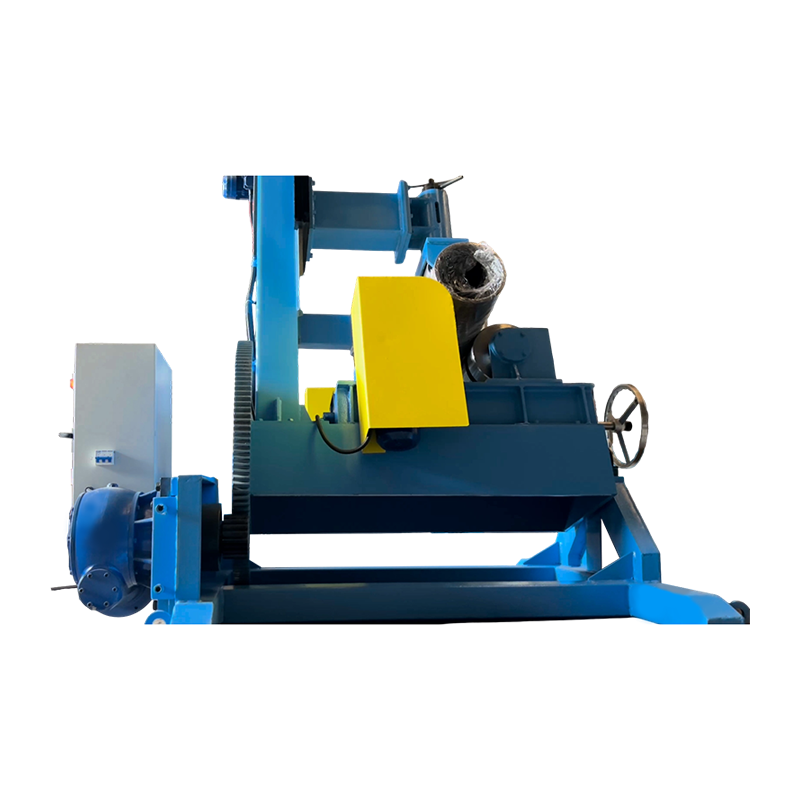
The 1.5T Tilt Welding Positioner is a device used to position and rotate workpie...
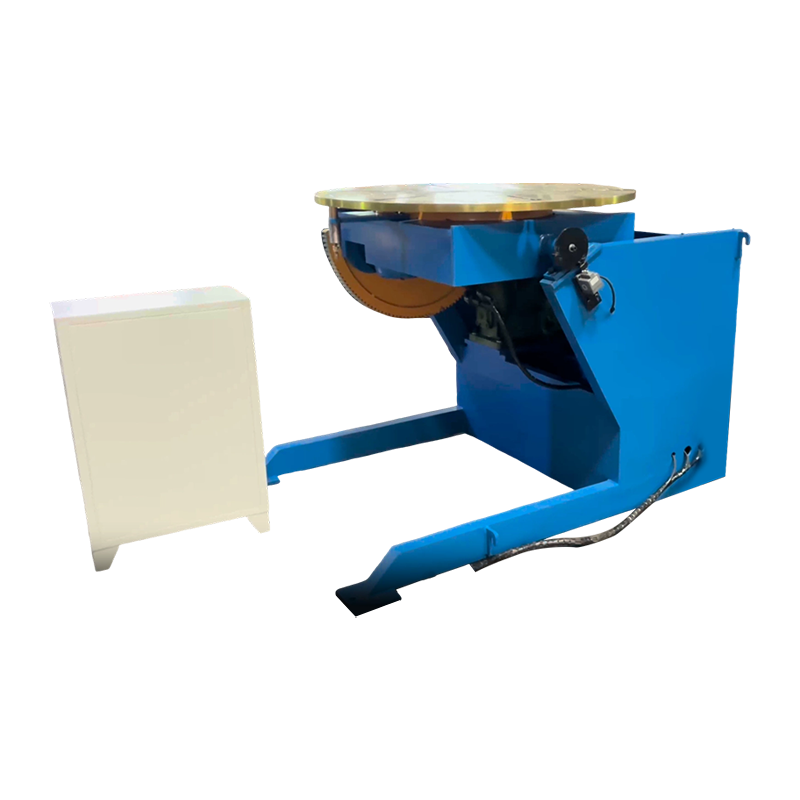
The 1T Welding Positioner with Servo Control is a welding auxiliary device integ...
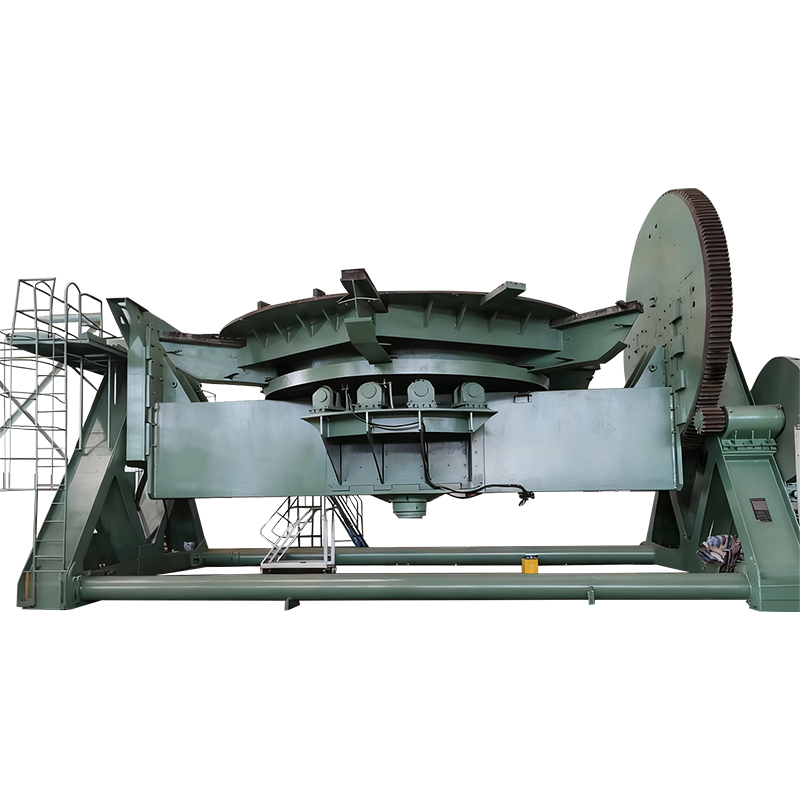
The 300T Welding Positioner is a positioning device specifically designed for we...
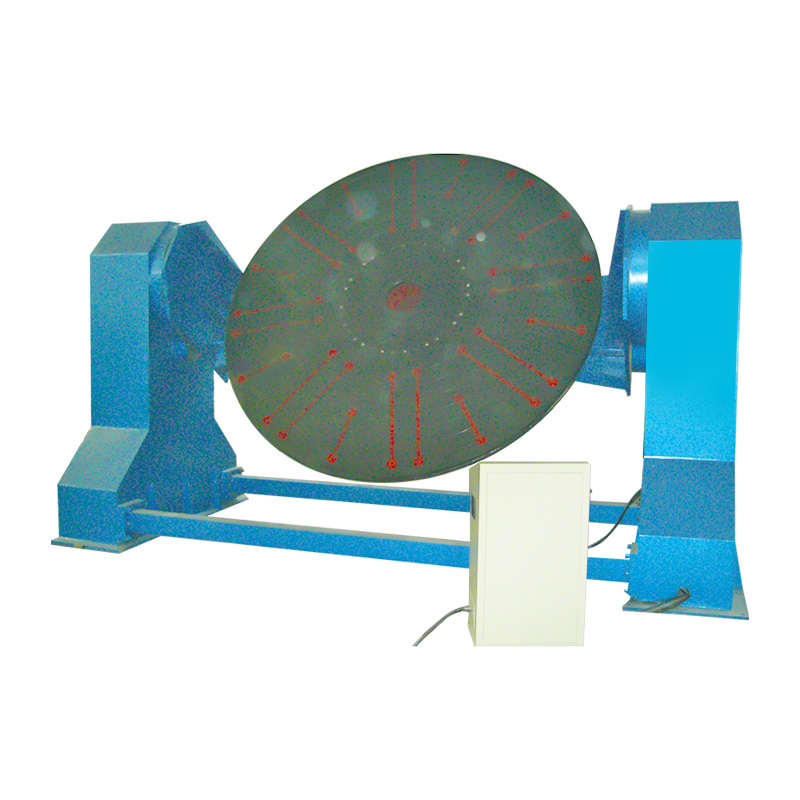
The Welding Positioner with Customized Loading Capacity is a welding auxiliary d...
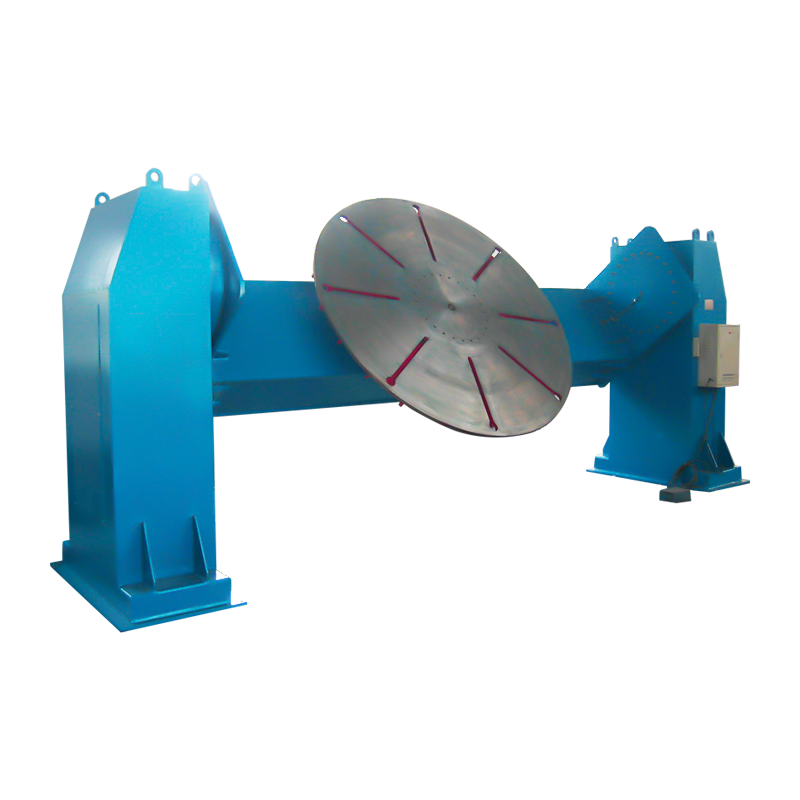
The High Precision Double Column Welding Positioner for Special Work Piece is a ...
In heavy-duty industries such as energy equipment manufacturing and large-scale pressure vessel fabrication, the primary challenge is not just the weld itself, but the safe and precise manipulation of the workpiece. A 15T Conventional Welding Positioner is a heavy-duty powerhouse designed to handle...
READ MOREIn the realm of machinery manufacturing and pressure vessel production, the ability to maintain a consistent welding angle is often the difference between a high-strength joint and a costly defect. The 100KG Conventional Welding Positioner is engineered as a universal solution for these high-precis...
READ MOREIn the fabrication of boilers and pressure vessels, the ability to rotate cylindrical workpieces with precision is the difference between a high-integrity weld and a structural failure. The Welding Rotator (also known as a Welding Turning Roller or Roller Frame) is an essential specialized tool for...
READ MOREA customized welding positioner is a core positioning device in modern automated welding systems, designed to achieve precise, stable, and repeatable pose transformation of workpieces during the welding process. Wuxi WeldNice Heavy Industry Technology Co., Ltd., leveraging nearly two decades of specialized manufacturing experience, provides solutions ranging from standard models to highly personalized WeldNice Customized Welding Positioners. The essence of such equipment lies in the targeted development of functions and structures based on the customer's specific workpiece, process flow, and automation requirements—such as integrating Orbital Movement, Foot Switch Control, Servo Motor Drive, or Hydraulic/Electric Lifting Systems—thereby significantly enhancing welding quality, production safety, and operational efficiency.
A typical customized welding positioner enables precise workpiece movement through the coordinated operation of its mechanical structure and control system. Its core principle involves clamping the workpiece onto a controllable work platform, which is then driven by an actuation system (typically AC motors, servo motors, or hydraulic systems) to perform rotation, tilting, turning, or complex compound motions. This ensures the weld seam is always positioned optimally (e.g., flat position, horizontal-vertical position) for welding, guaranteeing process stability and weld seam formation quality.
Core Performance :
High Precision & High Rigidity Structure: Utilizes FEA-optimized box-type or frame structures to ensure smooth, vibration-free operation under full load.
Modular & Customizable Drive System: Options include variable frequency drives or servo drives based on load, speed, and precision requirements, enabling stepless speed regulation and precise positioning.
Safe & Reliable Interlocking Control: Integrates multiple safety mechanisms including overload protection, emergency stop, and limit switches.
Flexible Interface & Integration Capability: Equipped with standard communication ports (e.g., Profibus, Ethernet/IP) for seamless integration with welding robots and automated production lines.
WeldNice Customized Welding Positioners are widely used in fields requiring high precision, high-volume, or complex weld seam applications.
| Industry | Typical Workpiece | Custom Function Example | Value Delivered |
|---|---|---|---|
| Heavy Machinery | Crane booms, excavator arms | High tonnage capacity, dual-axis coordinated movement | Enables flat-position welding for all seams on large structures, ensuring uniform quality and improving efficiency by over 50%. |
| Pressure Vessels | Tanks, heads, tube sheets | Explosion-proof design, precision rotation, headstock-tailstock synchronization | Ensures automated welding of circumferential and longitudinal seams, meeting stringent nondestructive testing standards. |
| Rail Transportation | Bogies, car body frames | Long-span design, synchronous lifting, robot collaboration | Accommodates large, elongated workpieces, enabling simultaneous multi-robot operation and reducing cycle time. |
| Offshore & Wind Power | Wind turbine towers, pipe joints | Ultra-high tonnage, outdoor protection rating, wireless remote control | Overcomes challenges of oversized and heavy workpieces, ensuring reliability and operational safety in harsh environments. |
When selecting a WeldNice Customized Welding Positioner, customers can choose from the following combination of functional modules based on their process needs:
| Functional Module | Description | Ideal Application Scenario | Key Advantage |
|---|---|---|---|
| Basic Rotation | Worktable rotates around a single axis at constant speed. | Simplified circumferential welding, spraying, inspection. | Cost-effective, reliable operation. |
| Dual-Axis Motion (Tilt + Rotation) | Worktable can perform simultaneous tilting and rotating movements. | Complex 3D workpieces requiring multi-angle welding access. | Achieves ideal welding position for seams in any spatial orientation, high automation level. |
| Servo Motor Drive | Utilizes servo motors and controllers for precise positioning. | High-precision trajectory welding, precise synchronization with robots. | Positioning accuracy up to ±0.1mm, precise speed control, suitable for flexible production. |
| Orbital Movement | The entire positioner can move along a preset track. | Segmented welding of extra-long workpieces or coordination with fixed stations. | Expands working range, enables "flow-line" processing of workpieces. |
| Lifting System | Achieves overall height adjustment via ball screw or hydraulic cylinder. | Matching production lines of different heights or coordinating with robots of various specifications. | Enhances system flexibility and adaptability, optimizes ergonomics. |
| Foot Switch Control | Allows the operator to control positioner movement via foot pedal during manual welding. | Small-batch, high-mix semi-automated welding. | Frees operator's hands, improves flexibility and efficiency in manual welding. |
Q1: What is the main difference between a standard welding positioner and a customized one?
A1: The primary difference lies in adaptability and functional integration. Standard positioners suit generic, mass-produced workpieces. Customized welding positioners are specifically engineered for particular workpieces (e.g., special dimensions, complex shapes, ultra-high tonnage) and specific processes (e.g., synchronized robot trajectory, unique motion paths). They are designed to perfectly match production line cycle times, spatial layout, and automation requirements, fundamentally solving specialized application challenges.
Q2: What key parameters should be prepared and considered when planning a customized solution?
A2: To ensure an accurate and efficient design proposal, it is recommended to clarify the following core parameters:
Workpiece Information: Detailed drawings, weight, center of gravity location, and clamping method.
Process Requirements: Welding method, weld seam locations and types, required positioning speed and angular range.
Performance Specifications: Repeat positioning accuracy, maximum load moment, duty cycle.
Integration Environment: Communication interface protocols with welding power sources, robots, and external control systems.
Site Conditions: Installation space dimensions, power/air supply specifications, ambient temperature/humidity, and required protection rating.
Q3: What are the practical differences between Servo Motor Drive and standard Variable Frequency Drive (VFD) for positioner applications?
A3: This is a critical choice determining equipment precision and controllability.
Servo Motor Drive: Features closed-loop control, precise positioning, and rapid response. It is suited for high-end applications requiring position synchronization with welding robots or the welding process itself, such as complex spatial curve welding. It enables precise stopping at any angle and instantaneous speed adjustment.
Standard VFD Motor Drive: Primarily provides stable, continuous stepless speed regulation. It is applicable for scenarios with lower demands for absolute positioning accuracy but requiring stable rotation or tilting to complete circumferential or flat seams, offering a higher cost-performance ratio.
For production lines pursuing ultimate process quality and automated integration, a WeldNice Customized Welding Positioner equipped with a servo drive system is the superior choice.
Q4: What are the maintenance priorities and recommended intervals for a welding positioner?
A4: Maintenance is crucial for long-term stable operation and can be categorized into three levels:
Daily Maintenance (Per Shift): Clean equipment surfaces and tracks, check air/power supply, listen for abnormal noises during operation.
Periodic Maintenance (Monthly/Quarterly): The core focus is the lubrication system. Lubricate gears, bearings, and other transmission components with the specified grease as per the manual. Also, check the tightness of electrical connections and the reliability of limit switches.
Professional Inspection (Annually): It is advised to have a comprehensive check performed by the supplier or qualified personnel. This includes system accuracy verification, assessment of transmission component wear, and performance testing of electrical components. WeldNice can provide technical support and spare parts services for such in-depth maintenance.
Copyright 2025 Wuxi WeldNice Heavy Industry Technology Co., Ltd. All Rights Reserved Customized Welding Positioner Manufacturer Custom Customized Welding Positioner Company


sales@weldnicefactory.com