 English
 русский
 Español
 عربى
عربى300T Welding Positioner
The 300T Welding Positioner is a positioning device specifically designed for we...

Welding positioner has a widely apply in the machine manufacturing industry. Welding positioner can significantly improve the efficiency of welding, polishing or spraying because it can steplessly adjust the posture of your product. Workers or robots can conduct the work in a more convenient posture, which means a better quality of work. Welding positioner produced by WeldNice boasts advanced structure, complete function, easy operation and provides a reliable guarantee for improving product quality.
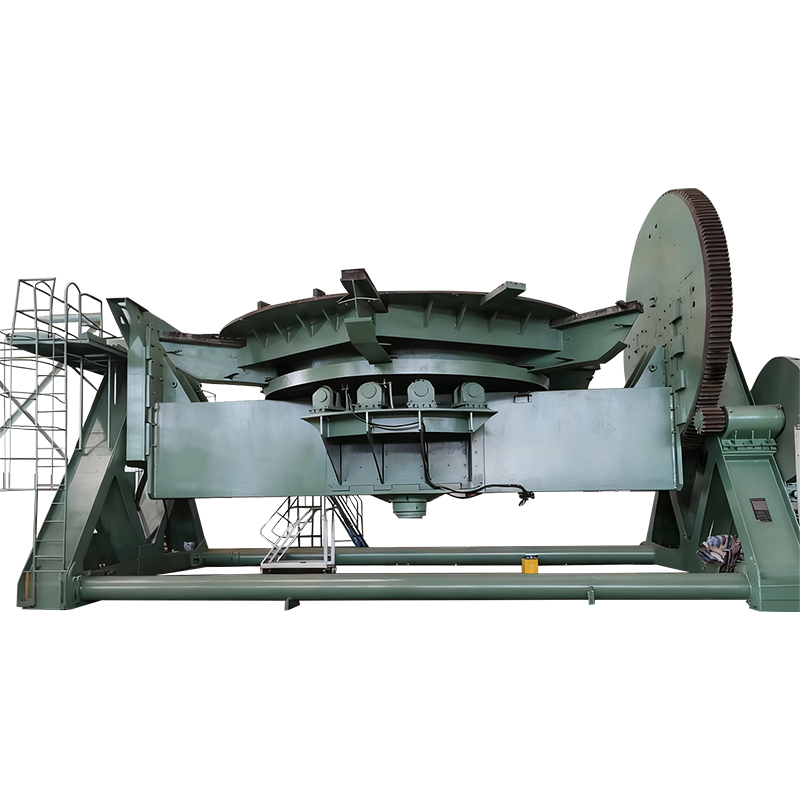
The 300T Welding Positioner is a positioning device specifically designed for we...
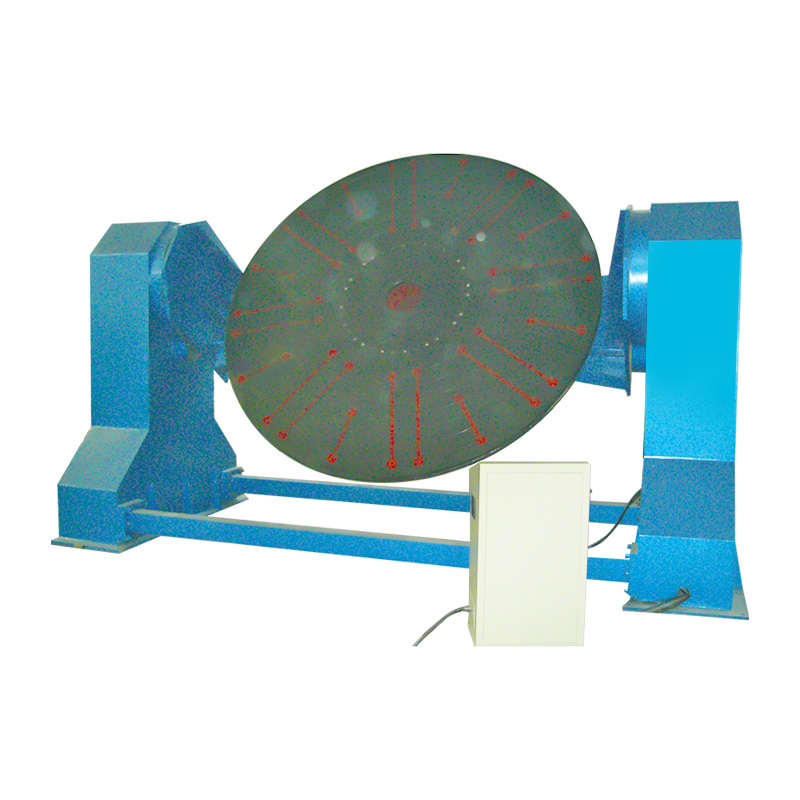
The Welding Positioner with Customized Loading Capacity is a welding auxiliary d...
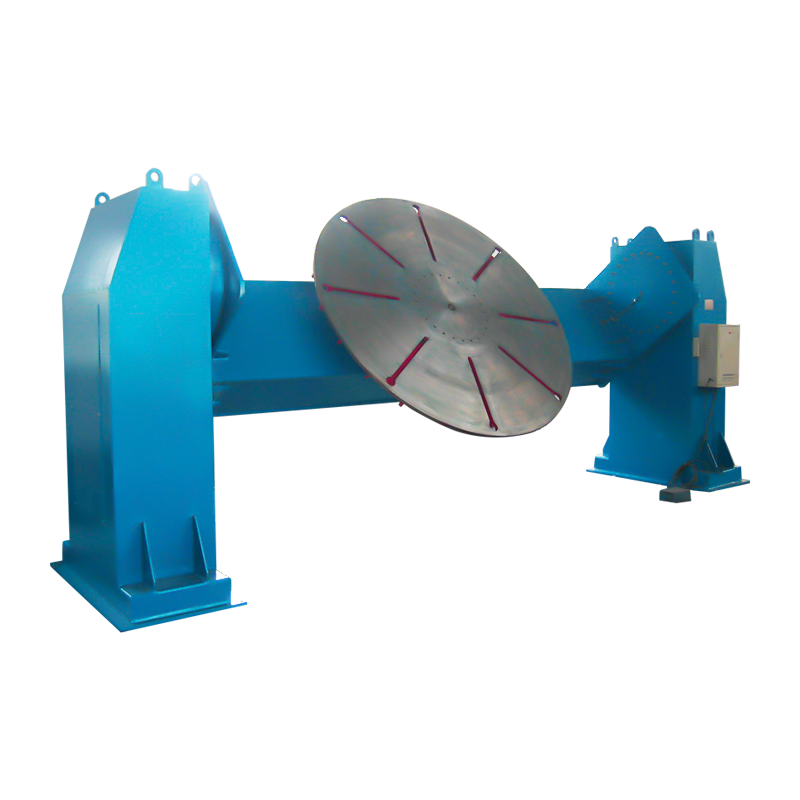
The High Precision Double Column Welding Positioner for Special Work Piece is a ...
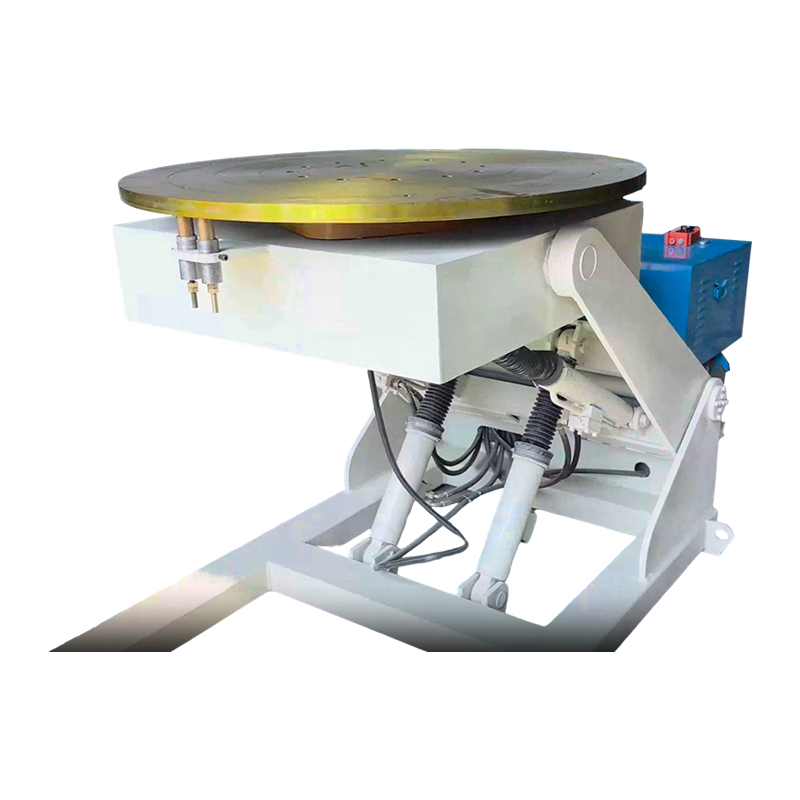
3T Hydraulic Conventional Welding Positioner is a hydraulically driven equipment...
In heavy-duty industries such as energy equipment manufacturing and large-scale pressure vessel fabrication, the primary challenge is not just the weld itself, but the safe and precise manipulation of the workpiece. A 15T Conventional Welding Positioner is a heavy-duty powerhouse designed to handle...
READ MOREIn the realm of machinery manufacturing and pressure vessel production, the ability to maintain a consistent welding angle is often the difference between a high-strength joint and a costly defect. The 100KG Conventional Welding Positioner is engineered as a universal solution for these high-precis...
READ MOREIn the fabrication of boilers and pressure vessels, the ability to rotate cylindrical workpieces with precision is the difference between a high-integrity weld and a structural failure. The Welding Rotator (also known as a Welding Turning Roller or Roller Frame) is an essential specialized tool for...
READ MOREIn heavy manufacturing industries such as wind tower wind power, storage tanks, and pressure vessels, welding operations face core pain points including large workpiece size, difficult posture adjustment, and high requirements for consistent welding quality. Traditional manual welding relies on operators' experience, leading to low efficiency (single workpiece welding cycle extended by over 30%) and increased weld defect rates due to improper welding angles. As a professional automated welding equipment supplier with 20 years of industry experience, Wuxi WeldNice's Welding Positioner/Welding Turntable is technically positioned with "stepless posture adjustment, advanced structure, and easy operation," serving as a key supporting equipment to address the above pain points and providing stable and reliable automated welding support for various industries.
I. Basic Cognition: Core Definition and Classification of Welding Positioners
| Classification Dimension | Type | Core Features | Application Scenarios | WeldNice Product Advantages |
|---|---|---|---|---|
| Load Capacity | Light-duty (≤500kg) | Compact size, flexible operation | Welding of small parts and precision instruments | Complete functions, suitable for small-batch customized needs |
| Medium-duty (500kg-5t) | Strong stability, wide speed regulation range | Welding of storage tanks and middle sections of pressure vessels | Stepless speed regulation, precise control of welding angles | |
| Heavy-duty (≥5t) | Robust structure, high load-bearing capacity | Welding of wind tower bodies and large equipment housings | Advanced structural design, durability meeting heavy-duty working conditions | |
| Structure Type | Single-axis Positioner | 360° rotation only, simple operation | Circumferential welding of cylindrical workpieces | Easy to operate, low maintenance cost |
| Dual-axis Positioner | Dual-degree-of-freedom adjustment (rotation + tilting) | Welding of complex shaped workpieces and multi-joint workpieces | Comprehensive posture adjustment, improved welding consistency | |
| Driving Method | Manual Positioner | Manual adjustment, low cost | Small workshops and simple workpiece processing | Cost-effective, suitable for start-up enterprises |
| Electric Positioner | Motor-driven, precise and controllable | Automated production lines and mass production | Compatible with robot collaboration, supporting intelligent control |
| Key Indicator | Definition | Industry Standard Requirements (Example) | WeldNice Product Parameters | Application Impact |
|---|---|---|---|---|
| Rotational Accuracy | Position deviation of the workpiece after one full rotation | ≤±0.1mm/m | ≤±0.08mm/m | Smaller deviation ensures higher weld consistency, suitable for high-precision needs such as pressure vessels |
| Speed Regulation Range | Rotational speed range of the workbench | 0.01-10r/min | 0.005-15r/min | Wider range adapts to welding of workpieces with different thicknesses (low speed for thin parts to prevent burn-through, high speed for thick parts to improve efficiency) |
| Load Adaptability | Range of workpiece weight and size that the equipment can stably carry | Rated load ≥1.2 times the actual load | Rated load ≥1.5 times the actual load | Redundant design improves equipment durability and extends service life (WeldNice products have an average service life of over 8 years) |
| Positioning Accuracy | Fixed deviation after posture adjustment | ≤±0.5° | ≤±0.3° | Precise positioning ensures uniform welding positions for multi-joint workpieces |
| Compatibility | Collaborative adaptability with robots and welding machines | Supports mainstream brand communication protocols | Compatible with ABB, KUKA, FANUC and other robots | Adapts to automated production lines, enabling unmanned welding |
| Development Trend | Industry Background | WeldNice Product/Service Matching Points |
|---|---|---|
| Automation and Collaboration | Rising penetration rate of industrial robots, unmanned production lines becoming mainstream | Products are compatible with mainstream robot communication protocols, providing "positioner + robot" one-stop solutions and supporting OEM/ODM customization |
| Customization and Precision | Diversification of workpiece types (special-shaped, extra-large size), general-purpose equipment struggling to meet needs | With 20 years of industry experience, customized positioners can be designed for workpieces in wind power, pressure vessels, and other industries (e.g., heavy-duty dual-axis positioners for wind tower welding) |
| Green and High Efficiency | Tightening environmental policies, enterprises pursuing low-energy consumption and high-efficiency production | Products adopt energy-saving motors, reducing energy consumption by 15% compared to the industry average; optimized structural design reduces equipment operating noise (≤75dB), meeting green factory standards |
Frequently Asked Questions (FAQs)
1. How to select a suitable welding positioner?
Answer: Focus on three core dimensions—① Workpiece parameters (weight, size, shape): Select load type (light/medium/heavy) based on weight, and structure type (single-axis/dual-axis) based on shape; ② Welding requirements (precision, efficiency): Prioritize products with rotational accuracy ≤±0.1mm/m for high-precision needs, and pay attention to speed regulation range and compatibility for mass production; ③ Production scenario (manual/automated): Choose electric positioners supporting robot collaboration for automated production lines. With 20 years of industry experience, WeldNice provides free product selection consulting to recommend suitable products based on your actual needs.
2. What is the maintenance cycle of welding positioners, and what precautions should be taken for daily maintenance?
Answer: It is recommended to perform daily maintenance once a month, mainly inspecting the tightness of clamping devices, lubricating oil levels, and the operation status of the speed regulation system; annual maintenance is recommended once a year, with comprehensive inspection and maintenance conducted by professional after-sales personnel. Daily maintenance precautions: ① Avoid overloading (actual load should not exceed 80% of the rated load); ② Keep the equipment clean to prevent welding slag and dust from entering the transmission system; ③ Regularly replace lubricating oil (use the model specified by the company). Following these maintenance requirements can effectively extend equipment service life (WeldNice products have an average service life of over 8 years).
3. How to ensure equipment stability in high-temperature and dusty heavy welding environments?
Answer: WeldNice's welding positioners are specially designed for harsh industrial environments: core transmission components adopt sealed protective structures to block welding slag and dust (protection level IP54); clamping devices are made of high-temperature-resistant alloy materials, capable of stable operation in -10℃~60℃ environments, suitable for high-temperature and dusty scenarios such as wind tower manufacturing and storage tank wel
Copyright 2025 Wuxi WeldNice Heavy Industry Technology Co., Ltd. All Rights Reserved Welding Positioning Equipment Factory Wholesale Positioner Welding Machine Factory



sales@weldnicefactory.com