 English
 русский
 Español
 عربى
عربى20T Self-Aligning Airfoil Welding Rotary Machine
The 20T airfoil self-aligning welding rotary machine is widely used in industries such as pressure vessels, chemical equipment, wind turbine towers, p...
See Details
In the heavy fabrication and welding industry, handling large cylindrical workpieces presents a set of persistent challenges. Operators and project managers frequently ask how to maintain consistent rotation, prevent unwanted movement during critical weld passes, and ensure the safety of personnel when dealing with loads weighing tens of tons. The need for reliable equipment that can manage these heavy components while providing precise control has never been greater.
Traditional welding methods often rely on manual turning or basic mechanical rollers. While these methods have served the industry for decades, they can fall short when dealing with complex projects that require high levels of accuracy and repeatability. Issues such as workpiece slippage, inconsistent rotation speeds, and the physical difficulty of repositioning heavy pipes can lead to weld defects, rework, and extended production timelines.
To address these industry-wide concerns, manufacturers have developed advanced positioning devices that combine robust load-bearing capacity with sophisticated control systems. One such solution is the 40T Self-Aligning Welding Rotary Machine With Electric Track Movement And Anti-Drift Function, which is designed to enhance the welding process for heavy-duty applications.
One of the significant time-consumers in any welding shop is the setup phase. Getting a heavy cylinder perfectly centered on a roller frame can be a labor-intensive process. If the workpiece is not aligned correctly, it can wobble or walk off the rollers during rotation, creating a hazardous situation and compromising the weld quality.
Self-aligning technology addresses this issue by allowing the rollers to adjust automatically to the diameter of the workpiece. This feature reduces the time spent on manual adjustments and ensures that the pressure is distributed evenly along the length of the cylinder. For workshops that handle a variety of pipe diameters, this flexibility is invaluable. It means a single machine can adapt to different job requirements without the need for extensive reconfiguration.
When welding long seams on large vessels or pipelines, access to every part of the joint is critical. A fixed-position roller table limits the welder's reach and may require the workpiece to be lifted and moved multiple times, which increases the risk of damage and injury.
Modern solutions incorporate electric track movement systems. This feature allows the entire roller frame to travel along a rail system, bringing the workpiece to the optimal welding position rather than forcing the operator to move around a static object. This mobility is particularly beneficial for:
The electric drive system provides smooth and controlled movement, which is essential when handling heavy loads. By eliminating the need for manual pushing or pulling, the risk of sudden shifts or drops is significantly reduced.
Stability is the cornerstone of a successful weld. Even a minor drift in the workpiece position during a welding pass can result in misalignment, porosity, or lack of fusion. The anti-drift function is a critical safety and quality feature found in advanced rotary machines.
This system utilizes high-precision guide rails combined with a responsive brake control mechanism. When the machine is in operation, these components work together to lock the position of the rollers and the workpiece. This prevents "creep," where the rotation or vibration of the welding process slowly pushes the workpiece out of its intended position.
The benefits of an anti-drift system include:
To visualize the advantages of modern rotary machines, it is helpful to compare the capabilities of basic manual equipment with that of advanced systems like the 40T Self-Aligning Welding Rotary Machine With Electric Track Movement And Anti-Drift Function.
| Feature | Manual / Standard Rollers | Advanced Self-Aligning System |
|---|---|---|
| Load Capacity | Limited by manual strength and basic motor size | High capacity (e.g., 40 tons) with robust motors |
| Alignment | Requires manual shimming and adjustment | Automatic self-alignment to workpiece diameter |
| Mobility | Static position; requires crane to move workpiece | Electric track movement for multi-point access |
| Stability Control | Mechanical friction only; prone to drift | Anti-drift brake system with guide rails |
| Setup Time | Lengthy due to manual adjustments | Reduced setup time through automation |
When selecting equipment for a fabrication shop, understanding the specific technical capabilities is essential. The 40T Self-Aligning Welding Rotary Machine With Electric Track Movement And Anti-Drift Function is built to handle substantial tasks while providing the finesse required for quality welding.
Efficiency in welding is not just about speed; it is about the ratio of quality input to quality output. A machine that can hold a heavy pipe steady while moving at a consistent speed allows the welder to focus entirely on the technique rather than struggling with the workpiece.
Safety is another paramount concern. Handling 40-ton workpieces carries inherent risks. Equipment that includes integrated braking systems and stable track movement minimizes the chances of accidents. The anti-drift function, in particular, acts as a safeguard against the sudden movement of the load, which can be catastrophic in a busy workshop environment.
Furthermore, the reduction in manual handling contributes to workplace ergonomics. By allowing the machine to do the heavy lifting and precise positioning, the physical strain on operators is reduced, leading to fewer injuries and less fatigue over long shifts.
The utility of a 40-ton self-aligning rotary machine extends across various sectors of the heavy fabrication industry.
Pressure Vessel Manufacturing: These vessels often require precise circumferential and longitudinal welds. The ability to rotate the vessel smoothly and move it along a track allows for continuous welding passes without interruption.
Wind Power Generation: The tower sections for wind turbines are massive cylindrical structures. Transporting and welding these sections demand equipment that can support the weight while allowing for the intricate welding required to withstand environmental stresses.
Oil and Gas Pipelines: Welding large diameter pipes demands high precision. The self-aligning feature ensures the pipe is centered, while the anti-drift system ensures the weld is consistent throughout the rotation, which is crucial for the integrity of pipelines that transport hazardous materials.
As the industry moves towards greater automation, the role of positioning equipment becomes even more central. Machines that can communicate with welding robots, adjust speed automatically based on sensor feedback, and provide data logging for quality control are becoming the standard.
The integration of electric track movement and anti-drift technology is a step in this direction. It bridges the gap between manual operation and fully automated lines. By providing a stable, movable platform, these machines enable the use of automated welding heads and other robotic tools, thereby increasing productivity and consistency.
For fabrication shops and industrial manufacturers looking to upgrade their capabilities, investing in reliable positioning equipment is a logical step. The challenges associated with heavy cylindrical workpieces—stability, alignment, and safety—are effectively addressed by modern machinery.
The 40T Self-Aligning Welding Rotary Machine With Electric Track Movement And Anti-Drift Function represents a practical solution to these common questions. By combining self-alignment for easy setup, electric track movement for flexibility, and anti-drift technology for stability, it provides a comprehensive tool for heavy-duty welding tasks. As the industry continues to evolve, such equipment will play a vital role in maintaining high standards of quality and efficiency in metal fabrication.
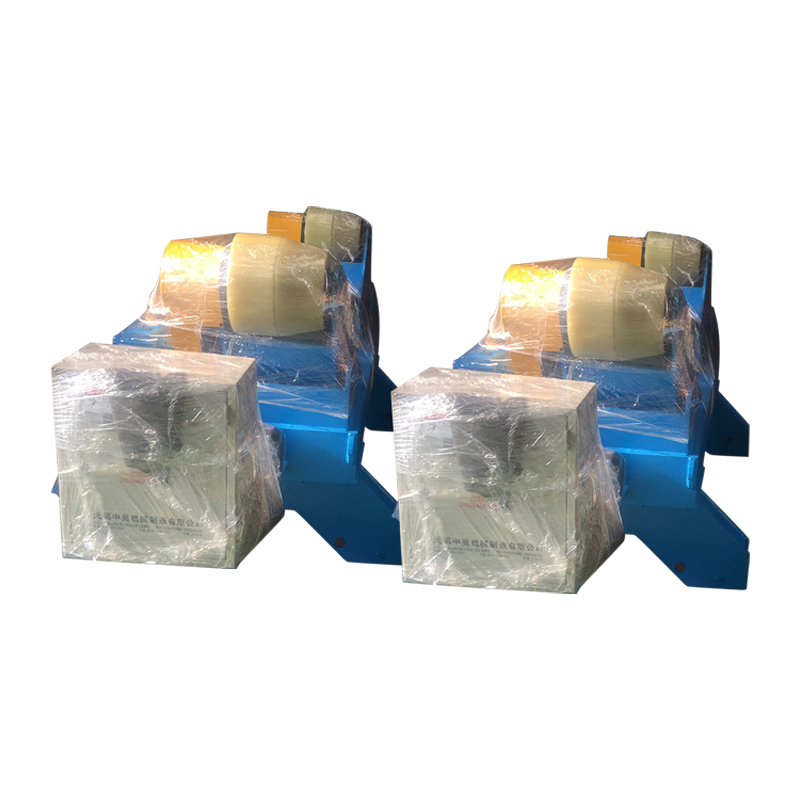
The 20T airfoil self-aligning welding rotary machine is widely used in industries such as pressure vessels, chemical equipment, wind turbine towers, p...
See Details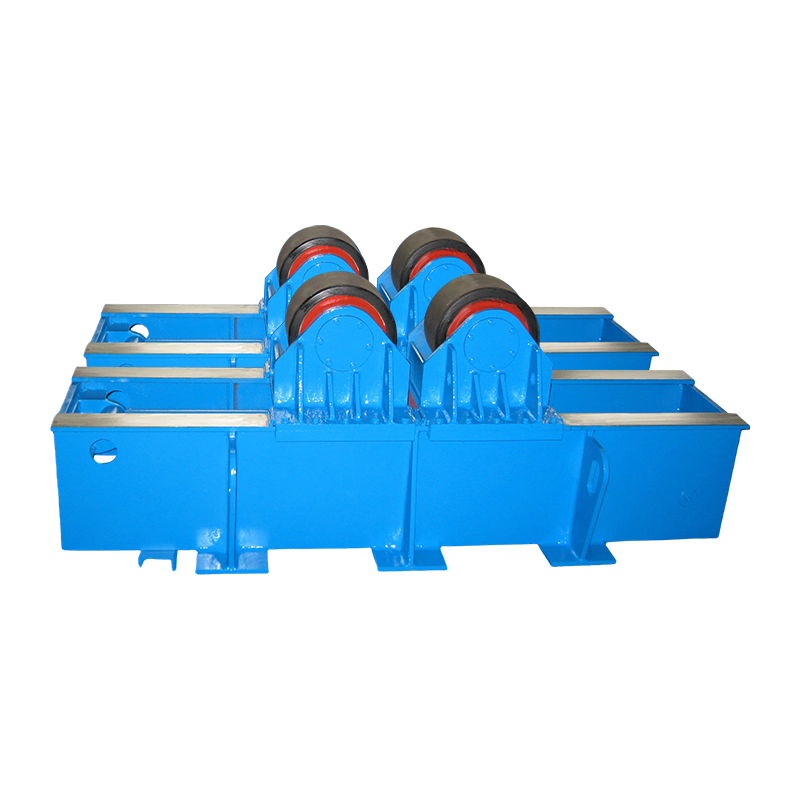
40T Fit Up Welding Rotator with Hydraulic Horizontal Pushing has a rated load of 40 tons and focuses on the assembly and welding of small and medium-s...
See Details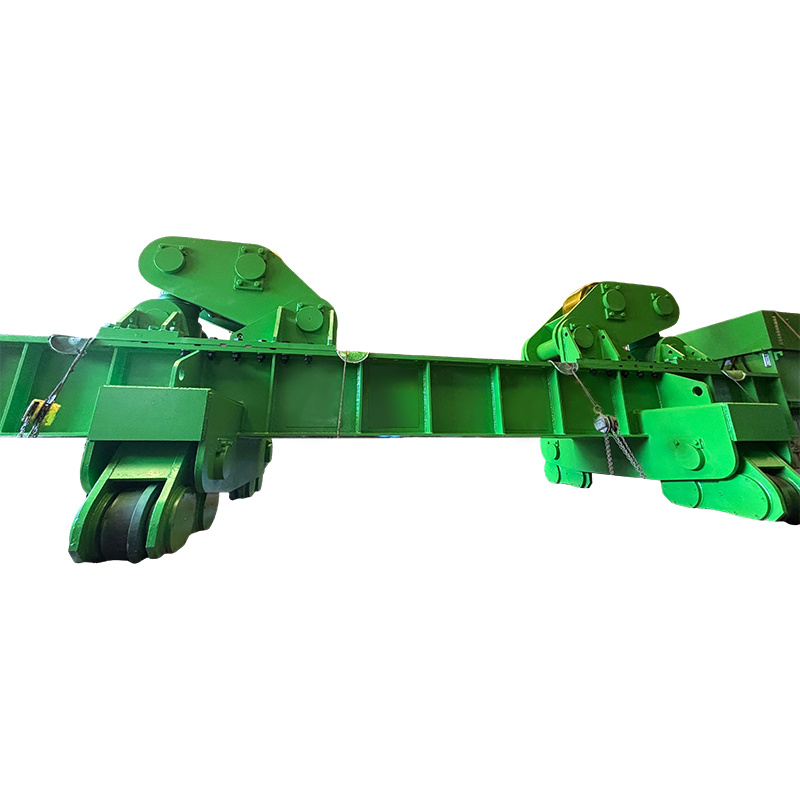
The 800T Fit Up Welding Rotator with Manual Orbital Movement is a special equipment for welding super-heavy workpieces, with a load capacity of up to ...
See Details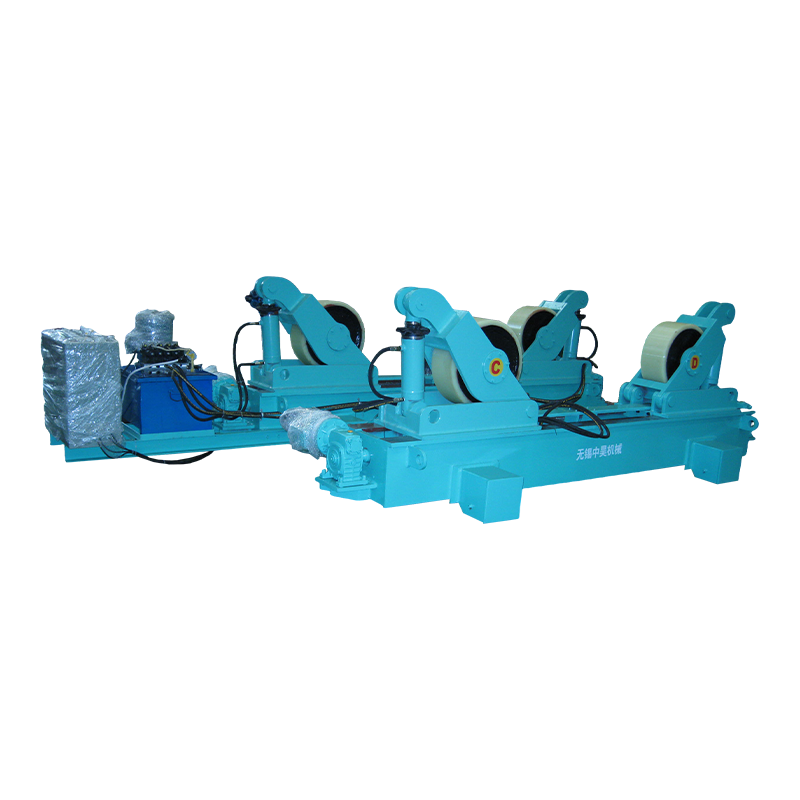
80t fit up welding rotator with manual orbital movement is a special equipment for welding medium and heavy workpieces. It can carry 80 tons and is su...
See Details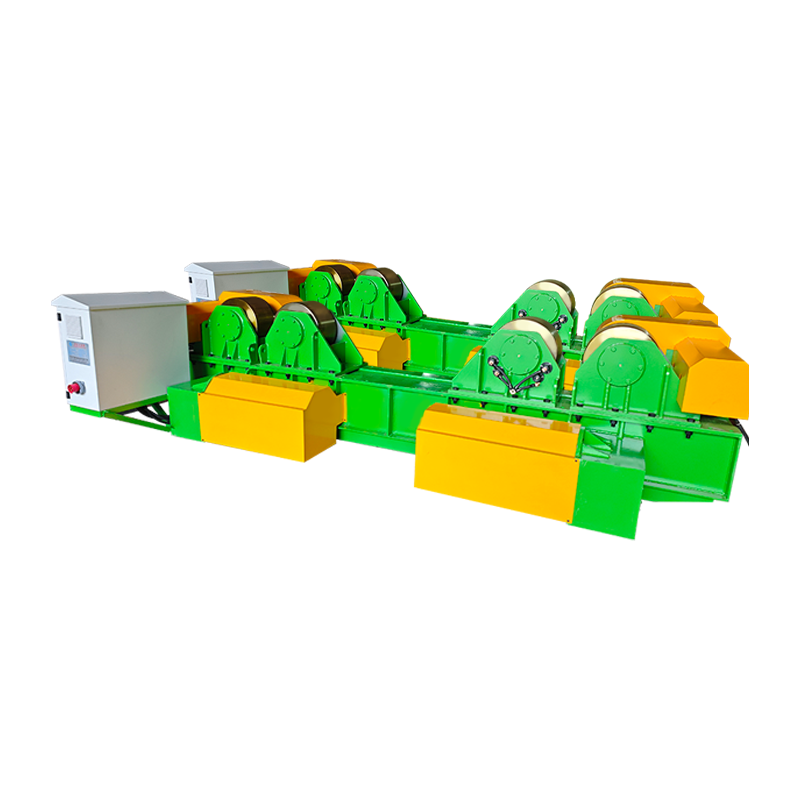
The 40t fit up welding rotator with hydraulic lifting manual orbital movement is a medium-sized welding auxiliary equipment with a load capacity of 40...
See Details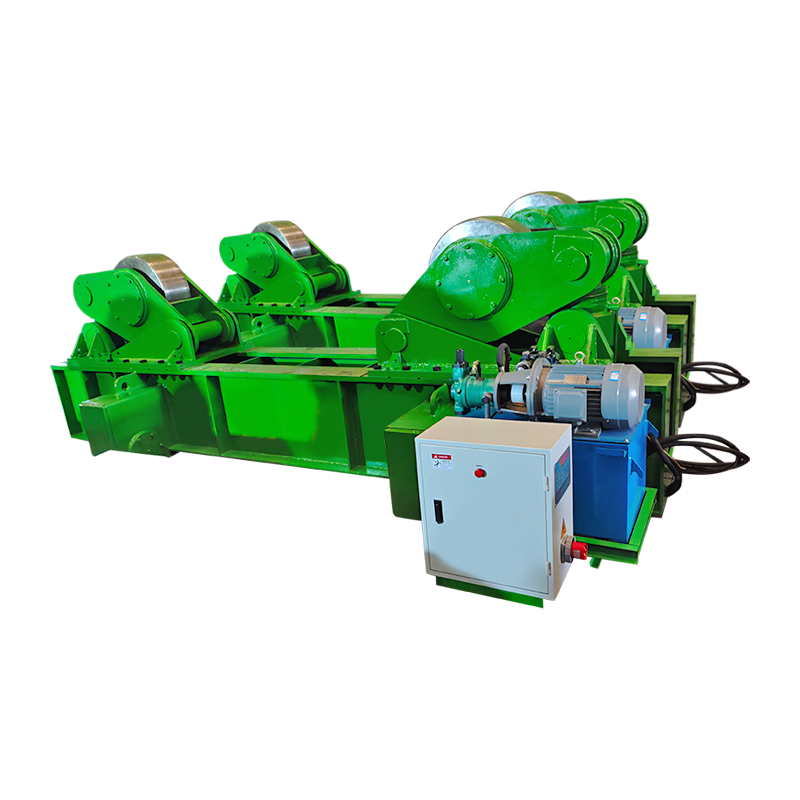
The 300t fit up welding rotator with manual orbital movement has a 300-ton load-bearing capacity and can stably support large cylindrical workpieces, ...
See DetailsCopyright 2025 Wuxi WeldNice Heavy Industry Technology Co., Ltd. All Rights Reserved Custom Automatic Welding Equipment Manufacturers



sales@weldnicefactory.com